ATRA’s University Project isn’t a place or even a thing. It’s a concept for advancing the transmission-repair industry — as a whole. This includes not only those in the industry, or even those who want to be in the industry, but those who don’t know they want to be in it (but belong in it anyway). This is the case with students at automotive colleges and Tech schools across the USA and Canada (I’m sure it’s worldwide, but that’s a later challenge). ATRA’s University Project seeks to reach those students to train them to get hired in a shop and be productive. There’s a lot to this aspiration, and we’ve covered this for a few years. The gratitude is when you see it unfold.


ATRA has scheduled 26 seminars for 2023; 15 are in tech schools. One was at Pasadena City College in Pasadena, California, and I was fortunate enough to be there. Normally, it would have been another step toward the goal of getting ATRA into tech schools, but this was different. An ATRA Supplier Member, Roger Swensen from Fitzall, wanted to hold a Meet-N-Greet event on the Friday afternoon before the seminar. It was an event to get to know the students and instructors. He delivered about a dozen pizzas to help generate the students’ interest to attend. He also brought a tool chest to use for a grand-prize raffle.

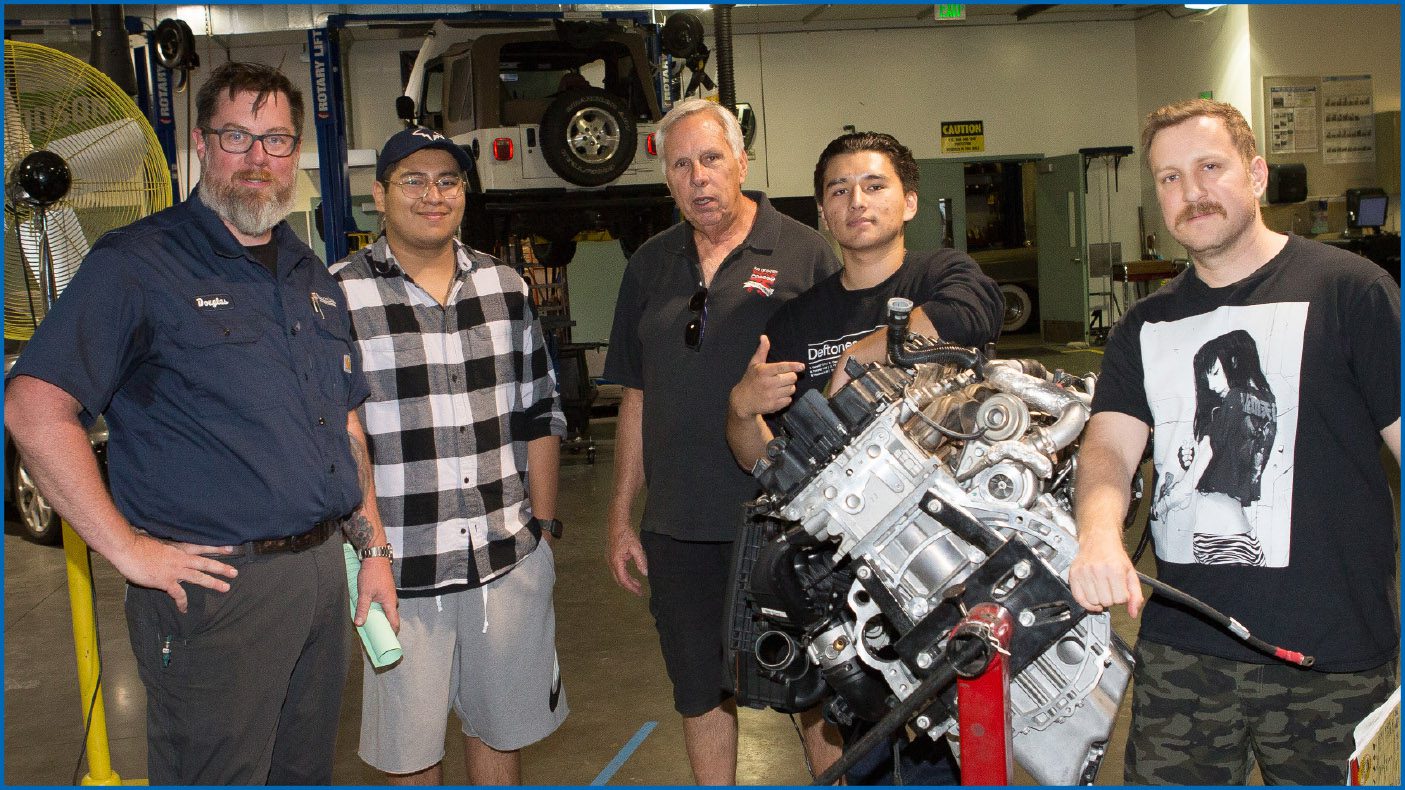
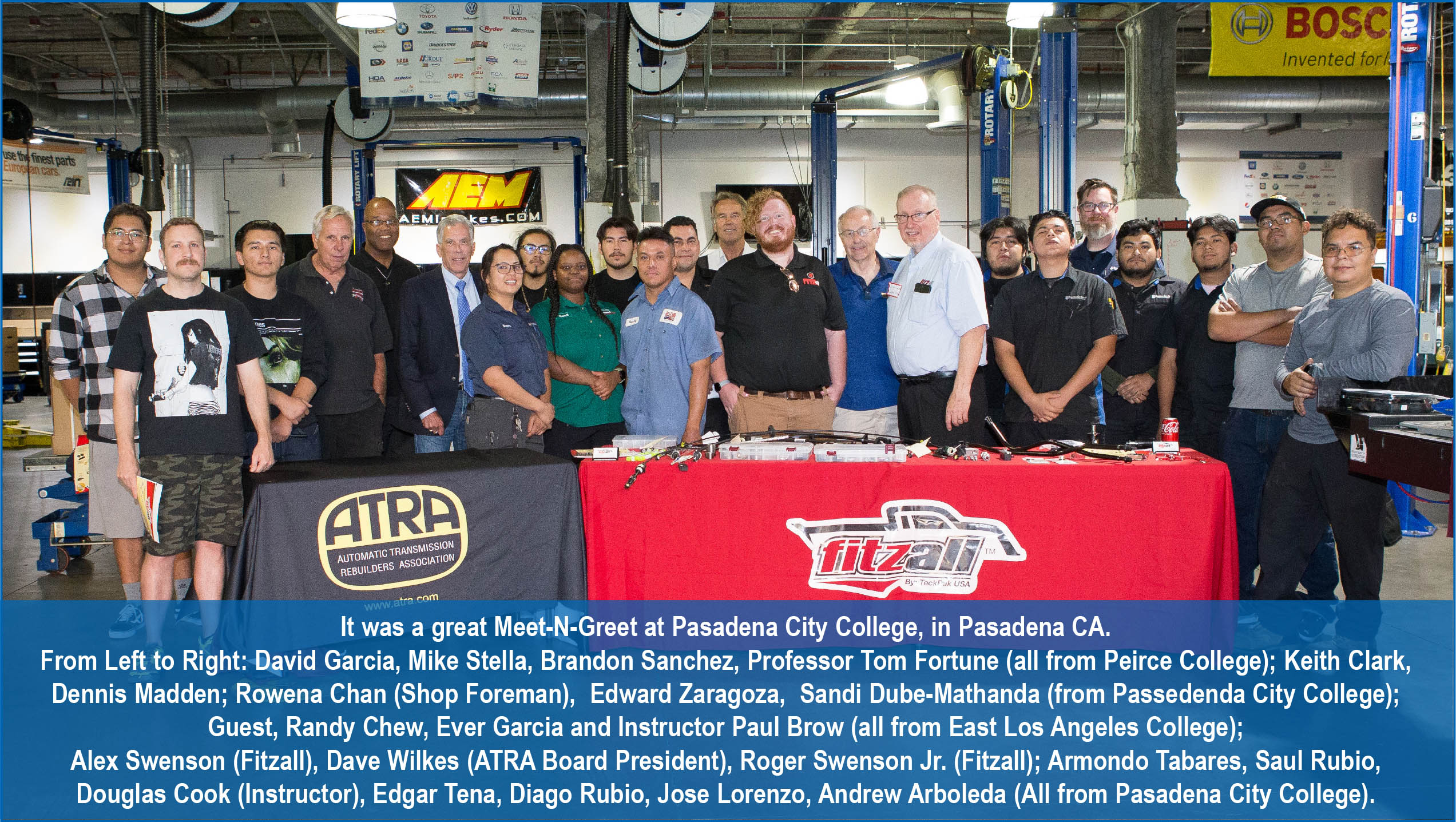
Pasadena City College hosted the event, as well as the tech seminar the following day. Also in attendance were instructors and students from two other schools: Peirce College in Woodland Hills, California, and East Los Angeles College. The lab shop was incredible, and you could tell that they taught modern and current technologies in the classes. But, as we found in the vast majority of tech schools, transmission repair held a minor interest from the students. Consequently, an in-depth study of automatic transmissions wasn’t a high curriculum focus. The event started at 5:00 PM, and as the students began to trickle in, we had a chance to talk to them about their career paths. As expected, most (if not all) of them focused on general repair end engine performance. I had the same response as more students arrived.
We learned, though, that the lack of interest in transmission repair wasn’t because they thought it was dull or boring but that they had no idea of how cool it was or the incredible opportunity available. But that was about to change.
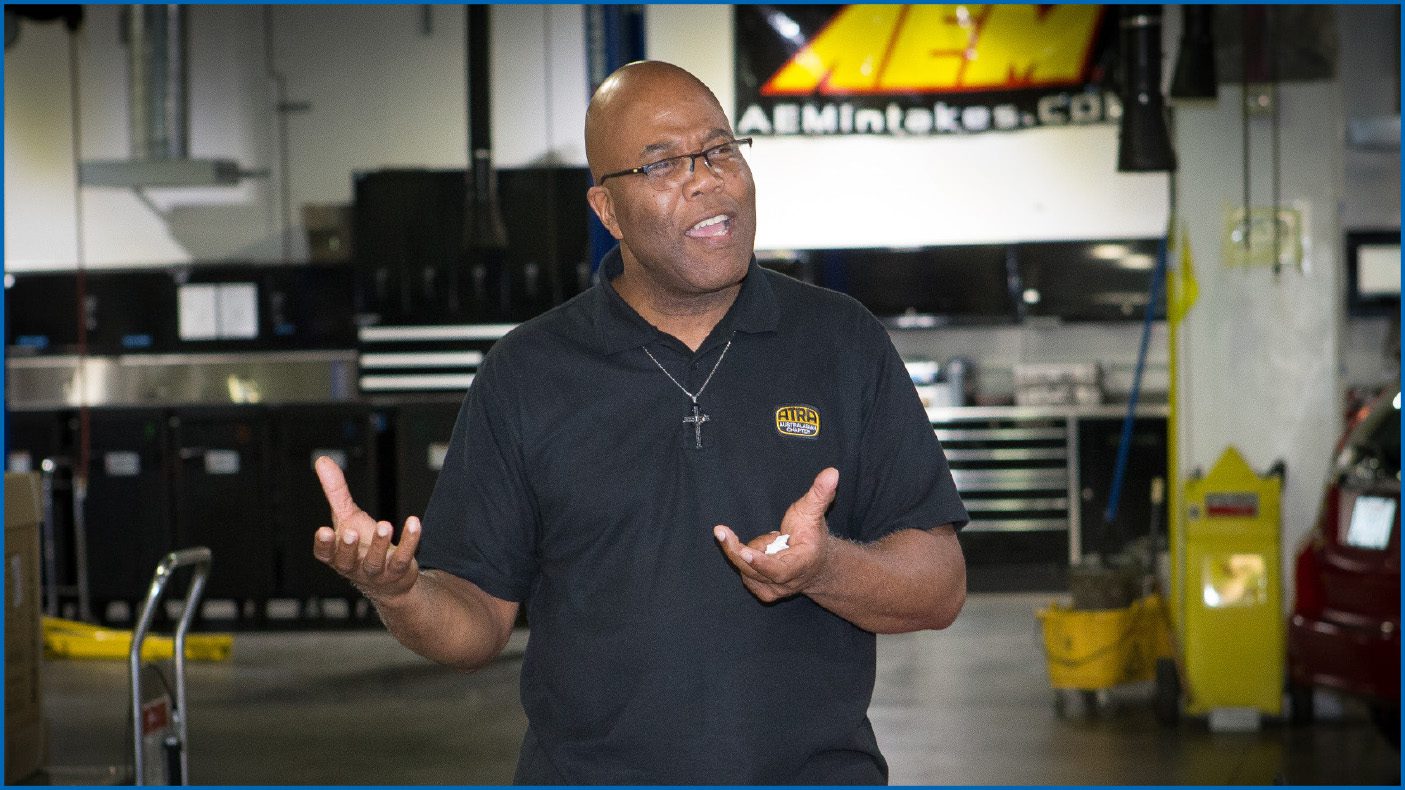
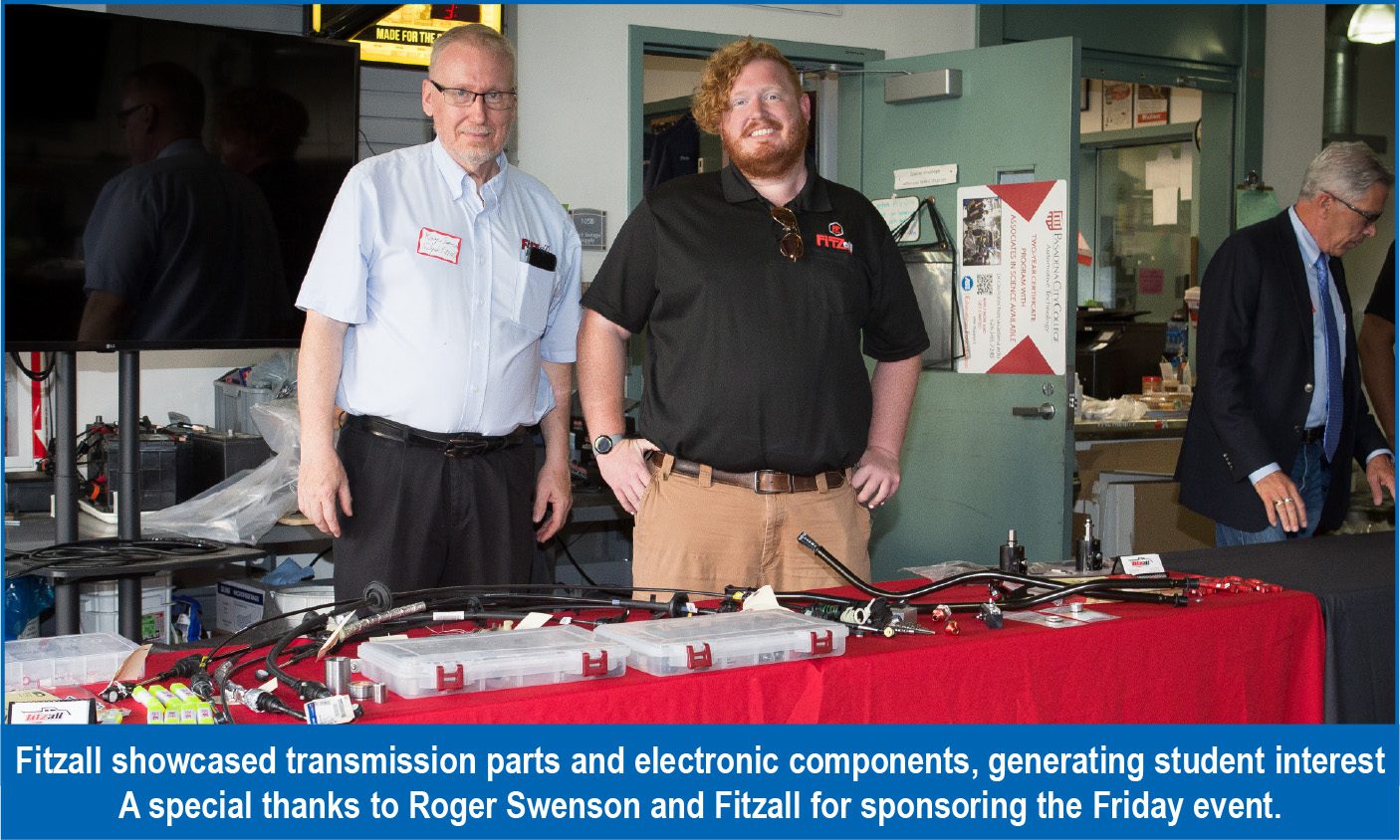
Fitzall had a table with transmission parts, cables, and electronic components that drew the attention of many of the students. The drawing for the tool chest was scheduled for 7:00 PM, and about 30 minutes before that, we had an opportunity to share career stories. I started the discussion with the University Project and ATRA’s plan to work with tech schools and help shape the training. I also shared my story, and while it was humbling, I couldn’t help but realize how cool my career had been.
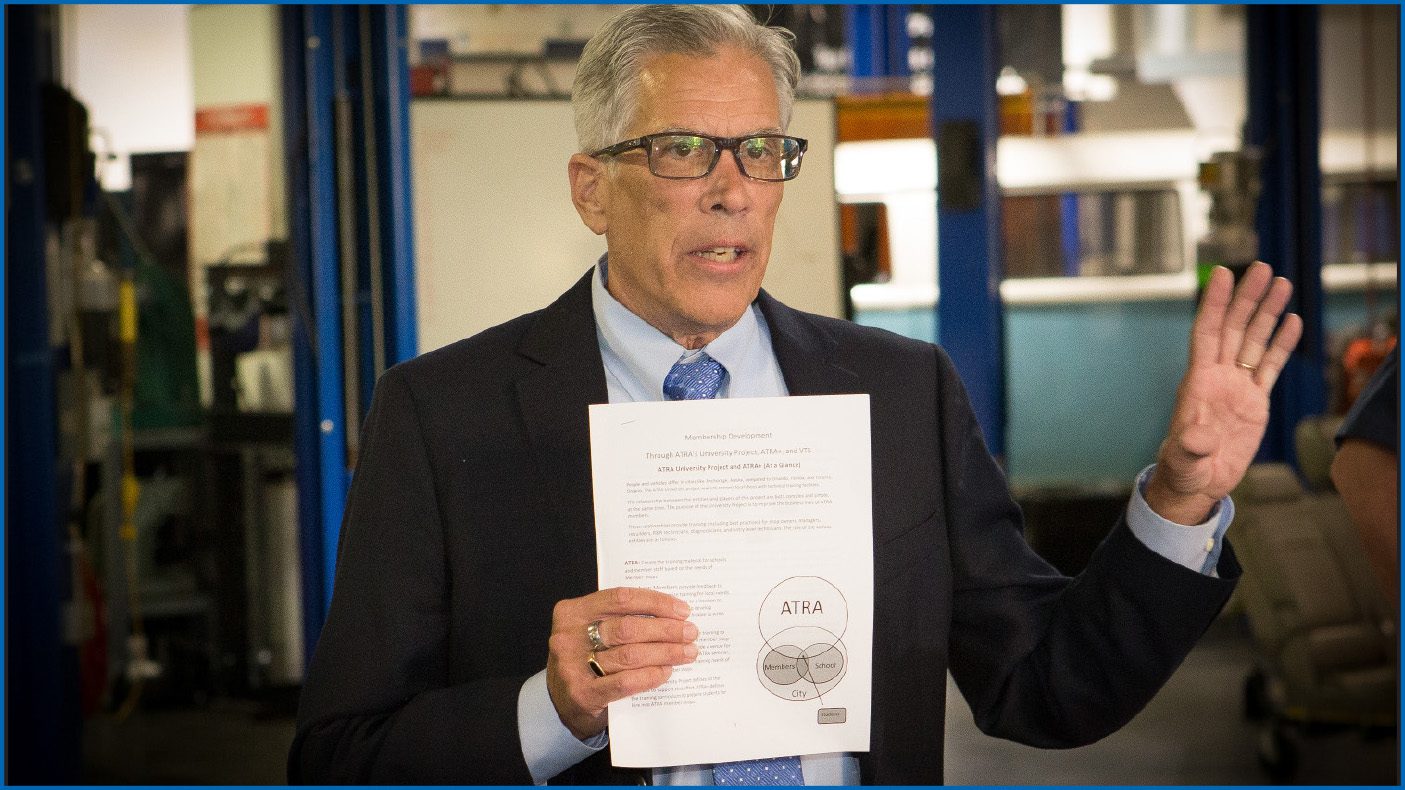
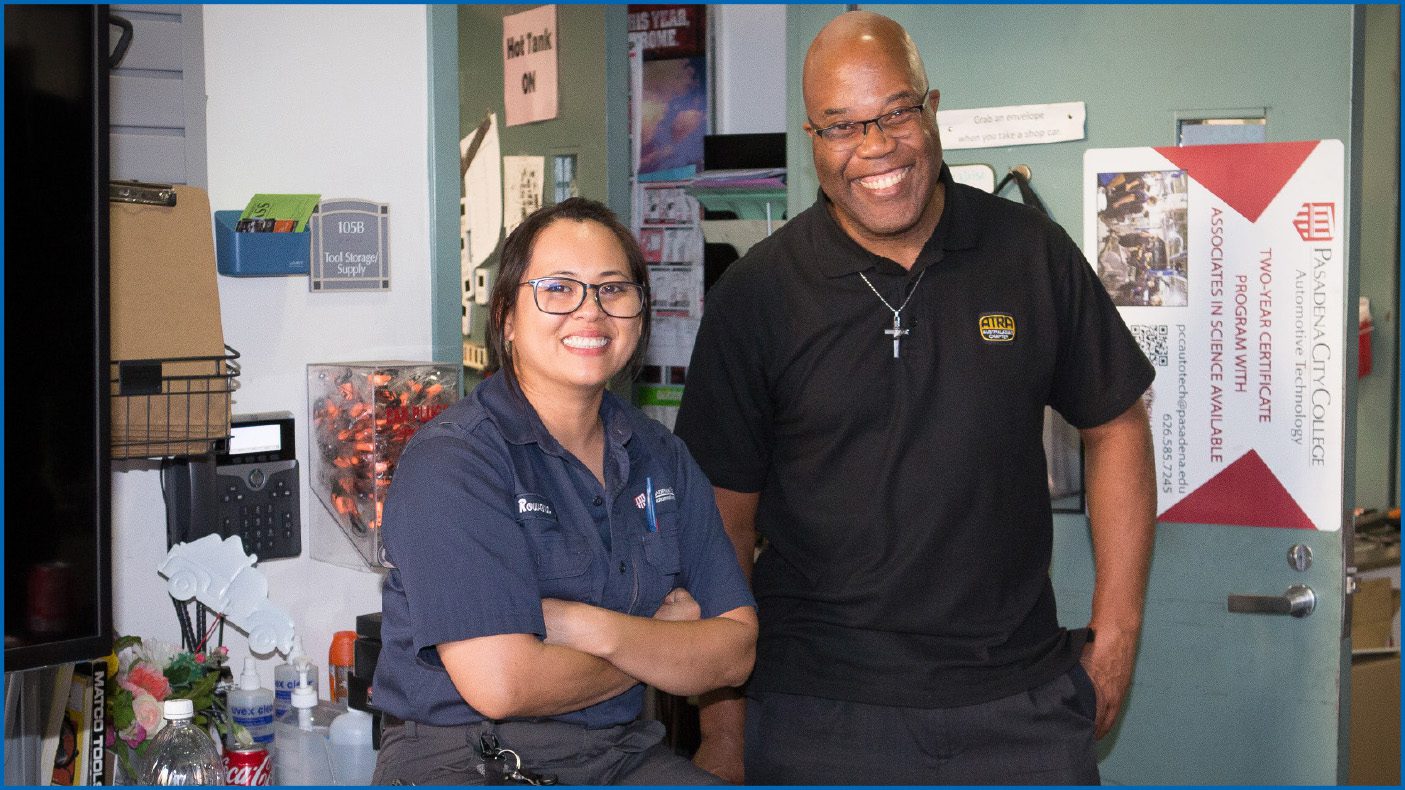

Keith Clark, ATRA’s Technical Director, followed, and I couldn’t help but think, “Wow.” He’s had a fabulous career. But of course, the crown jewel is being ATRA’s Tech Director. The image that was forming was the wide range of opportunities. The transmission-repair industry could take them anywhere in the country; the demand for skilled technicians is high and needed everywhere. The students were starting to perk up.
 Next came Dave Wilkes, a longtime shop owner and current ATRA Board President. He’s worked on every aspect of automotive repair, so he connected with the students intent on general repair. But I think the fact that he chose transmission repair as his career choice resonated with the students. Professors Douglas Cook from Pasadena City College, Tom Fortune from Peirce College, and Paul Brow from East Los Angeles College had similar but different stories that ranged from shop owner, Dealer tech, transmission rebuilder, and working on practically every part of the car before becoming a teacher. Now, the idea of a teaching career was added to the list.
 Roger and Alex Swenson added a career in the manufacturing segment to the list. While Roger is an engineer, Alex remarked that they hire technicians from the field for research positions. The students were impressed with their options. Options they likely never dreamed of. Throughout the deliveries, the students offered a round of applause.
7:00 came around, and the time had come for the drawing. The air was filled with anticipation as Roger pulled the winning ticket. Jose Lorenzo won the prize, and as it turned out. The tool chest was the exact one he’d been saving for.
 It was a terrific event, and we learned a lot. We learned that all the instructors could select topics to teach and were eager to include training courses from ATRA. We also learned that there was a CAT (California Automotive Teachers) meeting just weeks away and that ATRA could participate. It’s another opportunity to get in front of automotive trainers from all over the state.
As cool as this event was, the weekend wasn’t over. The following day was the tech seminar, which Keith knocked out of the park. After the seminar, we met with four shop owners, ranging from a small one-man show to a business with 15 lifts.
Regardless of their business model, it was clear that all of the shops could use another trained technician. They shared the challenges they faced and the type of skills they’d like to see in a new hire. It was great, and the time went by pretty quickly. So much so that the school had to kick us out of the room.
This work with shop owners brings us full circle with the mission of the ATRA University Project. And that is to turn the needs of the shops into usable training programs for tech schools. It’s a win-win-win.
If you’re a shop owner or technical instructor and want to be part of giving back to an industry that has offered so much to so many, then give us a call or drop us an e-mail. And, of course, keep an eye on GEARS magazine and ATRA newsletters as we share the progress of this program. The ATRA University Project may just come to a school near you.
A special thanks to Roger Swenson and Fitzall for sponsoring the Friday event.