
 As most shops in ATRA know, I have been producing Rebuild books for many years now. Each book has its own set of challenges. The challenges vary from project to project based on what technical material exists out there in the world. Some manufacturers produce quite a bit of material, while others produce the very minimum. This, as we know, is for economic reasons.
 It’s more cost-effective to simply change out a transmission than to rebuild it at the dealer level. So the training is more geared to diagnosis and R&R than rebuilding. Therefore, there is no need for the manufacturer to produce rebuilding techniques and specifications. Hydraulic diagrams have also gone the way of the Dodo.

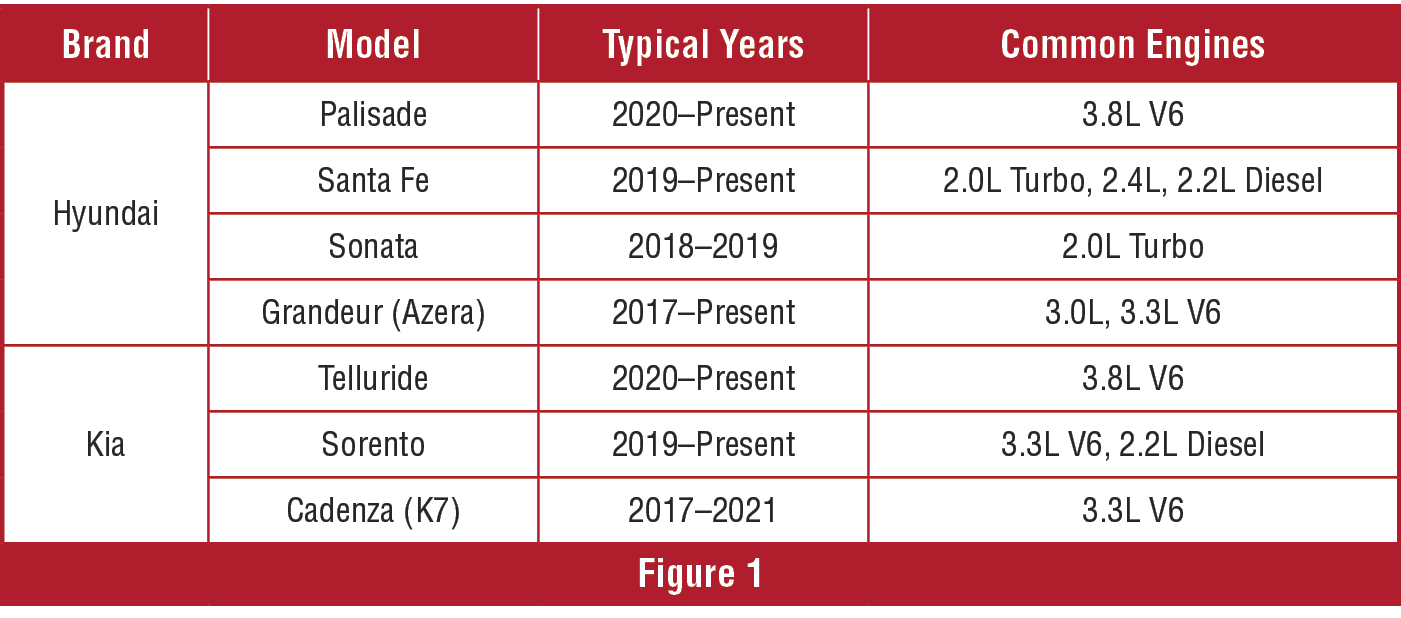
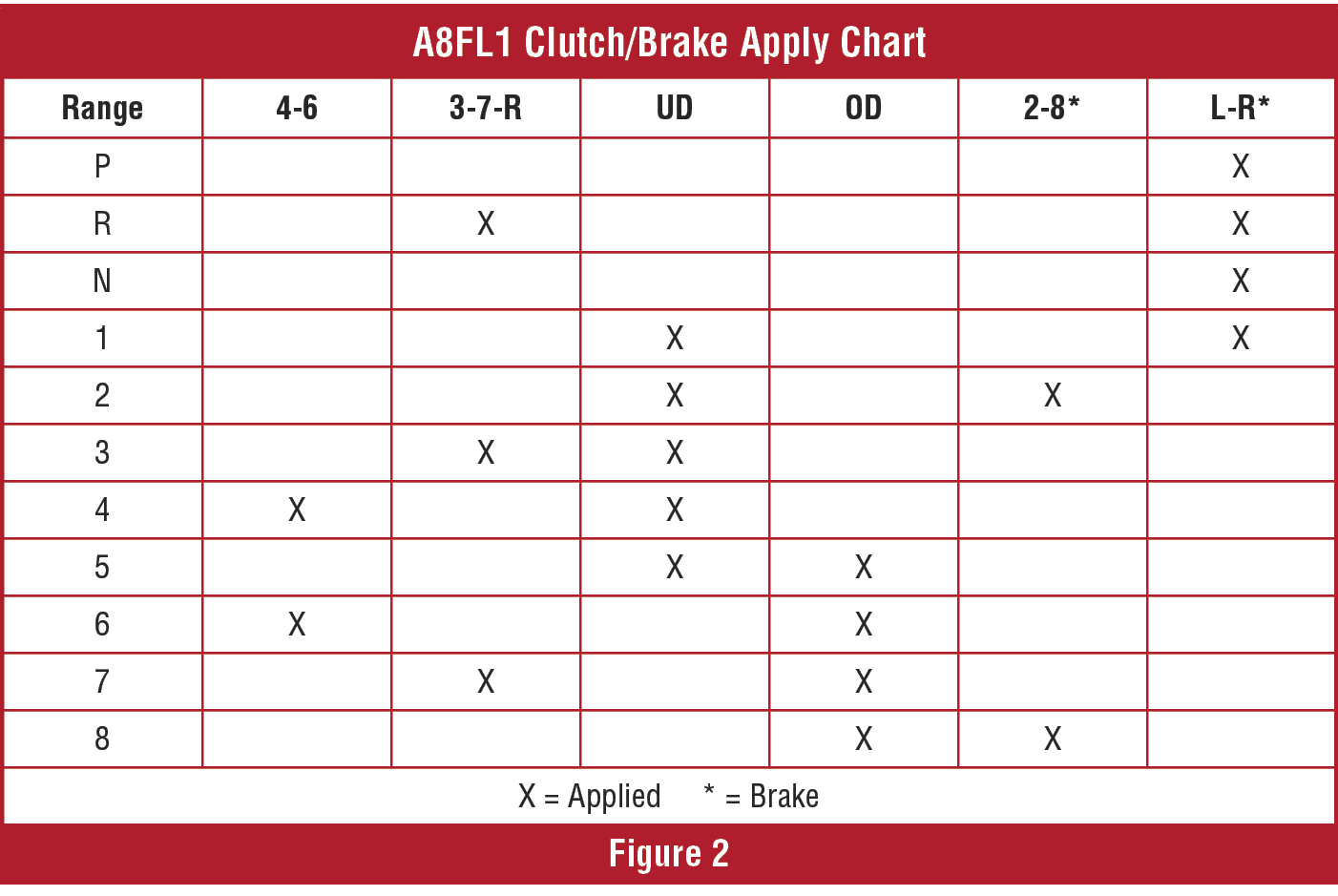
The A8LF1 is a Hyundai/Kia FWD/AWD 8-speed transmission that is available across various models (Figure 1). It is also found around the globe in various international models. The 8 speeds and reverse are produced by various applications of four driving clutch packs and two brake packs, which are splined to the case (Figure 2). 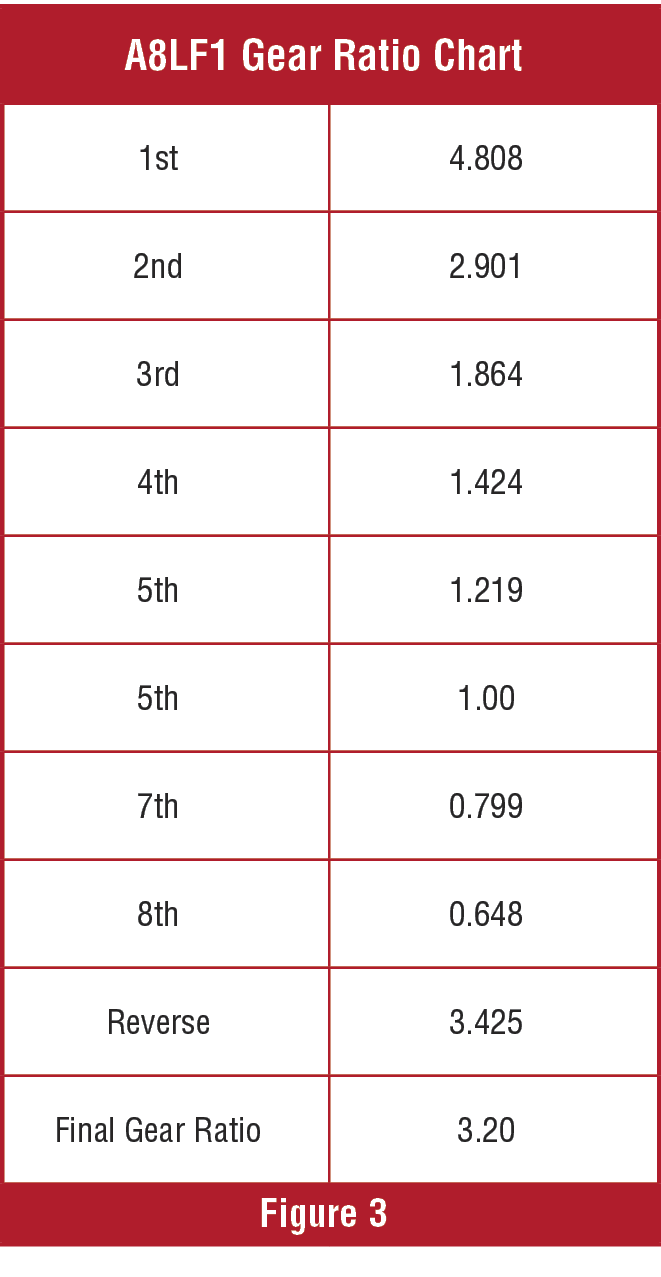 These clutches and brakes drive and hold three planetary gear sets to achieve the 8 forward speeds and reverse gear. One of the few specifications the dealer provides is a ratio chart (Figure 3). This information is very useful when diagnosing slip codes.
VALVE BODY
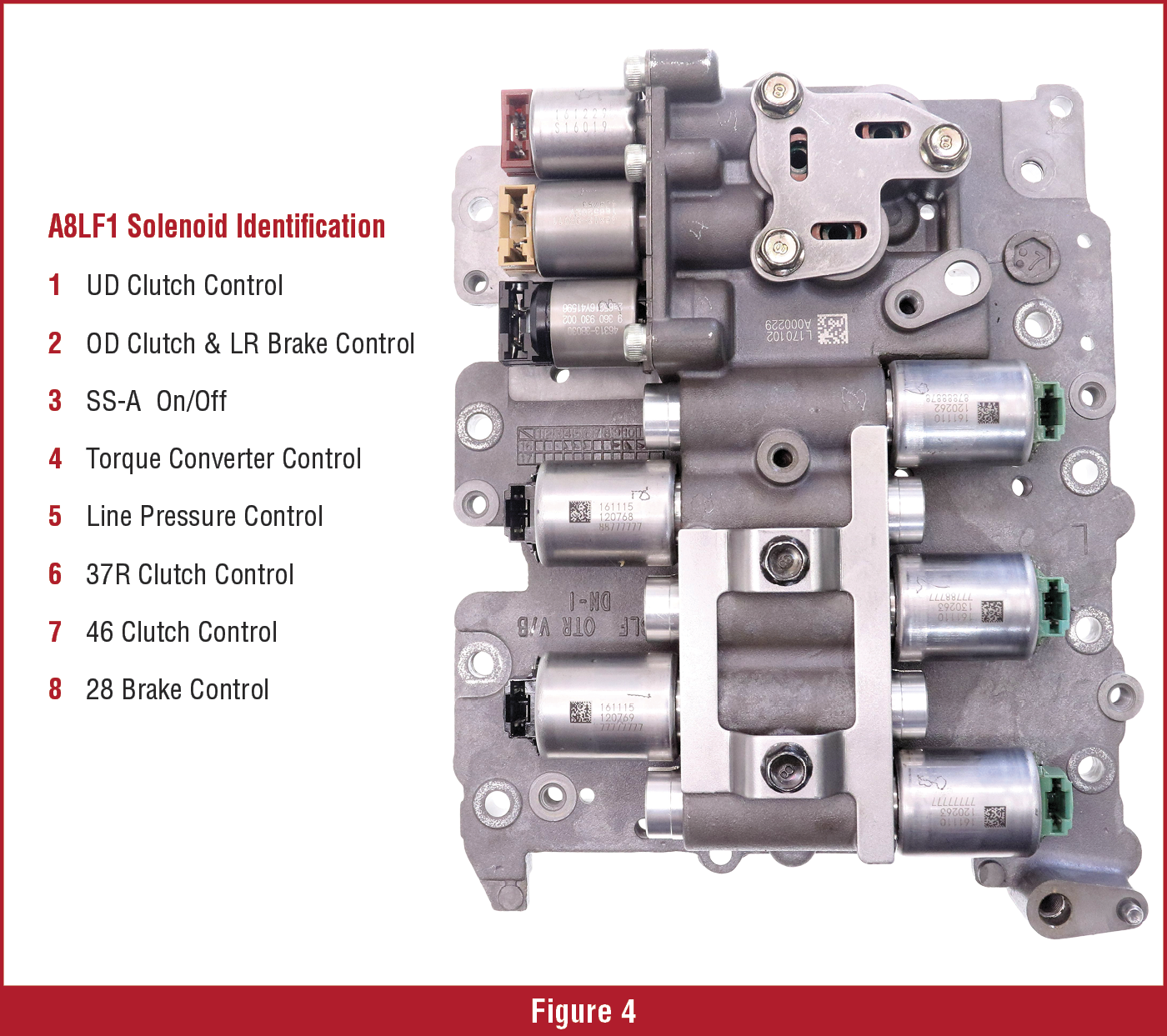
This fwd 8 speed uses seven Variable Force Solenoids (VFS) and one On-Off solenoid to control the apply and release of the clutches, brakes, and the torque converter clutch (TCC) (Figure 4). A call to the local Hyundai dealer results in a yes when asked if the solenoids are available. They are a couple of days out and are around eighty bucks. Not a bad deal, really. The new solenoid must be programmed with a dealer-level scan tool.
After a ton of research, a website was found for parts for this unit. This site even has a valve body breakdown with part numbers for springs, valves, and even shift solenoids. The problem is that none of the parts are available. Also, by the time you find these valve body illustrations, there are no names for any of the valves!
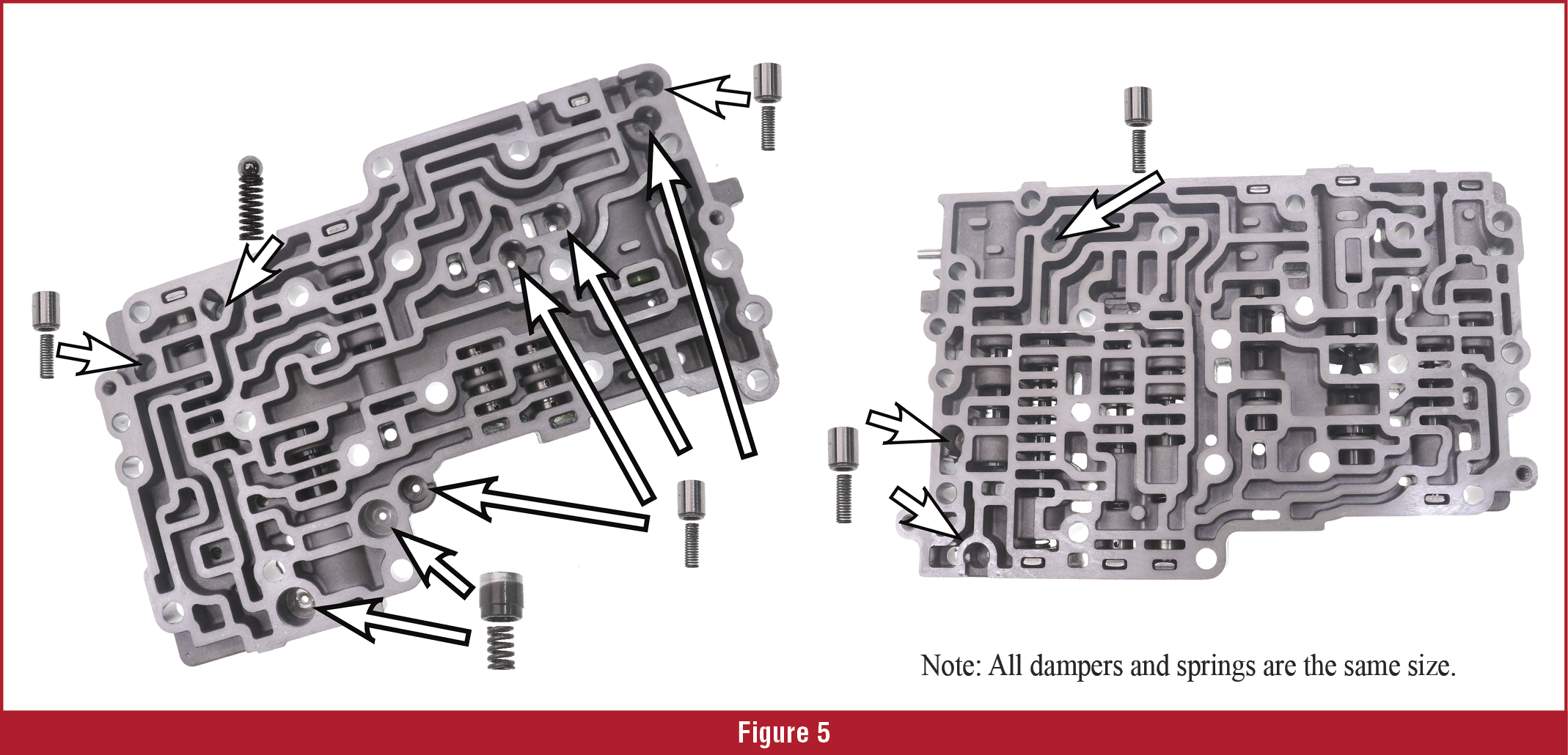
 The rebuild book does have a detailed breakdown of the valves and spring layout, along with a great breakdown of the small parts locations (Figure 5).
CASE PASSAGES
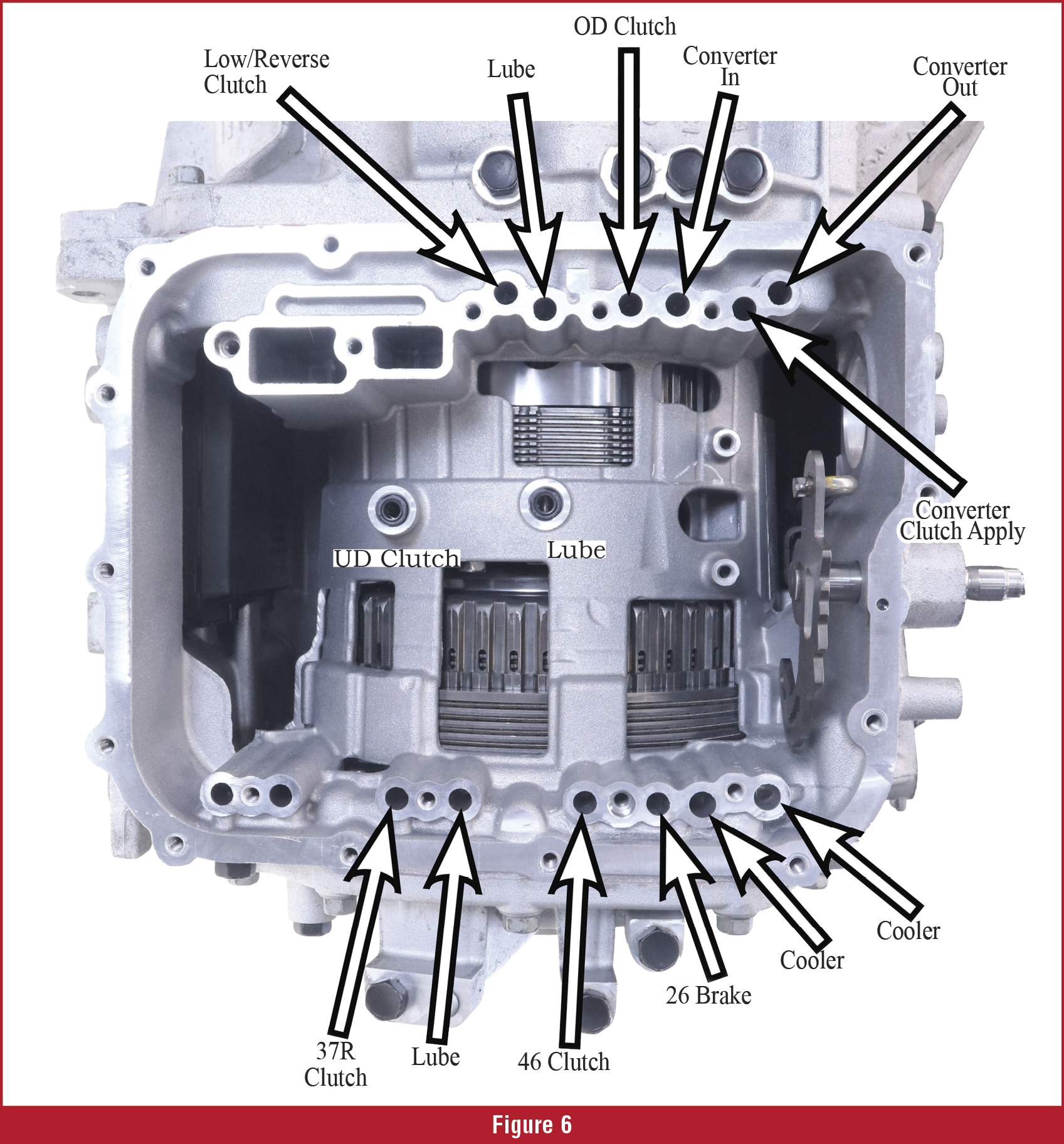
Once again, there is no factory information regarding the case passage identification. After assembling a transmission, it is always a good idea to air-check the clutches and brakes to make sure we have a good seal inside the unit. In figure 6, we have the passages labeled so the rebuilder doesn’t have to take the time to track down which passage goes where.
 Tracking down the passages wasn’t all that difficult; it just involves blowing air in the passages and disassembling the transmission to see where the air comes out. The first go round can be time-consuming, and once it’s done and recorded, it’s there for all to see.
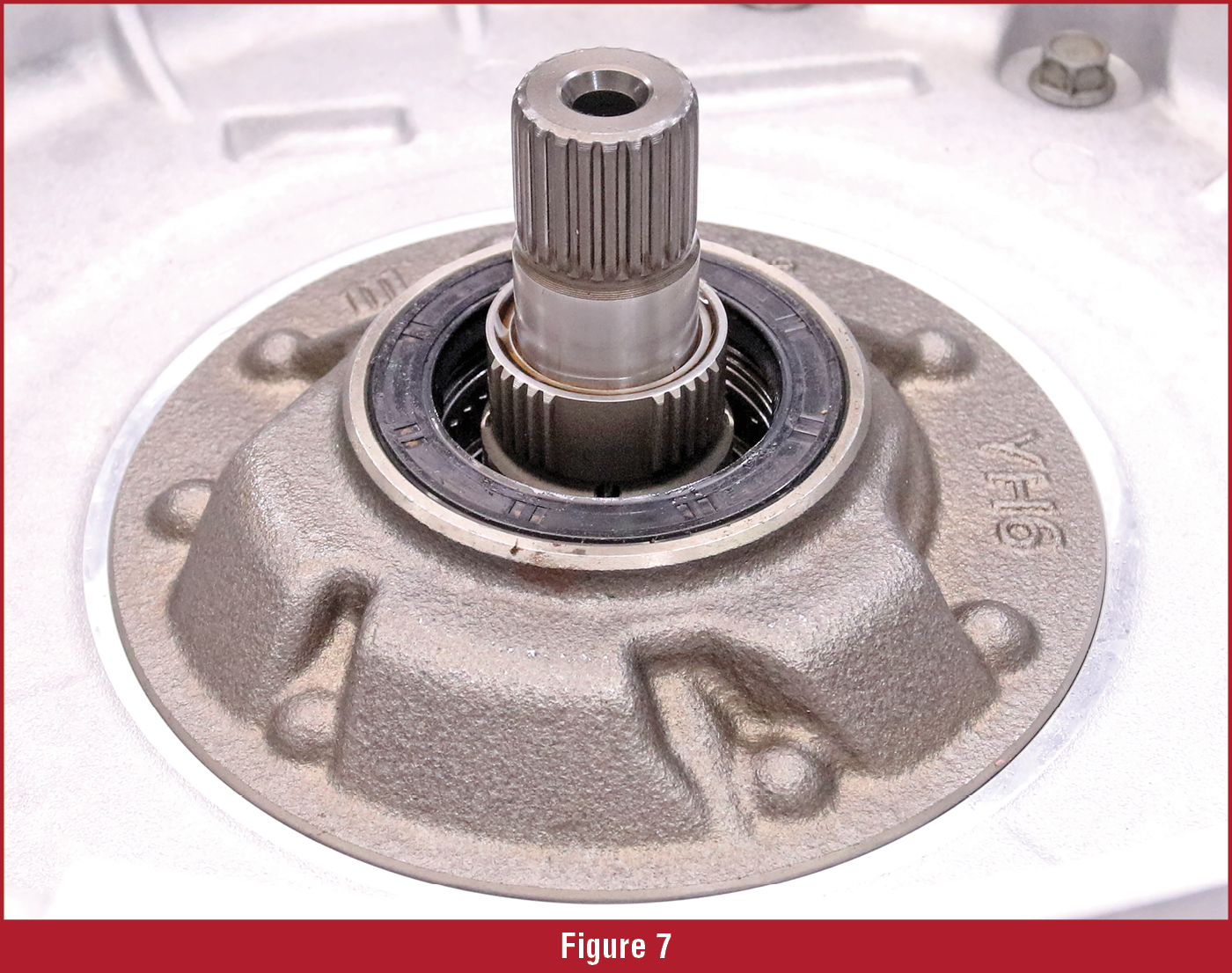
The interesting part was the converter clutch apply passage. Turns out this is a 3-path converter. We have a converter in, a converter out, and a Damper (TCC) apply circuit. One would think there would be an O-ring on the input shaft, and as we can see, there is none (Figure 7).
 TORQUE CONVERTER
Now that we see we have a 3-path converter, it’s time to figure out exactly what the clutch setup looks like inside the torque converter.
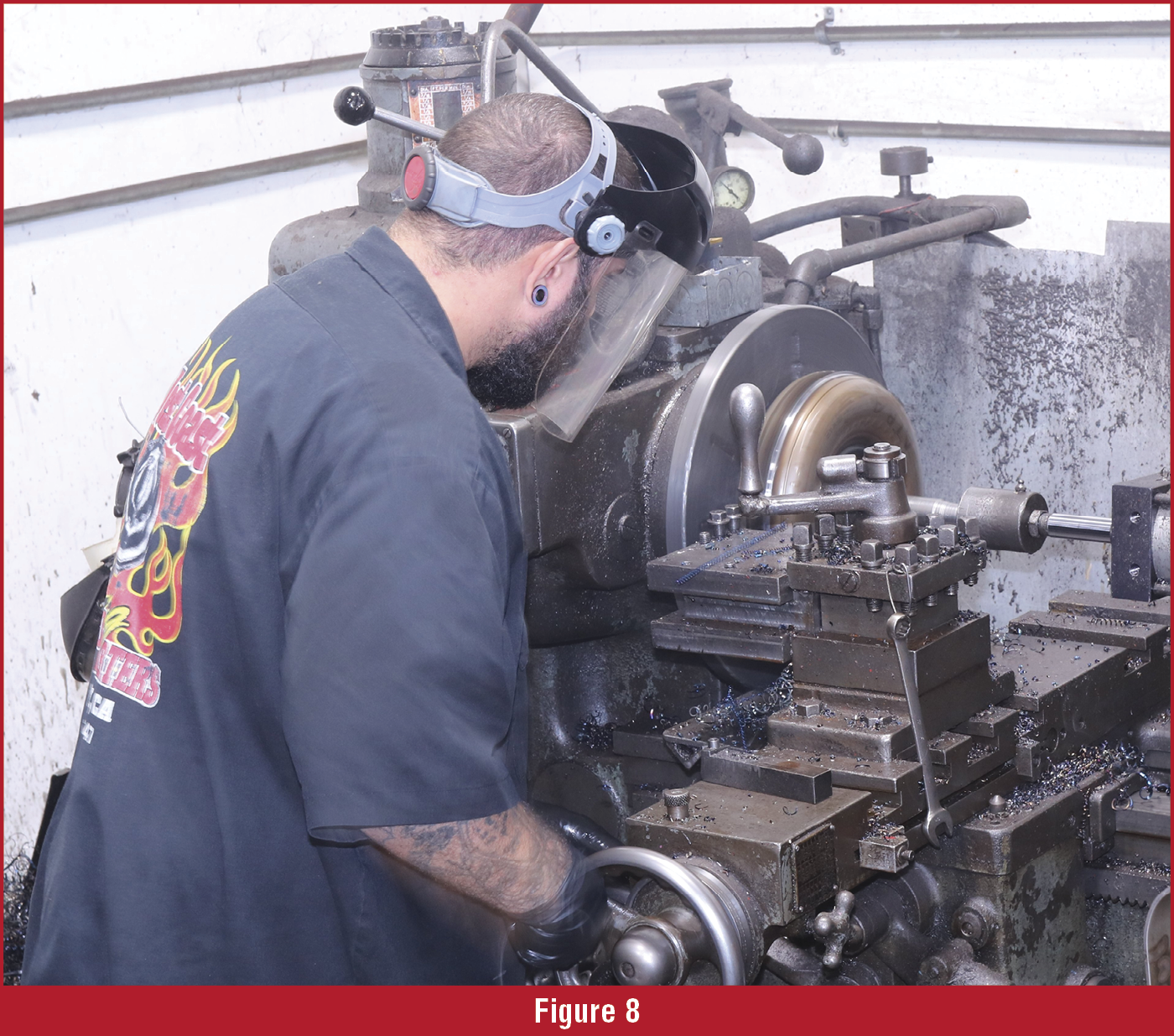
A quick call to West Coast Converters in Simi Valley, CA, and Bill, the owner, tells me to get right over, and his son Billy can cut the converter open while I wait and watch. West Coast Converters is a small father/son operation that mainly builds high-performance converters. Billy sets the converter on a lathe that looks about 100 years old and starts cutting away (Figure 8).
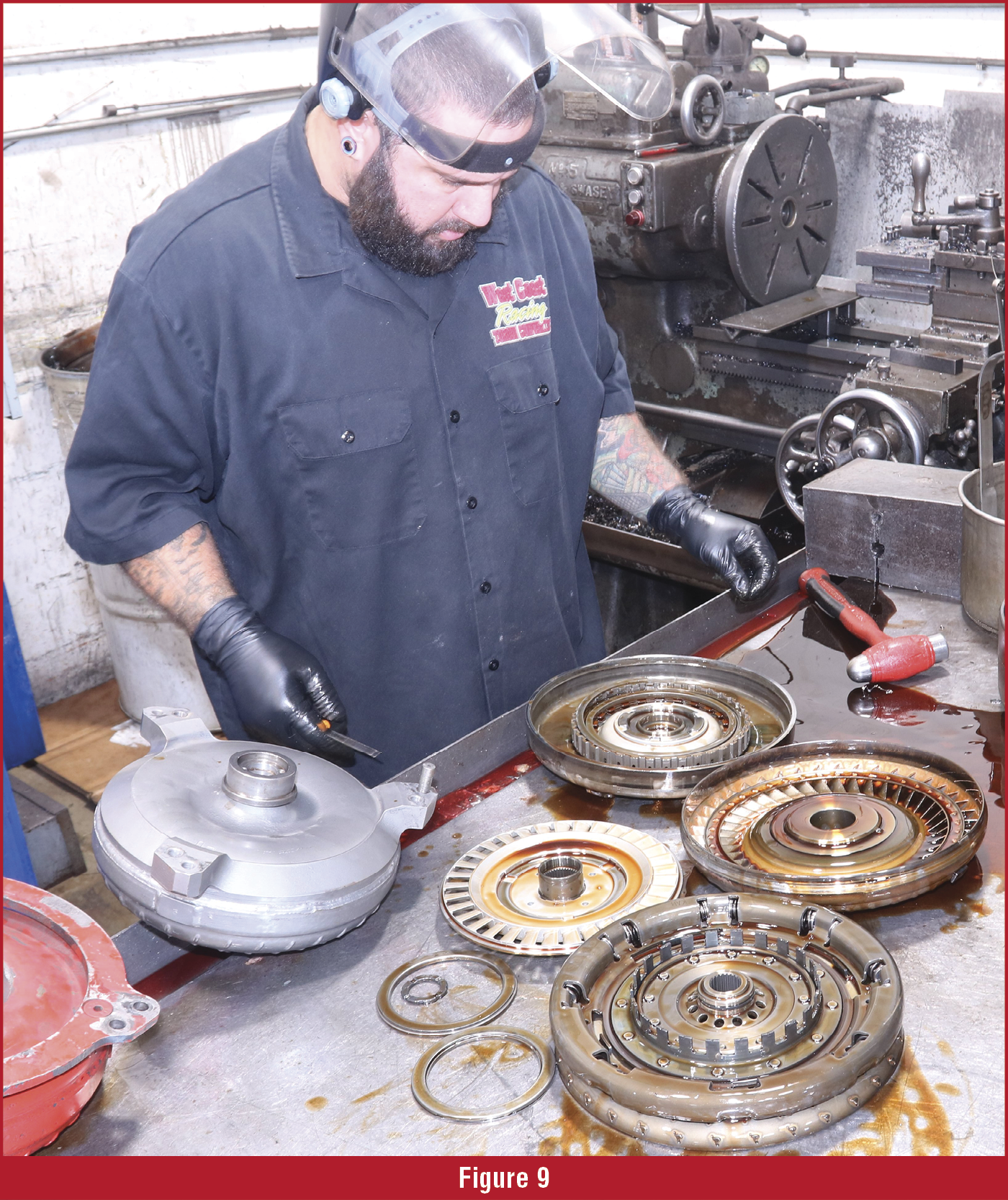
Once on the bench, we can see the clutch drum built into the housing (Figure 9). There is a sealing ring on the clutch hub, which is splined to the input shaft, and we can see the damper springs as well. This converter is designed to lock up very early for better mileage, and these damper springs take up a ton of engine vibration feel (Figure 10).
GET THE BOOK
Now this has been a preview of the A8LF1 rebuild book that will be on sale at the Upcoming Expo in San Antonio, TX. Aug 26-30 2026.
In the book, there are also tips on how to use your H-gauge for checking clutch clearances. Also, we cover checking front and rear end clearances with the H-gauge as well. Bringing the latest Tech to all can be challenging and fun!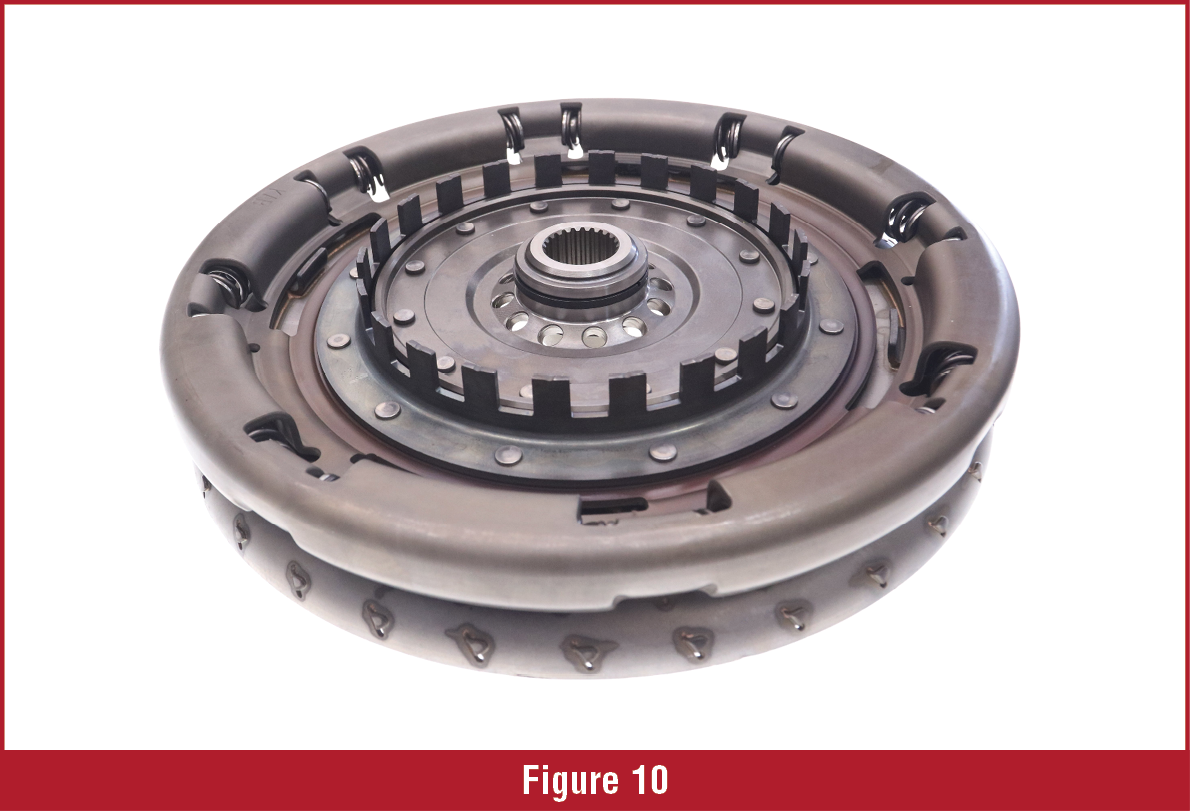
To teach, we must learn, and learning is fun! When we use that knowledge to achieve our goals (making money and fixing things at the same time), it is a very rewarding personal experience, and we all can have Fun With Transmissions!