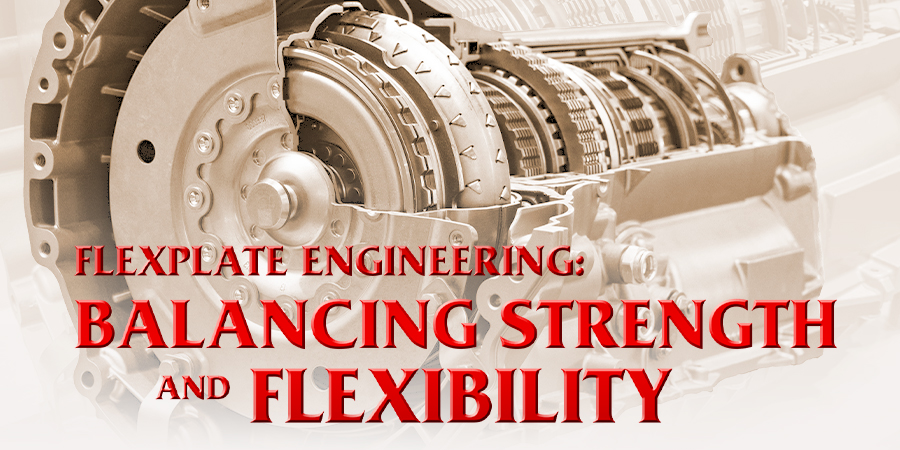
Most transmission shops purchase their torque converters from one of their local suppliers, while many transmission remanufactures rebuild torque converters in house for their applications. The age-old argument is still occurring regarding weather the issue the shop is experiencing is due to their new torque converter or the transmission they just finished rebuilding. Both the converter shops as well as the transmission shops would love to have a simple way to isolate who is responsible for the issue but in all reality there really is no easy way to isolate some of the issues leading to disagreements between the two parties.

Most transmission shops are not fully aware of what actually goes into remanufacturing a torque converter and the adjustments that the converter shop should make when assembling the converter. There is a lot that goes into the remanufacture of a converter including, various adjustments and measurements such as overall height, internal clearance, TCC release clearance, machining of components, selection the correct stator fin design and stator cap design as well as selecting and bonding of the clutch lining. Torque converter clutch applications are available in different designs:
- Captive clutches: “Captive clutch” simply means the TCC clutch plate is held captive by the pressure plate and lock up is “always on”. System oil pressure is needed to take the lock up off. This design has become very popular in the last few years and is used with the ZF 4-,5-,6-, and 8-speeds, Ford 6R60/6R80/6R140, GM 6L90, Allison, and the Dodge 68RFE, to name a few. This design is a challenge for many converter shops to rebuild especially if they are not properly trained or equipped.
- Clutch pack applications: This design actually utilizes a multiple disc clutch pack mounted internal to the torque converter for TCC operation. Mercedes, and now Nissan and Toyota use this design.
- Conventional clutch plate design: This design has been the most commonly used since the inception of TCC in the early 80s. It utilizes a pressure plate which is splined to the turbine wheel with a friction disc typically bonded onto the plate. The TCC system applies pressure to the converter housing forcing the friction material on the pressure plate to make contact with machined surface of the converter clutch cover.
Some other standard applications have the friction disc bonded to the front cover of the converter housing rather than the disc being attached to the pressure plate. The pressure plate is a machined apply surface forced against the bonded friction disc to provide TCC operation.
Like everything else, there are a lot of variables regarding converter designs such as “bowl shaped” pressure plates and friction materials” like those used in the 10L80/10R80. This new design has really complicated the remanufacturing process for those wishing to tackle the latest design units. In the future you will see a lot more of this design pressure plate in various applications.
In addition, pendulum dampeners are now in use which are effectively a set of centrifugal weights added to the TCC pressure plate. The tuned weights are designed to cancel out engine vibrations in some GM, ZF, and Mercedes models, as well as a few other applications.
No matter where I may be speaking, or which topics I may be speaking about there always seem to be questions regarding torque converters, their designs, the remanufacturing processes or issues the technicians in attendance may be construing as a torque converter related problem. When I am working with a reman, the companies often ask questions regarding the converter remanufacturing process they may be using and how it compares to others.
When a converter is remanufactured, the technicians should follow as process just like when you are rebuilding a transmission. Specific measurements such as end play and converter clutch release clearance need to be checked and adjustments need to be made if the measurements indicate they are not within specifications.
 Let’s look at one of the adjustments the converter remanufacture needs to pay attention to when rebuilding a convention design TCC application, converter clutch release clearance. Just like when you assembly a transmission clutch pack you want to make sure the clutch pack clearance or travel is correct as experience has taught you clutch clearances have a dramatic impact on clutch operation and clutch life. If the clearance is too loose, shift flares and bumps can occur where as if the clearance is too tight tie-up and clutch damage may occur.
The same is true when it comes to torque converter clutch release clearance, as issues will arise if it is not set correctly. Torque converter clutch release clearance is the amount of space between the converter clutch cover and the TCC pressure plate when the converter is in the released position (Figures 1 & 2).
With the TCC in the released position the fluid typically flows out of the end of the turbine shaft forcing the TCC pressure plate into the released position. That fluid then flows around the outside diameter of the pressure plate and finally into the transmission cooler circuit. As the fluid travels over the TCC clutch lining it carries away the heat from the friction lining cooling the clutch lining material and clutch cover.
 So, you may be asking yourself what happens if the converter clutch release clearance is too low? If the flow is too low due to the clearance being set too tight, the lining temperature will rise possibly leading to glazing and hot spotting of the cover and lining as well as possible lining wear issues with some lining designs. Now this issue does not happen from the first apply but rather it gets worse with time just like if the clutch clearance on a clutch pack that is set too tight. In addition, if the clearance is too tight you may see a drop in the cooler flow which is ultimately returning to the transmission lube circuit so lubrication related issues may occur.
What happens then if the clearance is too loose? Just like a clutch pack, a bump may happen as the TCC is applying as the pressure plate basically has a “running start” before it makes contact with the clutch cover. With EC3 design converters remember the system is designed to slightly slip during operation so you can experience some additional issues as the system tries to regulate the slip.
So, you are probably saying to yourself, the issues we are talking about could also be due to things outside of the torque converter such as, the wrong fluid, worn TCC valving, TCC bushing wear issues, restricted oil coolers, damaged or missing turbine shaft seals, which is why the issues with TCC is such a pain to isolate.
A couple of tips you can use to help isolate converter issues:
- If you have access to a Sonnax “SonnaFlow” tool, it will make your life much easier. The “SonnaFlow” monitors the Cooler flow so it can be used to find everything from converter clutch release clearance issues to worn valves and bushings.
- If you do not have access to a “SonnaFlow” your scan tool can be of great value in locating clutch release clearance issues that may be too tight. With the transmission hot, foot on the brake, place the transmission in gear to stop the turbine then place the shifter into neutral. With the engine idling, monitor the turbine shaft speed in graphing mode. Many times, the speed will appear as almost a sawtooth type pattern if the clearance is too tight indicating the pressure plate skipping along the clutch cover surface. If the clearance is really tight the speed may be even but very high, almost if not equal to engine RPM.
As you can see, problems with converter clutch operation is not always “cut and dry” but it can be overcome if you put your head together with your converter supplier to develop a diagnostic strategy. Your converter supplier is likely a member of “TCRA” (Torque Converter Rebuilder Association). TCRA has a wealth of information available to its members so take a minute look at the information they have available as you may find your solution to your problem by simply a little research. Until next time remember “If this stuff was easy, everyone would be doing it”.