In the fast-paced landscape of modern industry, we often find ourselves obsessed with “The Big Idea.” We lionize the lightning-bolt moments of inspiration—the disruptive technologies and the “overnight” success stories that dominate the headlines.
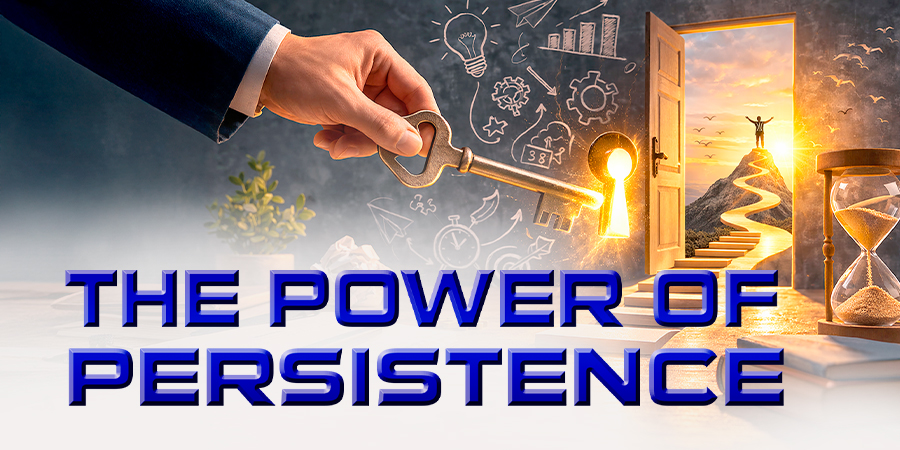
But from where I sit, ideas are the seeds, but persistence is the soil, the water, and the sun. Success is rarely a vertical climb. It is more often a series of grueling plateaus punctuated by unforeseen setbacks. What separates the organizations that scale from those that eventually fade away isn’t just a deeper war chest or a higher concentration of genius; it is the collective capacity to endure.
Redefining Grit in a World of Instant Gratification
We live in an era of “on-demand” everything. We want instant data, instant feedback, and instant growth. This cultural shift creates a dangerous trap for professionals: the temptation to abandon a strategy the moment it hits friction. However, we must distinguish between being stubborn and being persistent.
Stubbornness is the refusal to change a failing tactic out of ego. Persistence is a relentless commitment to the ultimate vision, paired with a radical flexibility in how we get there. It is the “long game” mindset. It understands that the “moat” protecting our business—the thing that makes us hard to replicate—is built precisely from the problems that were too difficult for others to solve. If our mission were easy, the market would already be saturated. The difficulty is not a bug; it is a feature of our value proposition.
The Anatomy of the “Messy Middle”
Every project follows a predictable emotional arc. There is the “Inception Phase,” characterized by high energy, novelty, and optimism. Then there is the “Completion Phase,” where the finish line is in sight, and the adrenaline of achievement carries us home.
The danger lies in the “Messy Middle.” This is the period where the initial excitement has evaporated, the data is complex, and the objective remains miles away. This is where most people—and most companies—quit. They mistake the exhaustion of the middle for a sign that the idea is flawed.
You need to embrace the middle. This is where the real work happens. This is where we refine our processes, stress-test our assumptions, and build the organizational muscle required for long-term dominance. As the saying goes, “Energy is contagious, but endurance is inspiring.” When you push through the middle, you aren’t just completing a task; you are setting a standard for everyone around you.
The Compound Effect of Consistency
We often overestimate what we can do in a single day and underestimate what we can achieve in a year of consistent, incremental effort. Think of persistence like compound interest in a bank account. In the first few months, the gains look negligible. You might even feel like you’re wasting your time. But because growth is exponential, there comes a “tipping point” at which the results suddenly dwarf the effort.
Most “overnight successes” are actually the result of ten years of quiet, persistent work that nobody noticed. The goal is to stay in the game long enough to hit that tipping point. You do that by showing up, solving the small problems, and refusing to let a bad week dictate your long-term trajectory.
Three Things You Must Do
- Normalize the Friction: Do not be discouraged when a project gets difficult. Acknowledge the friction as a sign that you are operating at the edge of your capabilities. That is exactly where growth happens.
- Pivot the Method, Not the Mission: If a specific process, procedure, or workflow isn’t yielding results, dare to scrap it and try a new way. But never lose sight of the “Why” behind your work.
- Celebrate the “Quiet Wins”: You shouldn’t only cheer for the major deals. You should cheer for the team debugging a problem that no one else could fix. The recognition of progress fuels persistence, no matter how microscopic it may seem.
The future of your company is not written in your business plan; it’s written in your daily refusal to give up. Late nights, the second or third attempts at “impossible” problems, and the unwavering belief in what you are building matter.
The road is long, but the view from the top is only available to those who keep walking.