


Welcome to this edition of “Clash of the Classics”. This month we’ll compare and contrast two titans in the Classic Truck world, the 1956 Ford F100 pickup and the 1956 Chevrolet Task Master 3100 series Stepside pickup. Both of these truck designs are iconic as well as legendary and certainly worthy of inclusion here at Clash of the Classics. Let’s begin with the ’56 Ford F100.
When it comes to classic trucks if you ask fifty people what their favorite model is, chances are good you’ll get fifty different responses. The 1956 Chevy Stepside that we’ll look at in a moment is hugely popular, the 1950 Dodge D-100 is one of the coolest in terms of classic style and who would argue with a 1955 GMC 100 Stepside?
For many people, however, the 1956 Ford F100 pickup is the clear favorite. Few trucks have inspired the classic truck world quite the way the second-generation Ford pickup truck has which may explain the almost cult-like following it’s developed.


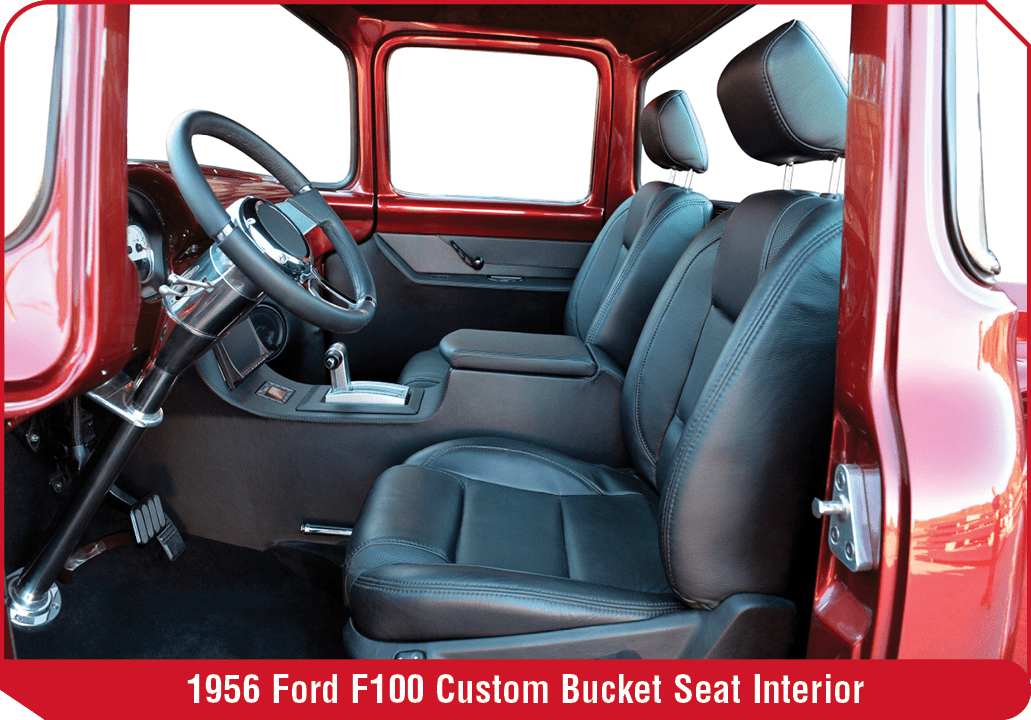
The 1956 Ford F100 Pickup had a cleaner, more modern style than the earlier generation pickups. It was tough, solid, and had outstanding looks. Another big part of the F-100’s appeal was a well-designed cab that was comfortable to drive with easy-to-reach controls. The dash and instrumentation were tastefully appointed with functionality for the time period. Some of the design upgrades available in 1956 included electric windshield wipers, tubeless, tires, and seatbelts. 1956 was also the year Ford converted many of their models to 12 V electrical systems.

Historically, the 6 cylinder engines and flathead V-8’s that were carried over from earlier years lacked sufficient power and low-end torque. In light of that, Ford engineers in 1953 developed the new Y-Block series engine that solved many of the earlier power problems. By 1956, the new 272 cubic inch overhead-valve V-8 in the F100 had been further refined and was now kicking out about 173 horsepower and 264 lb ft of torque. It was a welcome improvement over the original 239 cubic inch V8, to say nothing of the anemic 110 horsepower flathead engine. Overall, the Y-Block engine platform had a great run spanning approximately a decade before being retired in favor of the new FE series engines.

 On March 13, 1953, the Ford-o-Matic transmission became an option, and of all the automatic transmission designs of the time period, the cast iron Ford-o-matic was arguably one of the best. The geartrain was so reliable that Ford used the design for decades. Many revisions occurred over the years but the basic geartrain design endured for nearly a half century.
Any of us that have had opportunity to gain experience with those older Ford cast iron units will immediately identify the similarities between the earliest cruise-o-matics and the newest 4R75E units. All of which proves, the Ford engineers got it right.
The original stock suspension in the F-100 was a bit unreliable and many owners back in the mid 1950’s complained that it was difficult to keep the truck in the lane at higher speeds. The steering gearbox was traditionally sloppy and the large diameter steering wheel only exacerbated the problem.
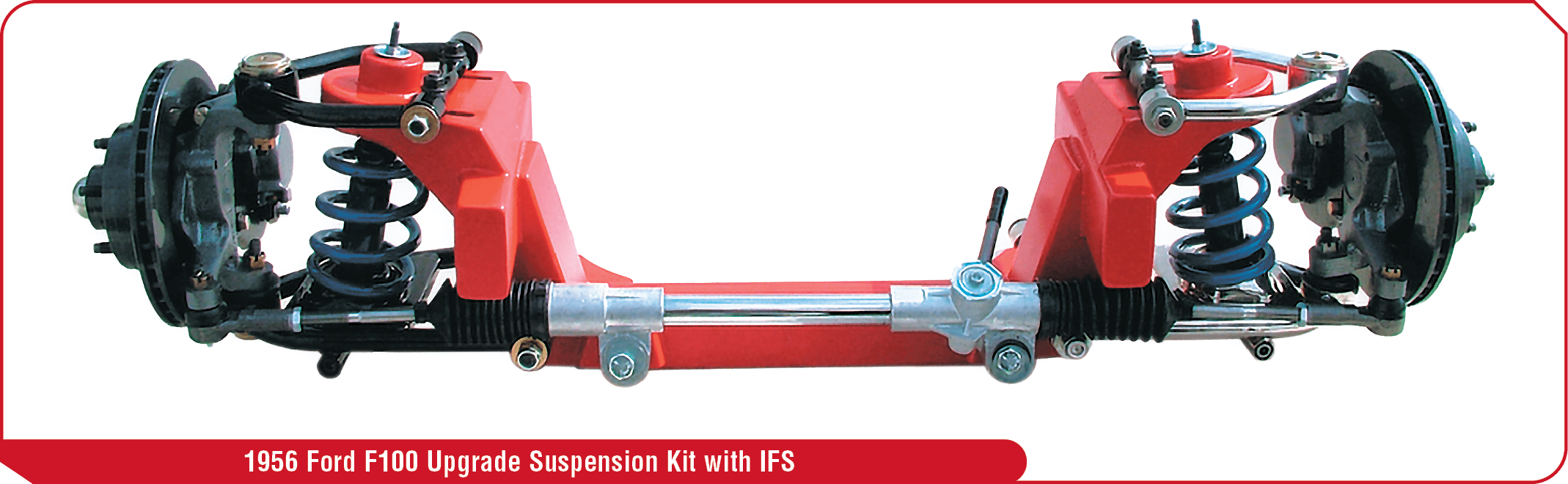
The good news is, today, there are a number of quality suspension upgrades for the 1st and 2nd generation F Series pickups that are reasonably simple to implement and are reasonable in terms of cost. Many shops today are using a Mustang II front suspension kit with IFS to upgrade the front end. It’s one of the best modifications you can do to improve the handling and feel.
Fortunately for all us F100 enthusiasts, Ford built quite a few of them. The Ford trucks that followed in subsequent years were lower profile and more car-like which may be the reason many still prefer the truck-like 1953-1956 generation. If you’re serious about becoming an owner, you can usually find someone willing to part with one for a reasonable price. Total production numbers for the 1956 F100 were approximately 162,703 trucks with an MSRP of $1,611.
The 1956 short bed F100 will always have a special place in my memory as my dad took me to school each morning in his original 1956 small window truck that he bought new.
I’ll never forget the feel of the interior, the instrumentation layout on the dash, or the many father-son talks we had while cruising Southern California in the late 1960’s.
Now, let’s look briefly at the 1956 Chevy Task Master series pickup.
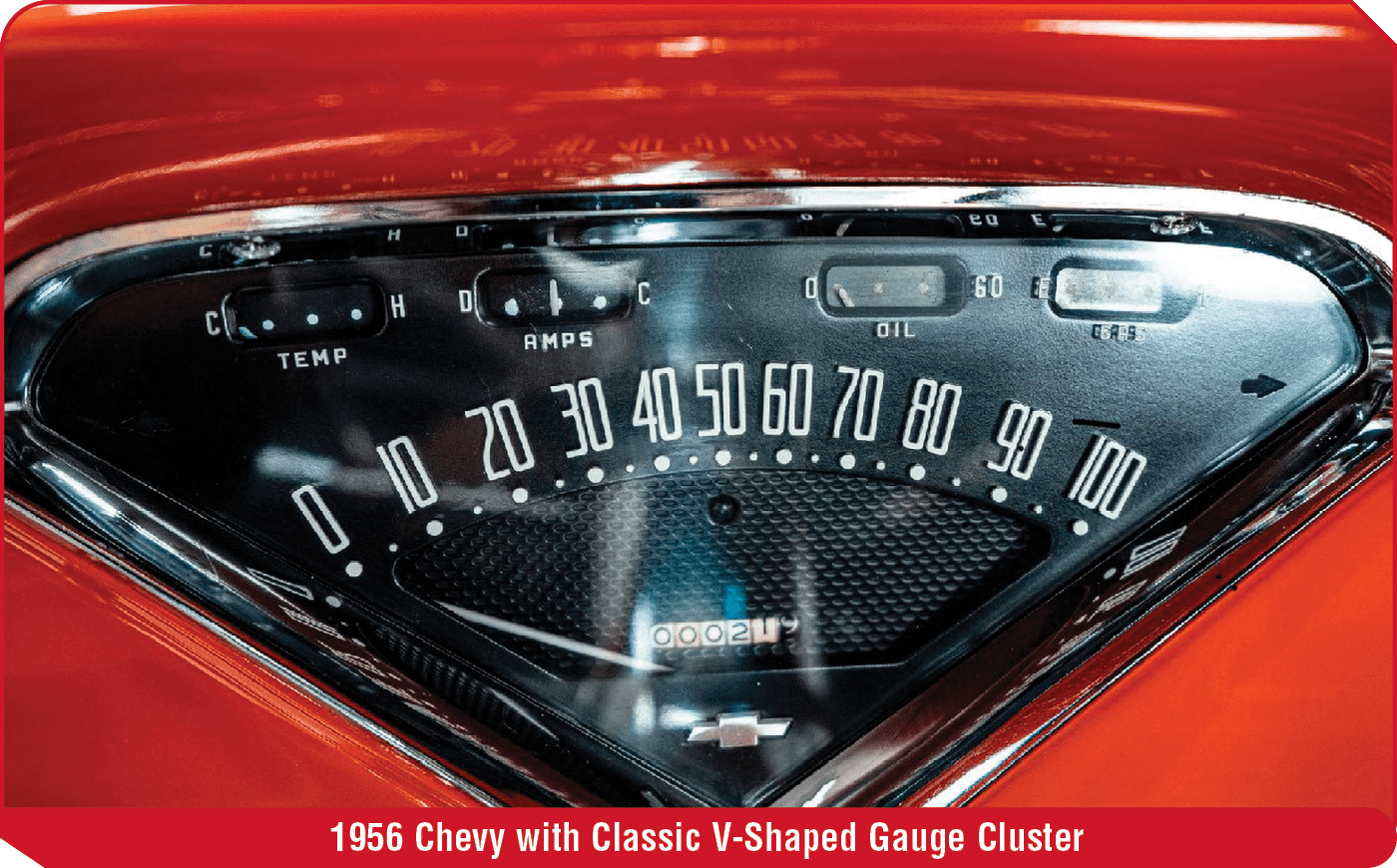
The mid 1950’s were a memorable time for Chevrolet thanks to a scintillating lineup of models which included the 1956 Bel Air, the 1956 Corvette, and the ever popular Chevy pickup lineup. Beginning in 1955, Chevrolet replaced their Advanced Design series trucks with the all new Task Force pickups. The newly designed Chevy Task Force had an aggressive look, an all new wraparound windshield, a larger interior, power steering, power brakes, and a 12-volt electrical system. The Deluxe Cab with the rounded rear glass made lane changes far easier and safer than with the earlier 1947- 1955 Advanced Design years. The chrome-plated bumpers, wheel covers, egg crate grille, and headlight rings that shared some similarities to the 1955 Chevy Bel Air helped give the 1956 Chevy truck its distinctive look. As with the Ford F100, the interior of the 1956 Chevy 3100 is functional and well laid out. While some may find it spartan and bare, in its day, both the Chevy and the Ford truck interior were state-of-the-art in pickup interior design. The 3100 stepside features the V-shaped gauge cluster that was typical of the time period for Chevrolets. The bench seat was surprisingly comfortable and easily accommodated 3 people.
For 1956 there were several engine options but the most popular choices were the 235 cubic inch Thriftmaster In-line 6 and the new 265 cubic inch Task Master V8. The 265 was the first small block V8 produced by GM and while it was revolutionary at the time, it was ultimately discontinued in 1957. Chevy ditched it due to a design flaw that seems unthinkable in terms of engineering. The problem was there was nothing built into the engine block to assist with the filtration of oil. An oil filter was added later during production up near the thermostat but it wasn’t adequate enough and engine durability suffered. Another problem that developed was premature camshaft failure due to insufficient oil pressure and volume. GM engineers were able to develop a fix for the problem but not before upper management decided to discontinue it in favor of the 283 cubic inch V8.
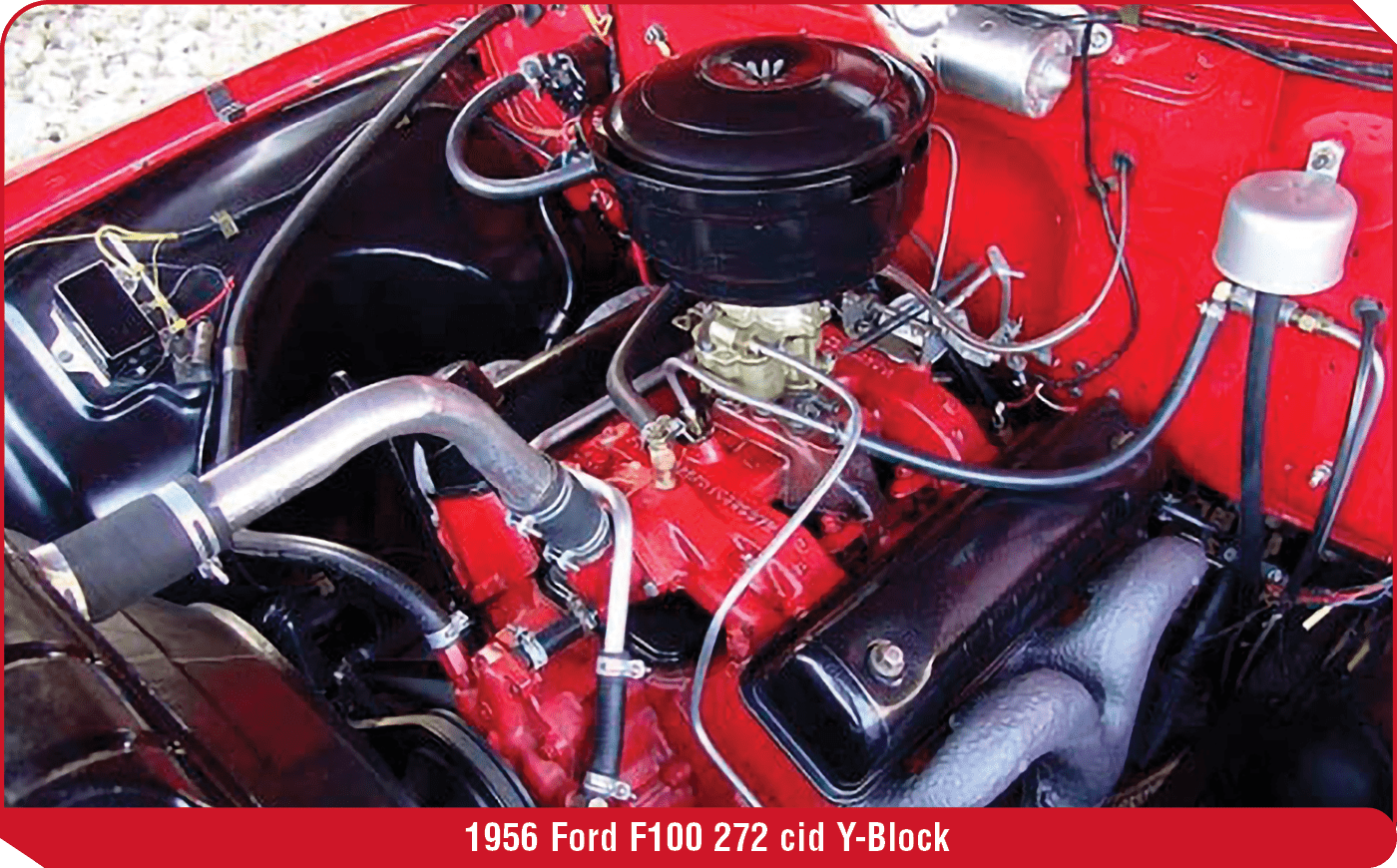 The raised hood allowed ample space that was needed for the different powertrain options, all of which came with taller carburetors and larger air cleaners. It also helped define the upper body line that ran rearward from the headlights and through the doors.
The transmission options were either 3 or 4 speed manual or the hydramatic 4 speed automatic. The majority of the Task Force series trucks produced from 1955-1959 were built with either the 3 speed manual Muncie 318 or the 4 speed manual SM420. There were, however, many models with the old cast-iron hydramatic 4 speed automatic transmission. And speaking of the old cast iron hydramatic, I’m reasonably confident many of us have had at least one opportunity to get into this transmission. As far as classics are concerned, it is one of my favorite units.
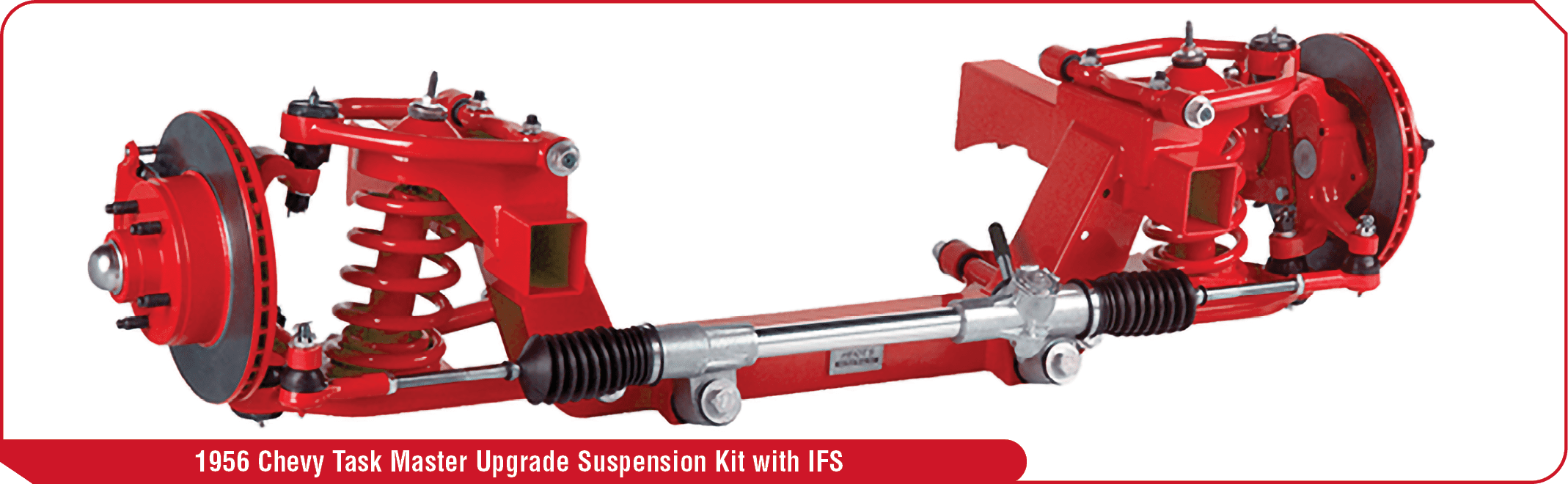
Another similar problem the Chevy shared with the ‘56 F100 was the original suspension was equally unreliable. Steering was sloppy and felt unsafe at higher speeds. The good news here is, just as with the F100, there are several IFS kits available to upgrade the suspension and steering systems.
 Back in 1956, a new Chevy 3100 retailed for about $1,619 and while exact production numbers are not known, it is estimated that Chevrolet produced approximately 342,612 light duty trucks in 1956. The entire body design for the 1956 Chevy Stepside is outstanding. The upper and lower lines that create the distinctive shape begin sharp and transition to smooth and flowing. Whether you’re a fan of the Chevy or the Ford, I think most would agree, both trucks are certainly icons in the classics world.
For us here at “Doc’s Clash of the Classics”, the winner and champion of today’s battle is the 1956 Ford F100 pickup. The style, body lines, and overall cool factor make it simply irresistible. The Chevy is cool also but just falls short in our opinion. We’d love to hear from you, let us know which truck you prefer and why.
Until next time when we take a ride on a classic highway, stay safe… stay timeless… stay classic!
About The Author
Donny Caccamise is an Automotive Technology Graduate and a Certified Master Technician with more than 40 years of automotive industry experience. Before retiring, he hosted the Nationally Syndicated Automotive Talk Radio Show “Horsepower for an Hour” airing on 161 AM and FM radio stations across the nation. He is a retired member of the ATRA Board of Directors, and retired transmission shop owner. Vintage and classic cars are his specialty. Contact Donny at donnycaccamise@gmail.com






I learned to drive in my dad’s 57 Chevy truck I remember when he traded in the 49 Chevy coupe my dad and my three brothers rode in.but later that truck went to my oldest brother it had a six.after a few years my second oldest brother got a red 57 truck granny low v8 he was a contractor so it had big tires mud and snows ,tool boxes and lumber rack.my first car was a 70 cudas and have always had mopars.one of my friends step father had a 57 bel air and I had always joked with him saying I wanted it.but it was a Chevy and my brother’s both had cameras by then.one afternoon I took my brother to see the yellow bel air to the guy I knew.he had bought that car and the first drive he went to the Giants game and on the way it broke the drive shaft.that guy and my brother hit it off and he towed the belair home started to work on it.,and gave me his 57 truck well after 10 motors I’m on number 11 and still have it.my daughter doesn’t want any of my cudas but she says don’t sell your truck