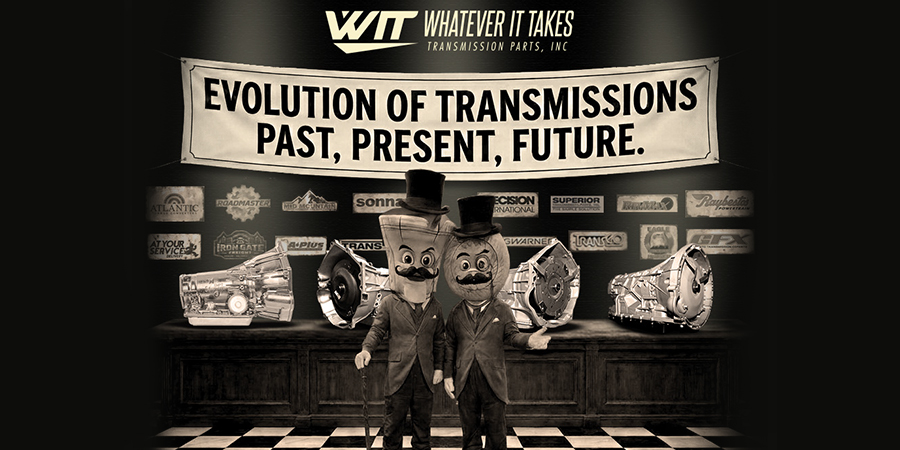
Every year, as we approach the year’s end, I like to look back, not only at the last twelve months but even further back, remembering the events and milestones that contributed to where we have been, where we are, and where we are going.
In the transmission fluid business, this year we are celebrating an anniversary that raised the bar for ATF and set the stage for the next 20 years. In the late 1990s and early 2000s, GM was under intense pressure to deliver new transmission designs to meet fuel efficiency needs, durability concerns, and unrelenting competition from technology companies like ZF, innovative automotive drivetrain component suppliers looking to build market share at the expense of what was then the largest automobile OEM in the world.
At that time, GM DEXRON fluids were already the “go-to” for ATF, with only a few OEMs pursuing their own ATF technology driven by their engineering needs. The new efficiency and hardware demands were forcing automakers to develop new specifications with superior additive technology and high-quality “long life” base oils to meet the extended warranty requirements that were driving forces for consumers.

The GM Powertrain design team was assigned the task of designing fuel-efficient automatic transmissions with six speeds instead of four speeds, and the release timeline designated 2006 as the year this was to happen. Using electronic controls managed by a PCM (Powertrain Control Module) with clutch-to-clutch power transfer and a service life double that of earlier transmission designs. Understanding the deficiencies of the current DEXRON III formulations, the Powertrain engineers decided a new fluid specification would be required, and the decision was made to develop the new specification using formulation expertise from the additive suppliers and input on new test development from the test laboratories.
One of the initial challenges was to decide exactly what was required to develop what was now to be called “fill for life” ATF. Getting the right base oil viscometrics was a driving factor, with the new, higher-quality Group III hydro isomerized base oils with a naturally high viscosity index being the perfect candidates for the job.
The first tests implemented by GM covered physical and chemical properties, including elemental composition, appearance, kinematic viscosity, viscosity index, and corrosion prevention. As anticipated, only the new Group III base oils could successfully pass the new criteria. Also, upping the game by modifying and extending earlier DEXRON III testing procedures came next for shear stability testing, wear testing, foaming and fluid aeration testing, band and plate friction tests with extended run times, and some innovative newer testing to better measure lubricant film thickness. GM’s four-speed cycling test (since then superseded by six-speed transmission test stands) and oxidation test were extended and initially used to develop the new fluid specification, as it was the closest thing to a full vehicle test to monitor transmission and transmission fluid performance in a controlled laboratory setting.

In the end, it was the testing and formulating expertise of Afton that won the race to develop DEXRON VI in 2003, with OEM validation that followed the new proprietary validation process for validating a new factory fill released by GM in early 2005. The new DEXRON VI specification and oil were revealed to the public in September of 2005, starting an era of higher quality proprietary OEM fluids that we are still benefiting from today. Twenty years is a long time for any lubricant to stay viable, and GM deserves a very happy birthday and thank you for making it happen!
When we look at the fluid landscape today and the proliferation of high-quality reduced viscosity ATFs, with dozens of proprietary ATFs now required by multiple OEMS, we must give GM credit for resetting the expectations for levels of quality, efficiency, and durability we in the business have learned to expect from ATF in general. From a current standpoint, DEXRON VI has become a legacy standard we use to measure other fluids. They created a higher standard of performance that has continued to evolve. It became the blueprint for fluids that followed, such as DEXRON HP and the new DEXRON/MERCON ULV (ultra-low viscosity) ATFs, which now power the eight-, nine-, and ten-speed transmissions. In the end, DEXRON VI became a standard for the high-quality ATFs we use and depend on today.
 With the growth of Hybrid and BEV technologies, the automatic transmissions’ technical evolution continues; and with the next generation of fluids now here, I get questions every day about “what’s next”. Innovations in base oils have allowed OEMs and additive companies to provide lower viscosity fluids that have resulted in improvements in fuel economy and improved durability. With this move to new viscosity grades, back serviceability for older transmission technology is not always possible. Some specifications are exclusive in their applications due to unique additive chemistry or engineering requirements. Because every OEM or transmission manufacturer relies on their own performance requirements, end users must rely on the technical judgments and recommendations of the suppliers to decide what fluids to use. The end game is to ensure there are licensed and approved fluids available to consumers that meet or exceed the requirements for the expensive, complicated automatic transmissions used in new vehicles, whether they are gasoline-, diesel-, or electrically powered.
 Adding to the complexity of the problem is the unexpected move to keep vehicles in service far beyond what consumers did in the past. The last few years have been an incredible mix of consequences from the pandemic, tariffs, and regional conflicts worldwide, with millions of displaced people, further adding to the uncertainty of resource streams and critical component supplies, changing the direction of the automotive aftermarket and new vehicle manufacturing. When questions of “where is it all going” are asked, the answer can be hard to determine when you factor in the different corporate approaches taken to meet the OEs’ specific, fluid needs and goals. Some choose to embrace the broader sustainability of the supply issue by not going down the “specific fluids for specific applications” path and instead use the transmission fluids currently in their control, with excellent availability and proven performance in the field.
In today’s “uncertain” supply chain environment, most OEMs and transmission suppliers like Nissan, GM, VW, Daimler, ZF, and Magna are choosing to use well-established transmission fluids suitable for, but not optimized to, EV applications because of known and proven performance in use with no technical justification for the added expense of new fluid development. Ford and Toyota, for example, have not chosen to use a CVT-specific fluid for some of their hybrid applications and have instead gone with the LV or WS fluid solutions they developed for the six and eight-speed step automatics they still have in service. Many of the OEs that produce BEVs (battery electric vehicles) now use transmissions that require ULV-type fluids with expensive synthetic base oils and additive packages formulated to be friendly to heavy electrical content, with lots of copper-based materials that need protection from corrosion. With these new high-tech fluids, there is also a desire for long-term service, superior wear protection, along with used fluid disposal issues oriented to more “eco-friendly” options for the waste stream.
Both approaches to the fluid used in the production vehicle have their pros and cons. Still, the more exotic, difficult to get, or expensive a service fluid is, the less likely the guy doing the service is going to be able to afford either or find it in a timely manner. Just a few years ago, this was not the issue it is today, and it may become worse in the future if things keep going the way they have been. What it forces us to do, as the source of the technical answers to the “what fluid do I use for service” question, is to make sure that as transmission service writers, mechanics, and consumers, we have a good working knowledge of what transmission fluid is required and the ability to find it when supply chains change or fail. It falls to us to keep the fleet running.
For those of us in the transmission repair and supply chain aftermarket, it is an exciting but at the same time challenging time to be involved in a rapidly changing but vigorous marketplace. With our business rooted in maintaining the aging consumer fleets, and the slow but inevitable |introduction of new technologies and transportation solutions that force us to expand our technical database. Understanding the fluids that power and protect the drivetrains is as important as understanding how they work and how to make sure your service fluid selections continue to give the performance consumers and businesses now demand.
The last twenty years have been amazing, with mechanical and computer-controlled transmission innovations made possible to a great extent by the efforts of OEMs and additive companies, determined to provide the best lubrication solutions possible to drive demand for efficient, durable automatic transmissions, whatever the power technology is. Let’s hope the next twenty years provide as much value and technical advancement as the last twenty years have.