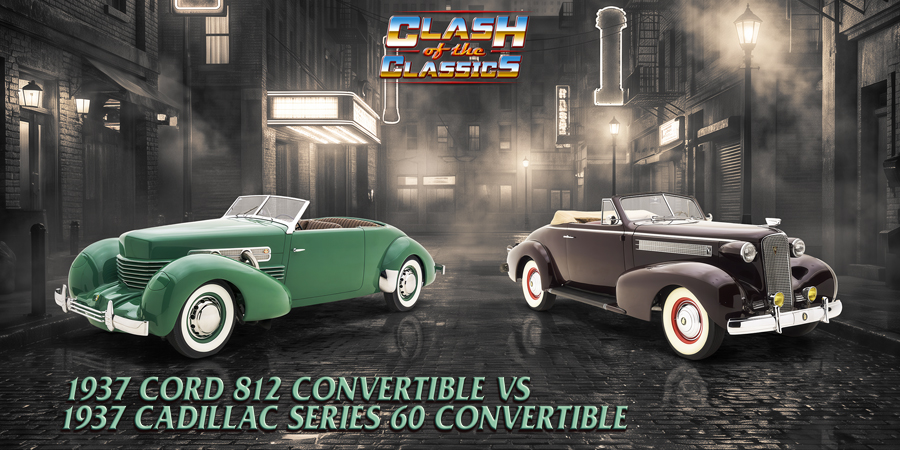
Welcome, once again to Clash of the Classics. This month we’ll head back to 1937 to pit two striking pre-war convertibles against each other: the innovative 1937 Cord 812 Convertible Phaeton and the elegant 1937 Cadillac Series 60 Convertible.
I often find myself returning to the 1930’s for these clash battles, it’s my favorite decade for design – the long hoods, sweeping fenders, and Art Deco details. But also for what was happening beyond the automobile: A decade of remarkable social change and invention, from streamlined industrial design to innovations that reshaped American life.
I wasn’t born during this time, yet it enchants me just the same, a sepia-toned world of whitewalls and big bands, of breadlines and breakthroughs, where hardship and hope rode side-by-side down a brand new highway. Yes, the 1930’s marked a fascinating time here in America, let’s now take a look at two classics that are sure to stir the soul and show just how stylish innovation could be.
 Let’s begin with a look at the 1937 Cord 812 Convertible Phaeton.
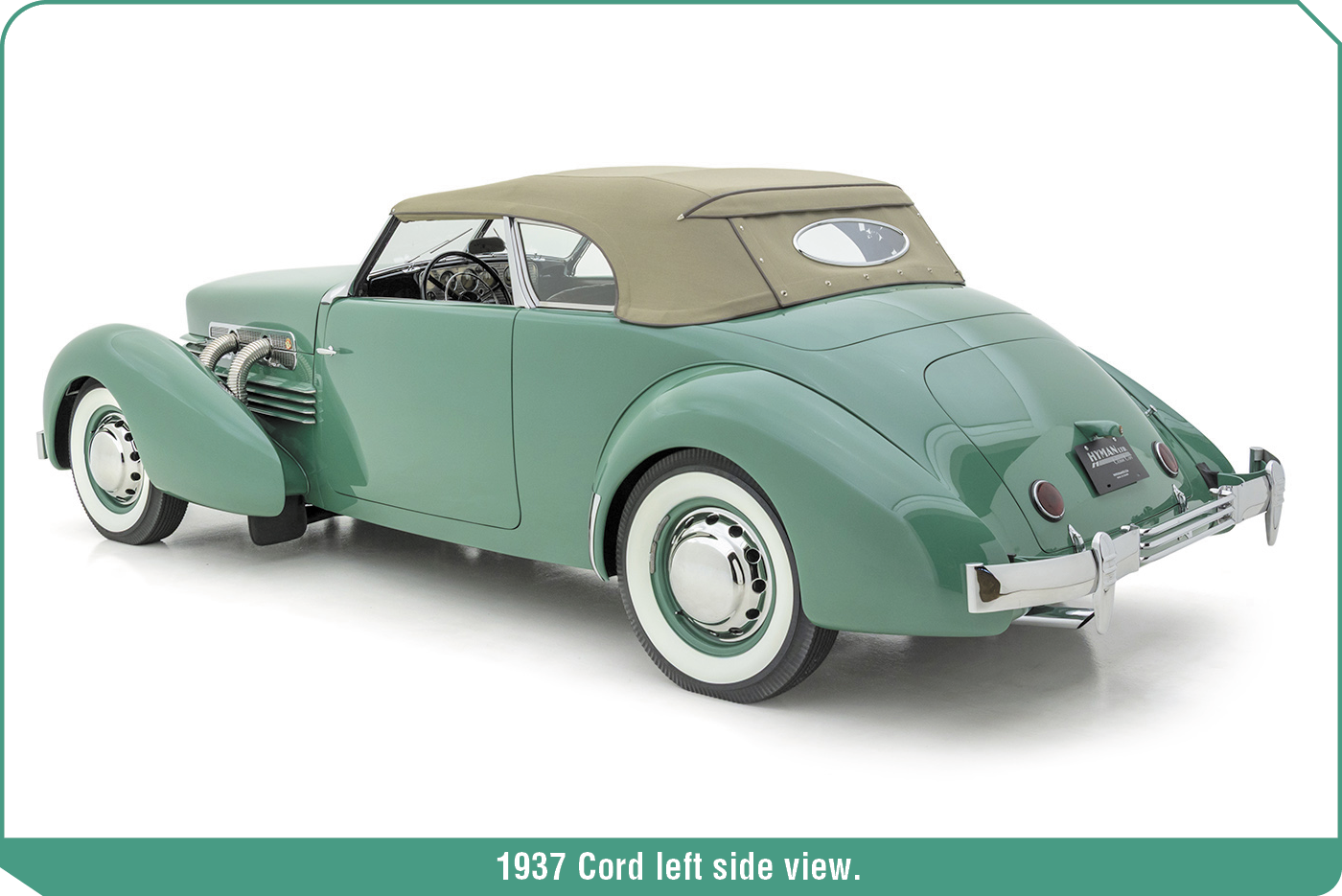
The Cord 812 represented one of the boldest experiments in American automotive history. Designed by Gordon Buehrig, it featured revolutionary styling with a “coffin nose,” hidden pop-up headlights, no running boards, and a sleek, aerodynamic profile that influenced designers for years to come.
Buehrig was only in his late twenties when he sketched the concept that would become the 810/812, having already cut his teeth designing the Auburn Boattail Speedster and the Duesenberg Model J. The car began life as a proposed “baby Duesenberg” in the early 1930s, and its wraparound louvered hood — non-functional at first, purely sculptural — became one of the most imitated design cues of the late 1930s.
The 810/812 was later recognized by the Museum of Modern Art as one of the defining works of American industrial design, a rare honor for an automobile.
The Convertible Phaeton body style offered open-air motoring with four-passenger capacity and dramatic lines. Total 810/812 production across both years was around 2,972 cars, with convertibles (including Phaetons and cabriolets) being especially rare — only about 205 convertible cabriolets were built, making the Phaeton a prized collector’s item today.
Body construction used a semimonocoque (unitized) structure rather than a separate body-on-frame design, which was still unusual for an American car in the mid-1930s and contributed to the low, ground-hugging stance — the roofline sat barely five feet off the pavement, since there was no driveshaft tunnel to raise the floor. The Phaeton’s top was especially notable for disappearing completely from view when lowered, tucking beneath a hinged metal deck lid rather than sitting exposed as a folded stack behind the seats.
 Pricing started around $2,445 to $3,060 depending on configuration, positioning it as a premium, avant-garde choice.
Styling was nothing short of groundbreaking: the front-end treatment with louvered hood and concealed lights gave it a futuristic appearance, while the flowing fenders and fastback-inspired rear created a low, sporting silhouette.
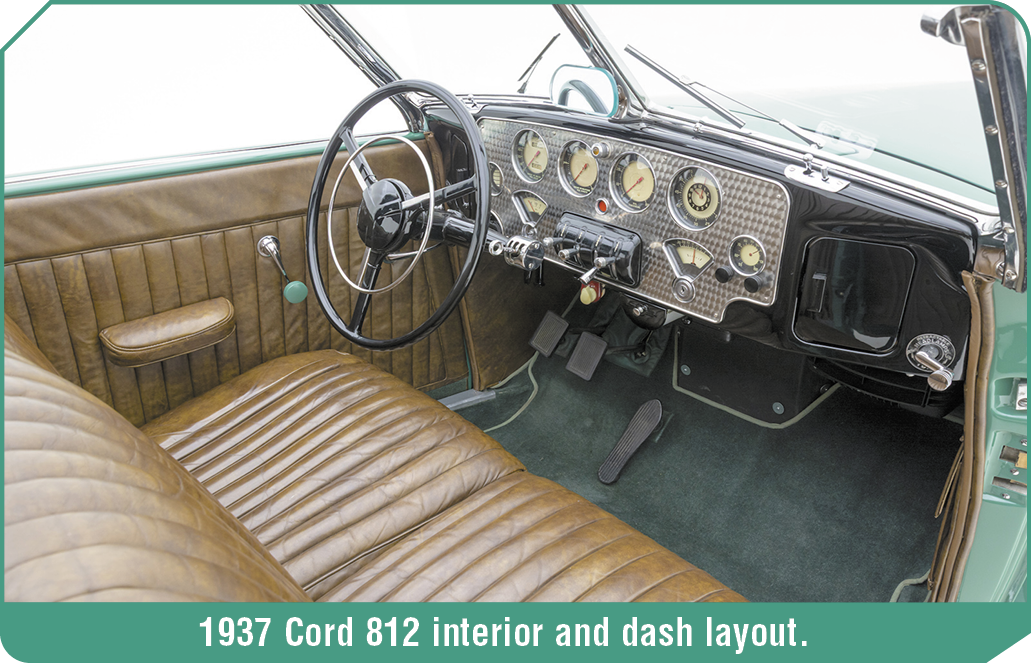
Interiors featured aircraft-inspired instrumentation, luxurious leather, and thoughtful details that emphasized both sportiness and comfort. The dashboard’s uninterrupted surface of machine-turned aluminum, free of the wood trim favored by competitors, conjured the feel of an aircraft cockpit rather than a conventional automobile — a detail that reportedly caught the eye of aviator Amelia Earhart, who is documented as having owned one of the surviving 812 Phaetons.
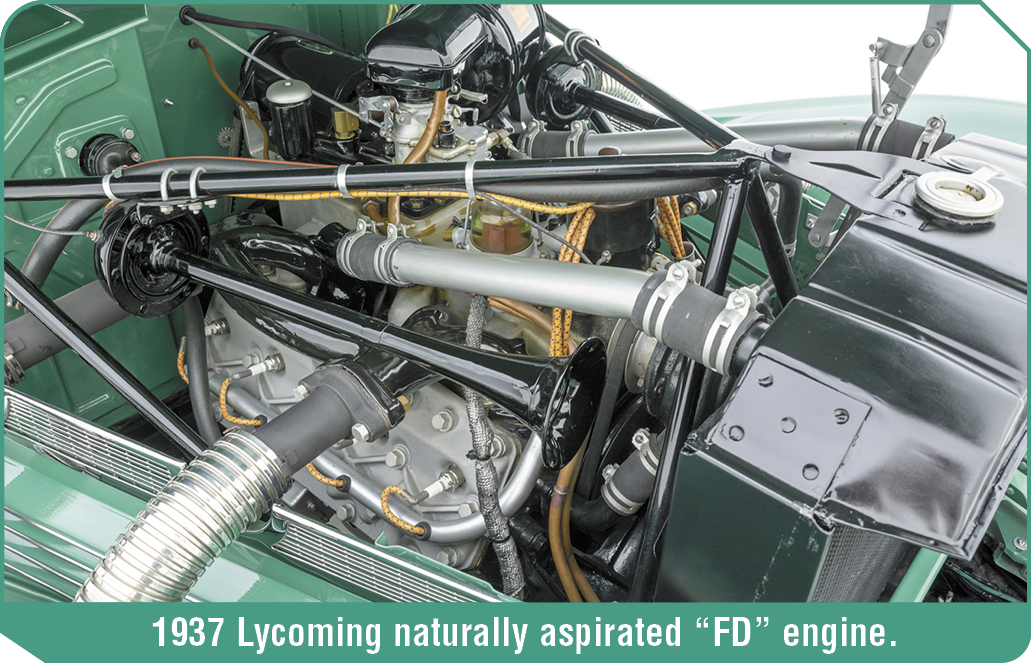
Power came from a Lycoming 288.6-cubic-inch V8 engine producing 125 horsepower in naturally aspirated form, with optional supercharged versions delivering somewhere in the range of 170 to 195 horsepower, depending on the specific Schwitzer- Cummins centrifugal unit and tuning, and significantly stronger performance.
 Supercharged cars were instantly identifiable by their bright, chromed external exhaust pipes running along the sides of the hood — a styling cue so popular that Cord offered it as a standalone option even on naturally aspirated cars. The supercharged 812 also had a genuine competitive pedigree: in September 1937, racer Ab Jenkins piloted a supercharged Cord to a 107.66 mph flying-mile record at Bonneville, proof the car’s performance claims weren’t just showroom talk.
The Cord was front-wheel drive — a rarity at the time, and a first for American production automobiles — paired with a four-speed semiautomatic transmission (pre-selector with electric shift). This setup, along with independent front suspension, delivered excellent handling and a low center of gravity. Top speeds reached 90-110 mph depending on configuration, making it one of the quickest luxury cars of its era.
The 812’s front-wheel drive design and advanced styling made it an instant icon, though production challenges and the company’s financial difficulties limited its commercial success.
The car’s technical ambition outran the factory’s ability to build it reliably — early cars suffered from transmission and overheating troubles, and the elaborate pre-selector gearbox proved difficult to manufacture at scale.
E.L. Cord’s broader business empire was unraveling at the same time, and by mid-1937 the Auburn Automobile Company had ceased production entirely. The 812 was, in effect, both the culmination of everything Cord’s engineers and designers had been working toward and the last car the company would ever build.
That combination of visionary design and commercial failure is a large part of what makes the 812 so significant today. It arrived at a moment when most American manufacturers were playing it safe, and its front-wheel drive layout would not be seriously revisited by an American auto maker for decades.
Design historians frequently rank it among the most important American cars of the twentieth century, and it remains a fixture in institutional collections such as the Auburn Cord Duesenberg Automobile Museum in Auburn, Indiana.
Survivors are highly sought after and often displayed in museums for their influence on automotive design. Well-restored examples routinely earn top honors at concours events, and supercharged Phaetons with documented ownership history command a particular premium among collectors.
For anyone tracing the evolution of American automotive design, the Cord 812 remains a natural starting point: a car that looked, and drove, like nothing else on the road in 1937.
Next year, we will be attending the 2027 Pebble Beach Concours d’Elegance. For any of our readers who have never been, I highly recommend it—it is truly a highlight event. General admission tickets go on sale toward the end of this year, I hope you’ll consider making the trip, look forward to seeing you there.
 Let’s look briefly now at the 1937 Cadillac Series 60 Convertible.
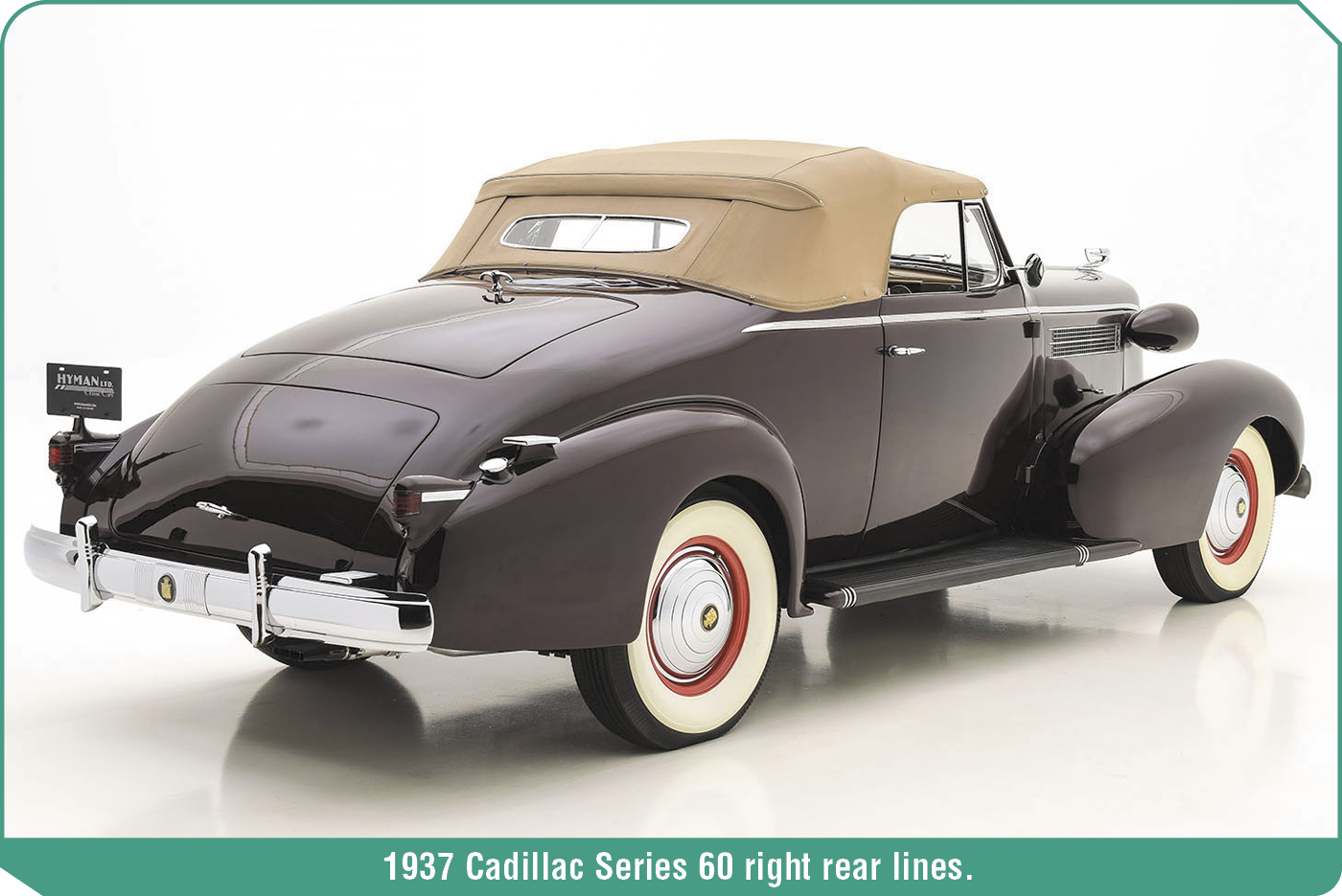
The Series 60 was Cadillac’s popular mid-range luxury offering for 1937, part of a lineup that emphasized refined elegance and strong V8 performance. It provided a more accessible entry into Cadillac ownership while delivering the brand’s signature comfort and presence.
Production numbers for the Series 60 were robust compared to ultraexclusive models, with convertibles being desirable but more attainable than the rarest coach built variants.
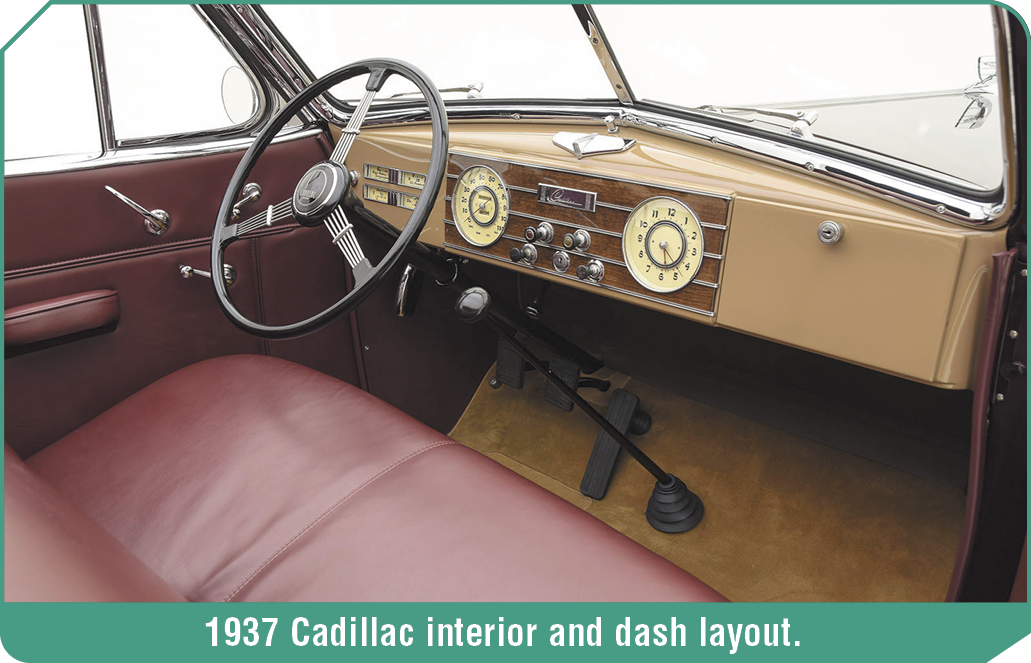
Styling featured classic Cadillac hallmarks: a bold vertical grille, flowing fenders, chrome accents, and a handsome convertible top that folded neatly for open touring. The body lines were graceful and substantial, projecting quiet luxury and success. Interiors were plush with high-quality leather, rich wood trim, comfortable seating for four or five, and thoughtful appointments that made long drives enjoyable.
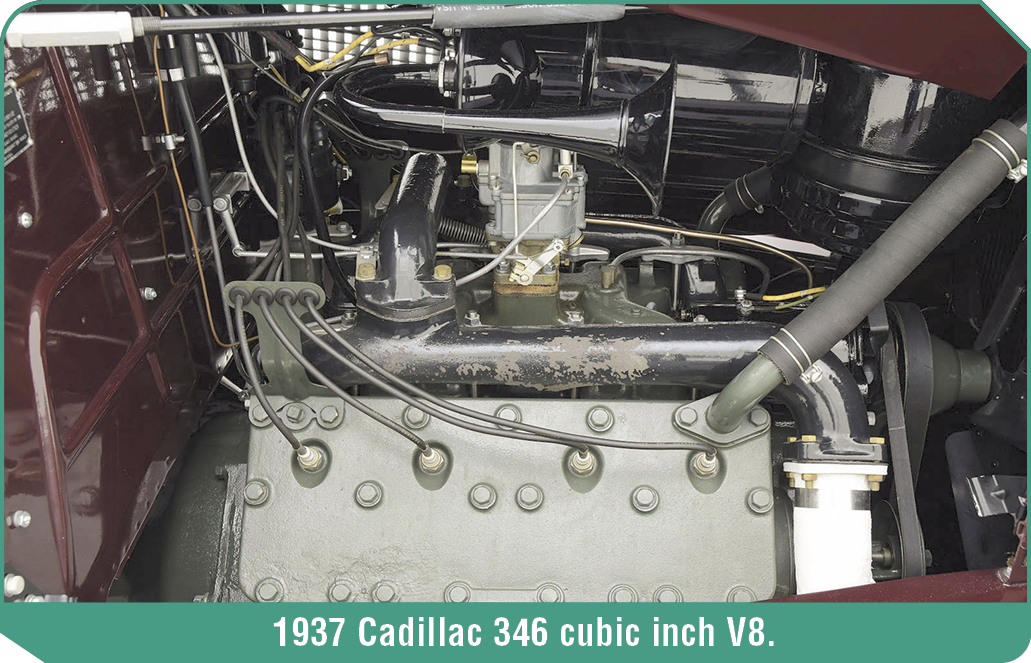
Power came from Cadillac’s new 346-cubic-inch Monobloc L-head V8 engine, rated at approximately 125- 135 horsepower with smooth, torquey delivery well-suited to effortless cruising. The standard transmission was a three-speed manual with synchromesh on the upper gears. The chassis rode on a 121- to 124-inch wheelbase with independent front suspension and leaf springs at the rear, tuned for a supremely comfortable and stable ride. Hydraulic brakes provided strong stopping power for the era.
The Series 60 helped Cadillac maintain its leadership in the luxury segment by offering refined engineering and timeless style at a relatively approachable price within the brand’s lineup. It appealed to professionals and families seeking prestige without the cost of the larger Series 70 or 90 models.
Years ago, during one of our “Horsepower for an Hour” radio shows, I got a chance to sample a beautifully restored 1937 Cadillac Series 60 Convertible during a vintage car show at the Los Angeles Convention Center.
 The car was originally purchased in 1938 by the current owners grandfather and remained in the family throughout its entire life.
Getting behind the wheel of the open convertible felt truly special — the Cadillac glided somewhat effortlessly along the coastline, the torquey engine providing ample pull for merging and passing while the suspension absorbed the road with that famous Cadillac composure.
The steering required a bit more focus due to its early design technology but was still precise for its size, and the plush interior with the ocean breeze flowing through created an unforgettable sense of elegance and freedom.
It wasn’t the most radical machine on the road, but its refined character and effortless luxury made every mile a pleasure. That Southern California drive remains one of my favorite encounters with a true pre-war classic.
The battle between the 1937 Cord 812 Convertible Phaeton and the 1937 Cadillac Series 60 Convertible pits radical innovation against established luxury refinement. Both cars embodied the ambition of late-1930s American motoring — one through daring design and engineering, the other through proven elegance and comfort.
 After considering the engineering daring, styling influence, driving character, and lasting legacy, the nod this month goes to the 1937 Cadillac Series 60 Convertible. Its smooth V8 power, supremely comfortable ride, timeless presence, and broader production success made it the more accomplished all-around luxury tourer that served owners well in its day and remains a wonderful choice for classic motoring today.
That said, the Cord 812 Convertible Phaeton deserves tremendous admiration for its groundbreaking design, front-wheel-drive innovation, and sheer boldness that influenced generations of automobiles. It was a true collector’s masterpiece that still turns heads with its futuristic appeal.
Both are exceptional pre-war classics that capture the spirit of an era when American builders weren’t afraid to dream big.
As always, we’d love to hear from you — let us know which car you prefer and why. Until next time when we take another ride on a classic highway, stay safe… stay timeless… stay classic!