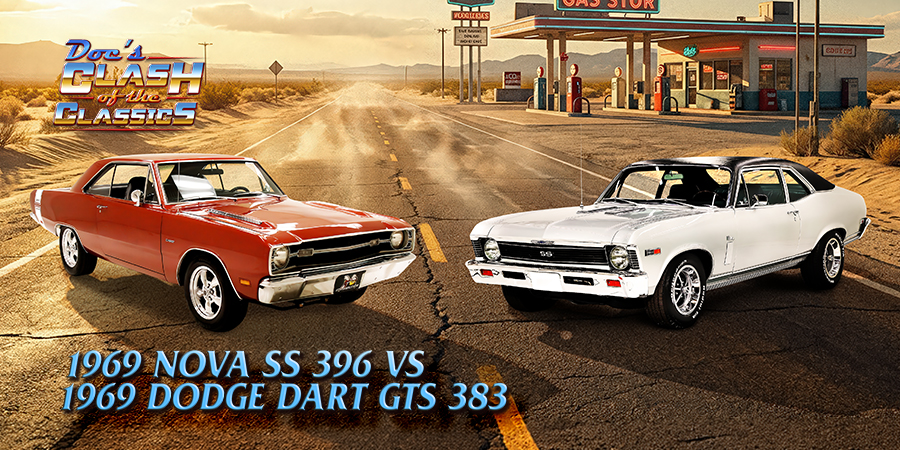
Welcome, once again to Clash of the Classics. This month we’ll head back to 1969 to revisit two compact muscle cars that packed serious punch in the late pony car wars: the 1969 Chevrolet Nova SS 396 and the 1969 Dodge Dart GTS 383.
Looking back now, 1969 was a pretty cool time here in America. In July, the Apollo 11 moon landing captivated the entire world and spawned conspiracy theories that continue, even today. The Mets somehow pulled off a miracle World Series victory over the Baltimore Orioles, and in August of 1969, over 400,000 people gathered in Bethel New York for a music festival that defined a culture, otherwise known as Woodstock.
In the automotive world, things were hotter than ever. The muscle car era was hitting its stride as manufacturers stuffed big-block power into lighter platforms, insurance companies started raising eyebrows at sky-high horsepower claims, and enthusiasts flocked to drag strips and back roads alike. Chevrolet and Dodge were both eager to carve out their share of the performance pie with these nimble, affordable street fighters that could embarrass much larger machines on a Saturday night.
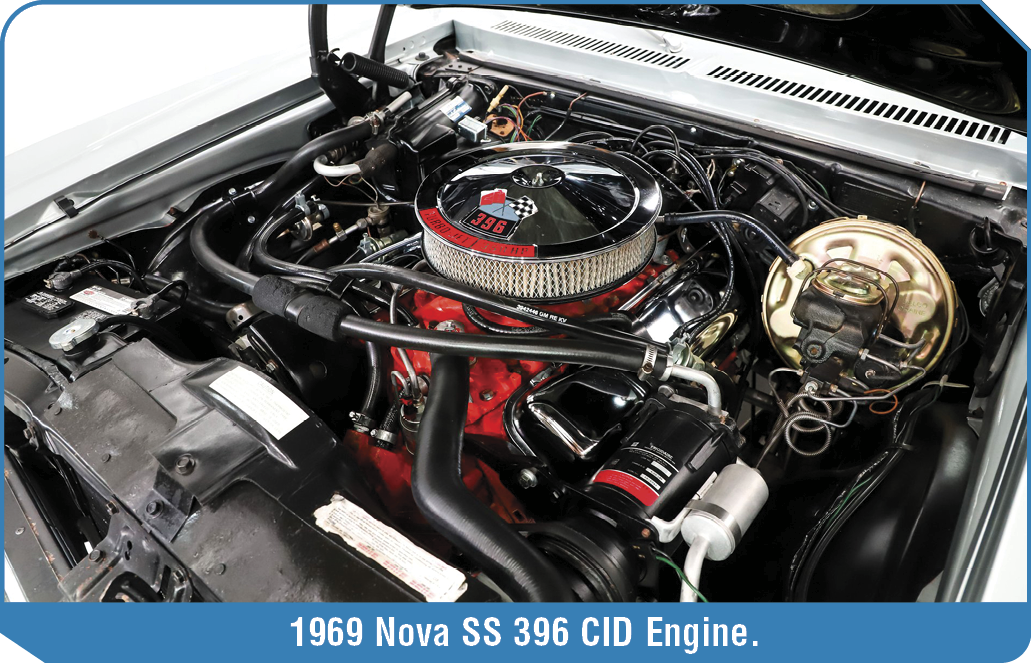 Let’s begin with a look at the 1969 Chevrolet Nova SS 396.
The Nova had evolved from its humble Chevy II roots into a legitimate performance contender by the late 1960s. For 1969, the Super Sport package turned the compact Nova into a serious muscle machine, with the SS 396 option delivering big-block power in a lightweight body that made it one of the quickest cars of its size.
Total Nova production for the year reached around 269,988 units, with SS models accounting for roughly 17,564 examples — a respectable showing that included a healthy mix of engine choices. Of those, approximately 1,947 came with the milder 350-hp 396 (L34), while the hotter L78 375-hp version saw about 4,951 built (plus a small number with the rare L89 aluminum-head variant). Prices for the SS package added around $312 to the base coupe, keeping it accessible for performance-minded buyers.
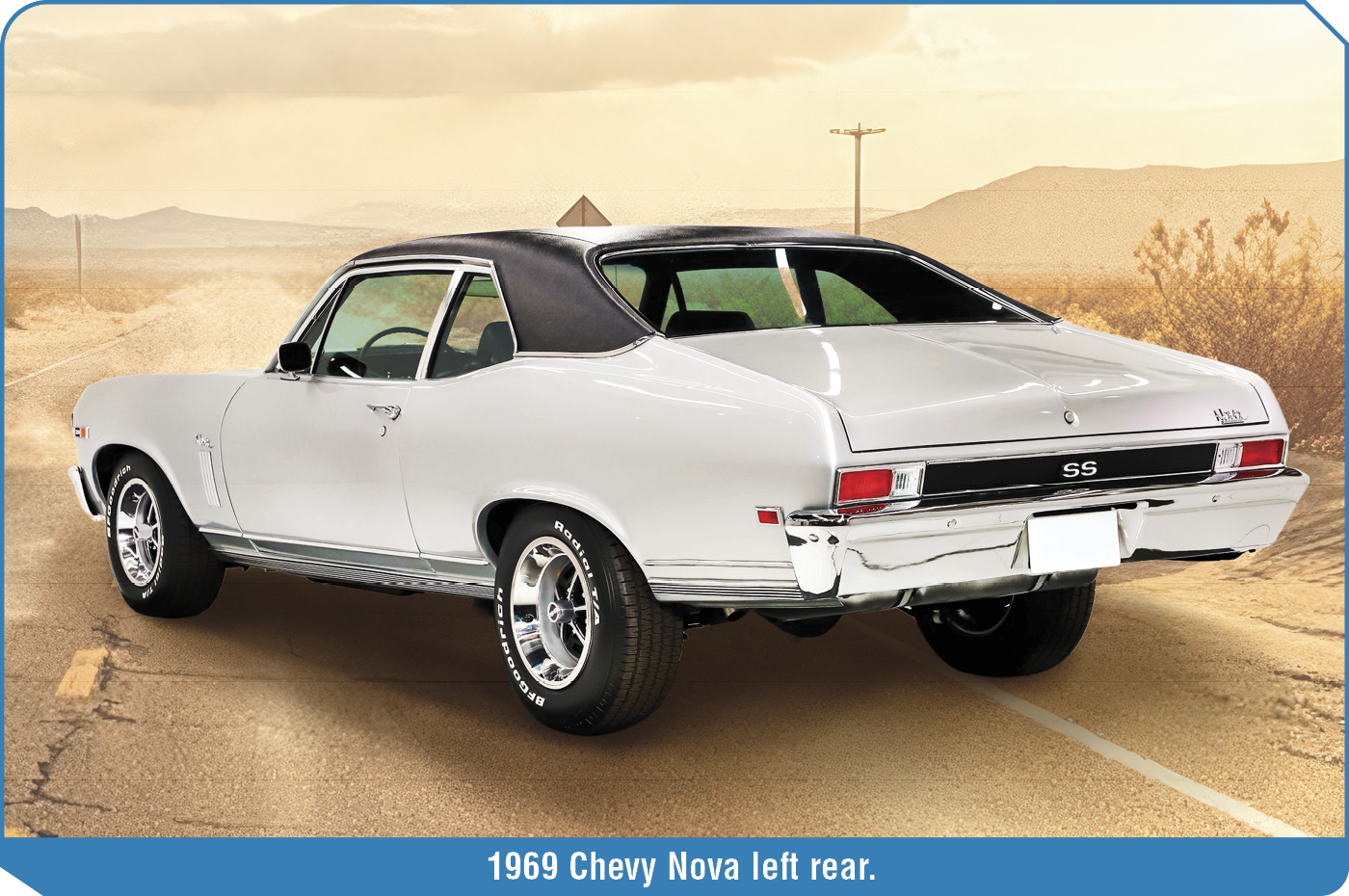
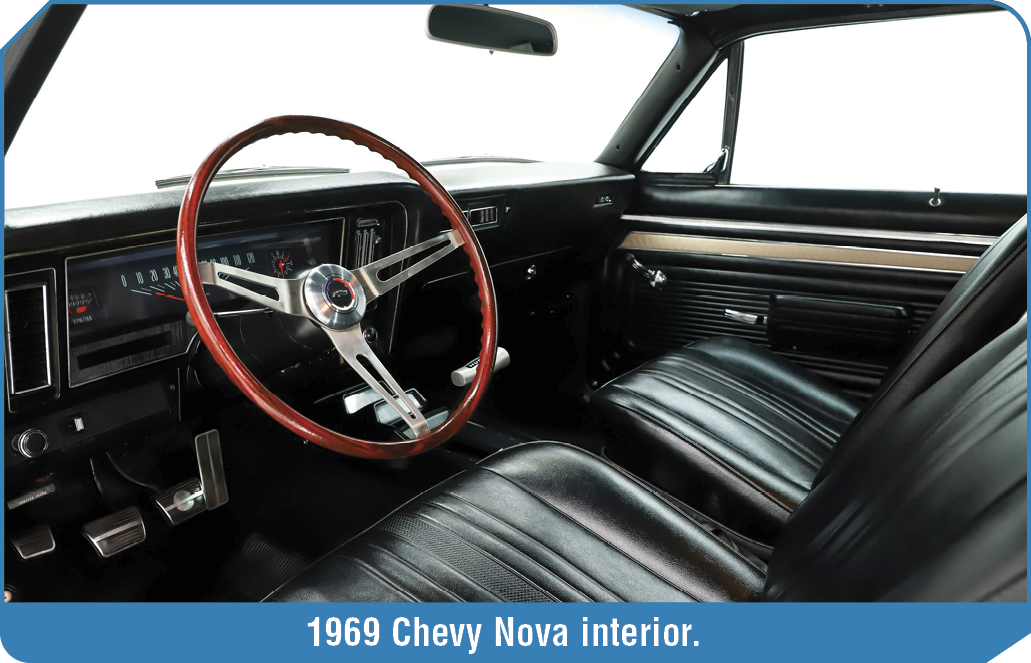 Styling was clean and purposeful, with the SS featuring distinctive badging, blacked-out grille accents and hood scoops on performance models. The interior sported bucket seats, a rally type steering wheel, and full instrumentation that gave it a serious driver-focused feel without excessive flash. It was the kind of car that looked unassuming at first glance but announced its intentions the moment the throttle opened.
Under the hood, the star was the 396-cubic-inch big-block V8. The L78 version cranked out a factory-rated 375 horsepower at 5,600 rpm and a stout 415 lb-ft of torque at 3,600 rpm, though real-world numbers were often higher thanks to the era’s conservative ratings.
Fed by a big 780 CFM Holley carburetor on an aluminum intake, rectangular-port heads, and a solidlifter cam, it loved to rev and delivered brutal acceleration in the lightweight Nova chassis. Transmission choices included the close-ratio Muncie fourspeed manual (with the legendary “Rock Crusher” M22 option) or the heavy-duty Turbo-Hydramatic 400 automatic specially calibrated for highperformance duty. Rear gears typically ran in the 3.55 to 4.10 range with a Positraction limited-slip differential, helping plant the power.
The chassis featured a relatively short 111-inch wheelbase that contributed to the car’s agile handling, with heavy-duty suspension, front disc brakes (standard on SS models for 1969), and a overall package that weighed in around 3,400 pounds — light enough to make the big-block sing.
 Development focused on making the Nova a straight-line terror while still offering decent everyday drivability, and to that end, GM engineers succeeded. Many of these cars went on to become drag strip favorites, with some legendary COPO and Yenko variants pushing the platform even further.
I had the chance to experience a nicely preserved 1969 Nova SS 396 a few years back during a muscle car event in Las Vegas, Nevada. The owner, a retired racer who had babied the car since the 1980s, let me take it for a spirited run on a quiet stretch of highway outside the city. Dropping into the driver’s seat, the car felt compact and ready — the big-block fired up immediately with that sweet tone that only a big-block can deliver. At idle, it had a steady, uneven pulse, and a quick press of the accelerator brings an immediate, forceful response.
As I eased into the throttle, the car responded with surprising authority, acceleration comes on hard and straight, with the rear end eager to step out if pushed. The big-block pulled hard through the gears with that classic Chevrolet thrust. The four-speed shifted crisply, the front discs hauled it down confidently from speed, and the whole package felt firmly planted on the desert pavement.
It wasn’t the most refined ride, braking and cornering require planning, more so than reflex but that raw, immediate response made every mile an awesome memory. Heads turned at stoplights, and the grin on my face lasted long after I handed the keys back. It was one of those drives that stay with you a lifetime, certainly one I will not soon forget.
 Let’s look briefly now at the 1969 Dodge Dart GTS 383.
The Dart had grown into a capable performer by 1969, with the GTS package transforming the compact into a legitimate muscle contender that gave Mopar fans a lighter, more affordable alternative to the bigger Charger or Road Runner.
Total Dart GTS production for the year came in at around 6,700 units, with the 383-powered versions making up a solid portion — roughly 1,912 big-block cars overall, including about 784 with the 383 and four-speed and another 488 with automatic. Pricing kept it competitive, adding performance touches without breaking the bank for younger buyers.
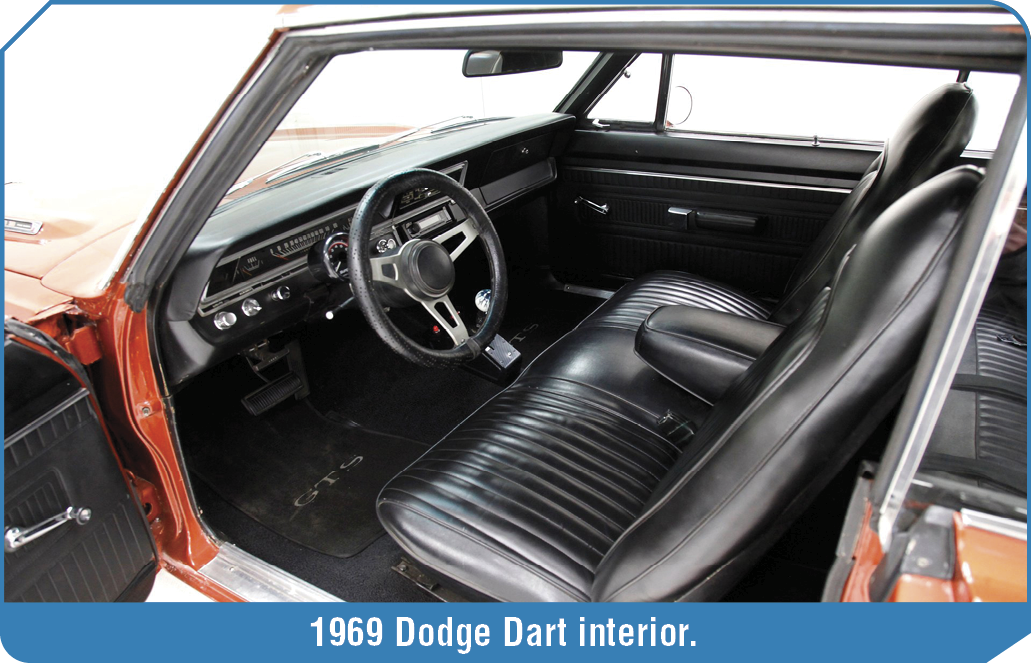
Styling featured aggressive GTS badging, hood scoops, sporty stripes, and often vibrant colors that helped it stand out in the Mopar lineup. The interior included bucket seats, a console shifter, and rally-style gauges that gave it a purposeful cockpit feel. It was designed to look tough and deliver on the promise once the light turned green.
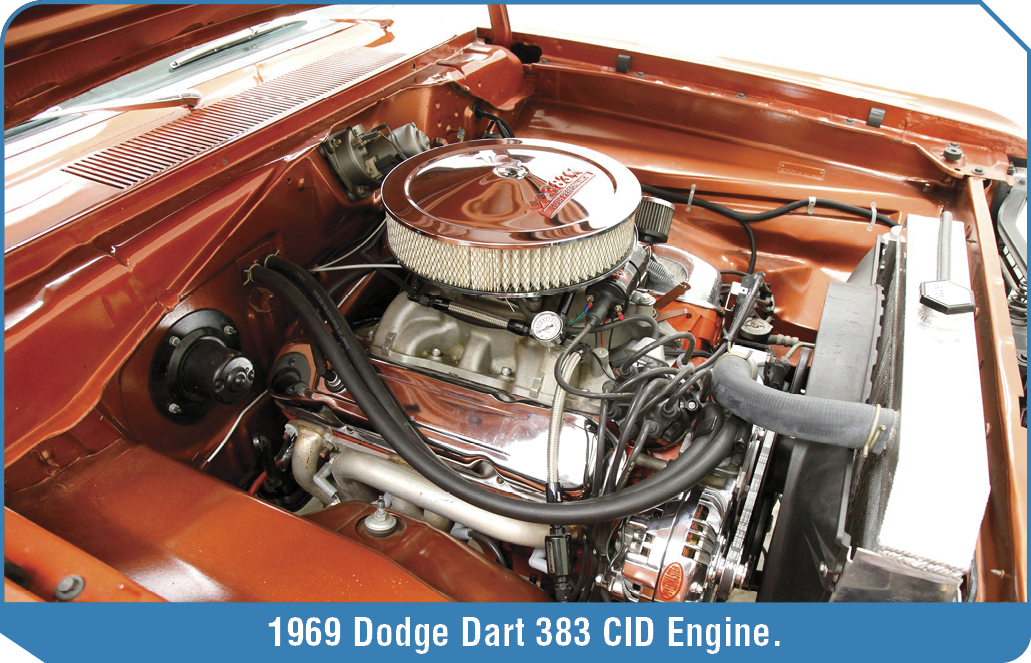
 Power came from the 383-cubic-inch V8, rated at 330 horsepower with healthy torque output around 425 lb-ft. It was a torquey, responsive engine that pulled strongly from low rpm and loved to rev, making it well-suited to the Dart’s lighter platform. The Carter AVS four-barrel carburetor performed well and was reliable. The hydraulic lifters proved equally reliable compared to their solid-style counterparts and the 9.5:1 compression ratio worked well enough that ordinary pump gas performed favorably for those grocery-getting events.
Transmission options included the sturdy A833 four-speed manual or the TorqueFlite 727 automatic. Out back, the limited slip rear differential typically came with either a 3.55 or a 3.91 gear ratio.
The chassis used a 111-inch wheelbase similar to the Nova, with heavy-duty torsion-bar front suspension and leaf springs at the rear, tuned for a balance of straight-line traction and decent cornering. Front disc brakes were available, and the overall curb weight hovered around 3,200–3,400 pounds depending on options, giving it excellent power-to-weight potential.
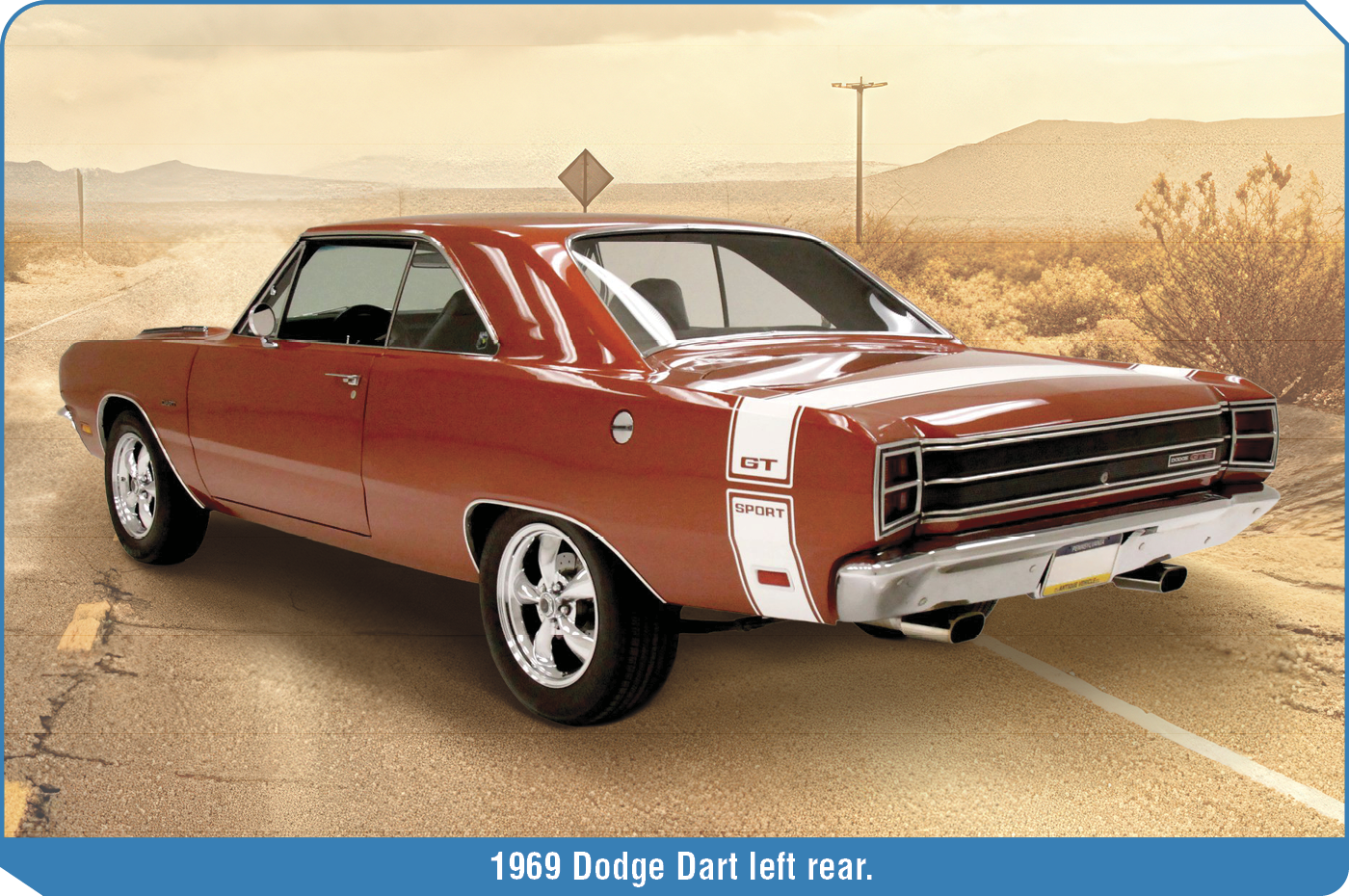 The GTS 383 offered strong performance in a package that was easy to live with daily, and while it didn’t dominate the headlines like some bigger Mopars, it earned a loyal following among those who appreciated its nimble character and big-block grunt in a smaller wrapper.
To summarize, the 1969 Dodge Dart GTS 383 feels like a compact car pushed beyond its original intent. The big 383 V8 dominates the experience, idling with a noticeable lope and delivering strong, immediate acceleration with minimal effort. The front end carries the engine’s weight, making steering feel heavier and less precise, especially in tight turns. Traction is limited, so careful throttle control is essential to keep it pointed straight. The cabin is simple and driver-focused, with little separation from noise and vibration. It’s a straightforward, forceful car built for quick bursts of speed rather than balance or finesse.
The battle between the 1969 Chevrolet Nova SS 396 and the 1969 Dodge Dart GTS 383 is a classic compact muscle car showdown — Chevrolet’s big-block brute in a lightweight shell versus Dodge’s torquey Mopar alternative. Both cars delivered respectable performance in affordable, agile packages that could surprise larger opponents, and both reflected the peak creativity of the muscle car era before emissions and insurance realities began to bite.
Now, it’s time to choose a champion and as with most of our previous battles, both of these cars are worthy of admiration, and both are worthy of ownership.
However, after weighing the engineering, straight-line capability, driving feel, and overall presence, the nod this month goes to the 1969 Chevrolet Nova SS 396. Its potent 375-hp 396 big-block delivered more outright power and rev-happy excitement, the chassis felt planted and responsive, and the Nova’s combination of light weight with serious horsepower made it a devastating performer on the street or strip.
The SS package added just the right amount of attitude without overcomplicating things, and its stronger production numbers in the performance variants helped cement its place as a benchmark compact muscle car.
That said, the Dodge Dart GTS 383 deserves plenty of respect for its torquey big-block delivery, agile handling, and that unmistakable Mopar character that still turns heads today. It was a smart, fun choice for drivers who wanted big power in a practical size.
Both are true icons that remind us why the late 1960s remain the golden age for enthusiasts who love raw, unfiltered American performance.
As always, we’d love to hear from you — let us know which car you prefer and why. Until next time when we take another ride on a classic highway, stay safe… stay timeless… stay classic.
About the Author
Donny Caccamise is an Automotive Technology Graduate and a Certified Master Technician with more than 40 years of automotive industry experience. Before retiring, he hosted the Nationally Syndicated Automotive Talk Radio Show “Horsepower for an Hour” airing on 161 AM and FM radio stations across the nation. He is a retired member of the ATRA Board of Directors, and retired transmission shop owner. Vintage and classic cars are his specialty. Contact Donny at donnycaccamise@gmail.com