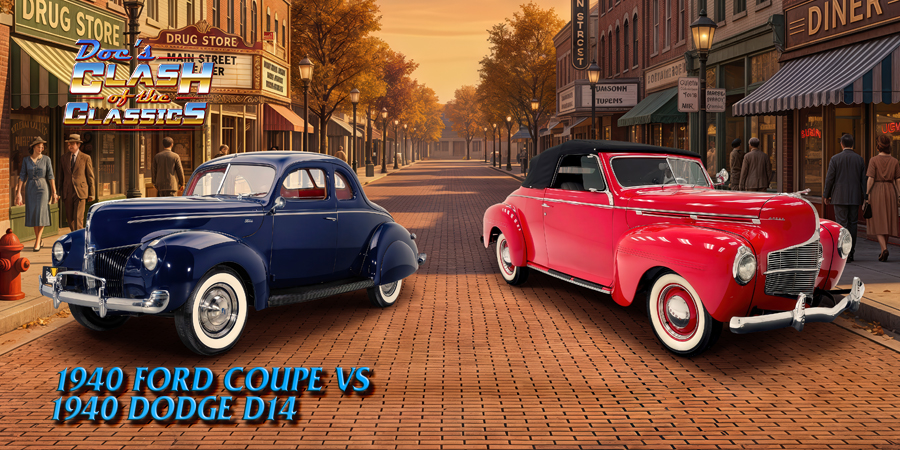
Welcome, once again to Clash of the Classics. This month we’ll head back to 1940 to revisit two very cool pre-war machines that blended style, reliability, and everyday usability on the eve of World War II: the 1940 Ford coupe and the 1940 Dodge D14 convertible coupe.
For many people, 1940 was a tough year. The country was still recovering from the Great Depression with many families struggling to make ends meet. At the same time uncertainty on the global stage was becoming a very real concern as war clouds were gathering in Europe.
On a lighter note, here Nationally, the Cincinnati Reds needed all seven games to narrowly defeat the Detroit Tigers 2-1 in the World Series.
Frank Sinatra and Tommy Dorsey had the #1 hit “I’ll Never Smile Again”, and for all you chocolate lovers, 1940 was the year the York Peppermint Pattie made it’s debut.
In the automotive world, things were brighter as manufacturers offered fresh styling and improved engineering to tempt buyers ready for something new after the tough 1930s. Ford and Dodge both delivered attractive cars that combined Art Deco influences with practical American engineering, giving families and enthusiasts solid choices for daily driving or weekend outings.
Let’s begin with a look at the 1940 Ford coupe.
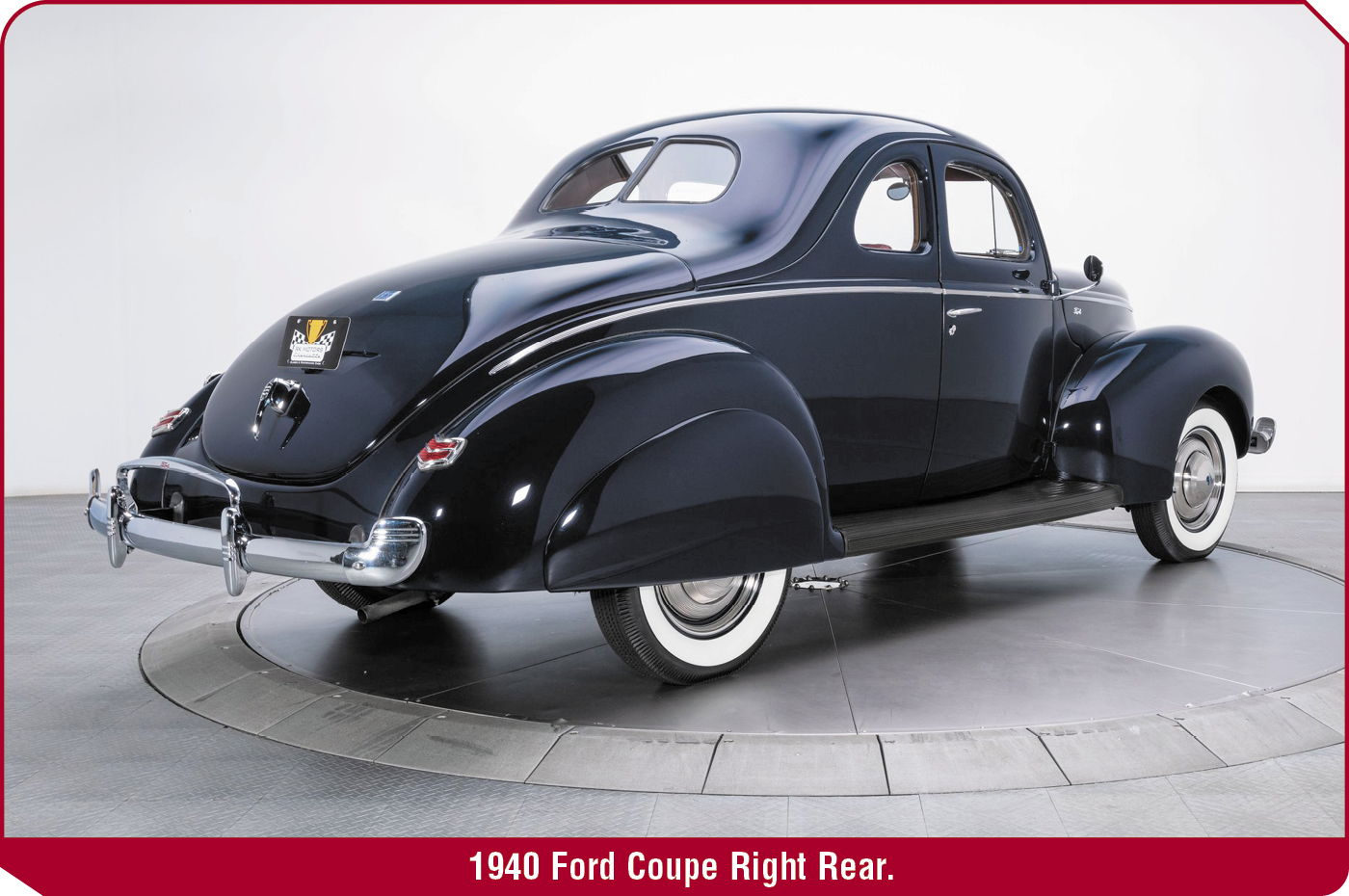
The 1940 Ford coupe, particularly in Deluxe trim, stands as one of the most iconic pre-war designs from the Blue Oval. Its clean lines, graceful fenders, and distinctive grille have made it a perennial favorite among collectors and hot rodders alike.
Total Ford passenger car production for the year reached around 541,896 units in the U.S., with Deluxe models accounting for a substantial 367,364 of them. Within that, the Deluxe coupe (often referred to as the three-passenger or opera coupe) saw approximately 27,919 examples built, making it a desirable yet attainable classic today.
Styling was a highlight, featuring a bold yet elegant front end with a narrow center grille flanked by horizontal bars, sealed-beam headlights (new for 1940 on Deluxe models), chrome accents, and flowing body contours that gave it a sleek, modern profile for the era. The coupe body offered a spacious trunk and a package shelf instead of a rear seat in some configurations, creating a sporty yet practical two-door layout.
 Interiors were straightforward but comfortable, with quality fabrics, a simple dashboard, and thoughtful details like vent windows that enhanced ventilation.
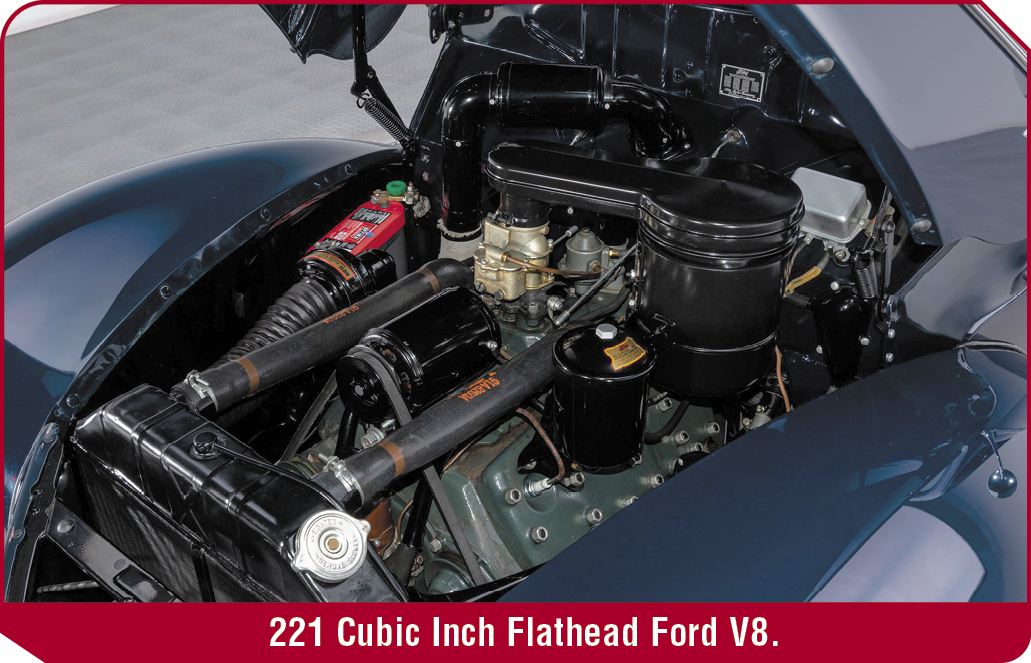
Under the hood, the standard powerplant for Deluxe models was the proven 221-cubic-inch flathead V8, rated at 85 horsepower at 3,800 rpm with around 155 lb-ft of torque. This smooth, reliable engine had already earned a strong reputation for durability and tunability, powering everything from family sedans to early hot rods. Transmission was typically the three-speed manual with column shifter (three-on-the-tree), though some examples featured optional overdrive for better highway cruising.
The chassis rode on a 112-inch wheelbase with transverse leaf springs front and rear, a solid front axle, and hydraulic drum brakes all around — an improvement that had arrived the previous year and contributed to safer stopping.
The 1940 Ford coupe struck a perfect balance of style, affordability, and performance potential. Its V8 gave it a slight edge in power and character over many six-cylinder rivals, while the overall package proved rugged enough for daily use or even the occasional back-road adventure.
 Many of these cars later became favorites for moonshiners and early stock car racers thanks to their strong frames and tunable engines, helping lay groundwork for what would ultimately become NASCAR.
I had the opportunity to experience a fairly well-preserved 1940 Ford Deluxe coupe during a vintage car show in Lancaster Pennsylvania a few years ago. The owner, a dedicated Early Ford V8 Club member, invited me for a short drive through the back country roads of a town called Ephrata after the main show. Sliding behind the wheel definitely felt like stepping back in time.
The flathead V8 came to life with a familiar rumble and quickly settled into a steady idle. As we pulled away, I was surprised by the pep the engine had especially given its age. I had driven several 1940 Fords before but they were all street rods with modern V8’s. This was my first experience with a true survivor and I’ll never forget it.
 The ride was also surprisingly smooth thanks to those transverse springs, and the steering offered decent feedback for a car of its era. With the windows down, the wind flowed nicely through the cabin, and the overall feel was one of solid, dependable fun. It wasn’t the fastest or most luxurious machine on the road, but it had genuine character that made every mile enjoyable. That drive reinforced why the ’40 Ford coupe remains such a beloved icon among enthusiasts.
Let’s look briefly now at the 1940 Dodge D14 convertible coupe. Before I begin with this overview, let me say, I was inspired to create this particular battle because it was on the very same day at the Lancaster car show that I got my first look at the D14 Coupe. Prior to that, I’d never seen one other than in photographs. I must say, I was surprised by the overall build quality of the car.
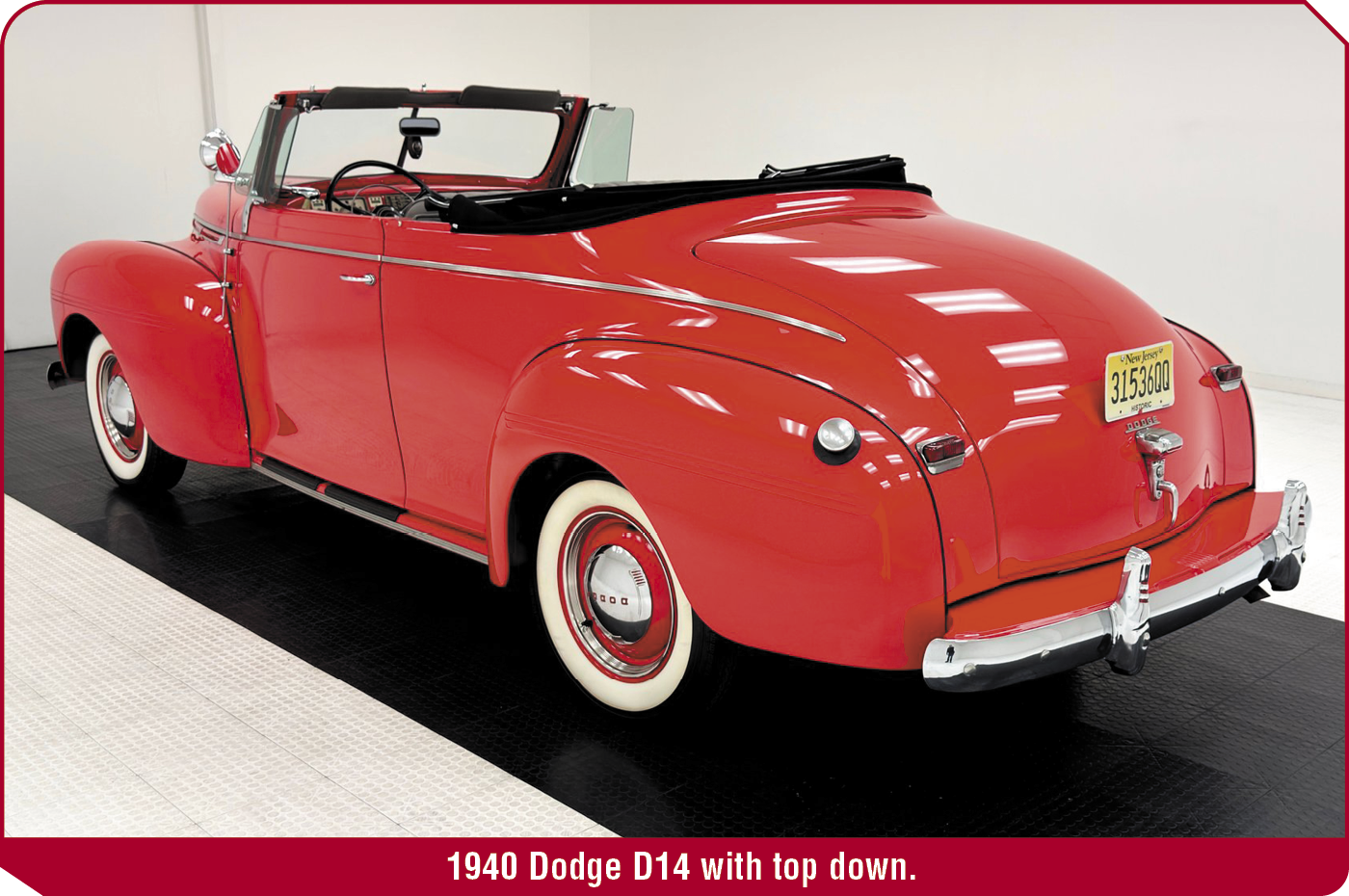
The 1940 Dodge D14 belonged to the Luxury Liner Deluxe series, representing Chrysler Corporation’s effort to offer stylish, comfortable transportation with a touch more refinement than basic models. The convertible coupe was a particularly glamorous body style in the lineup, emphasizing open-air motoring with elegant lines.
Dodge production for the year totaled around 195,505 units overall, with the D14 Luxury Liner Deluxe series making up a significant share. The convertible coupe itself was quite rare, with approximately 2,100 examples built — a low number that adds to its desirability among collectors today.
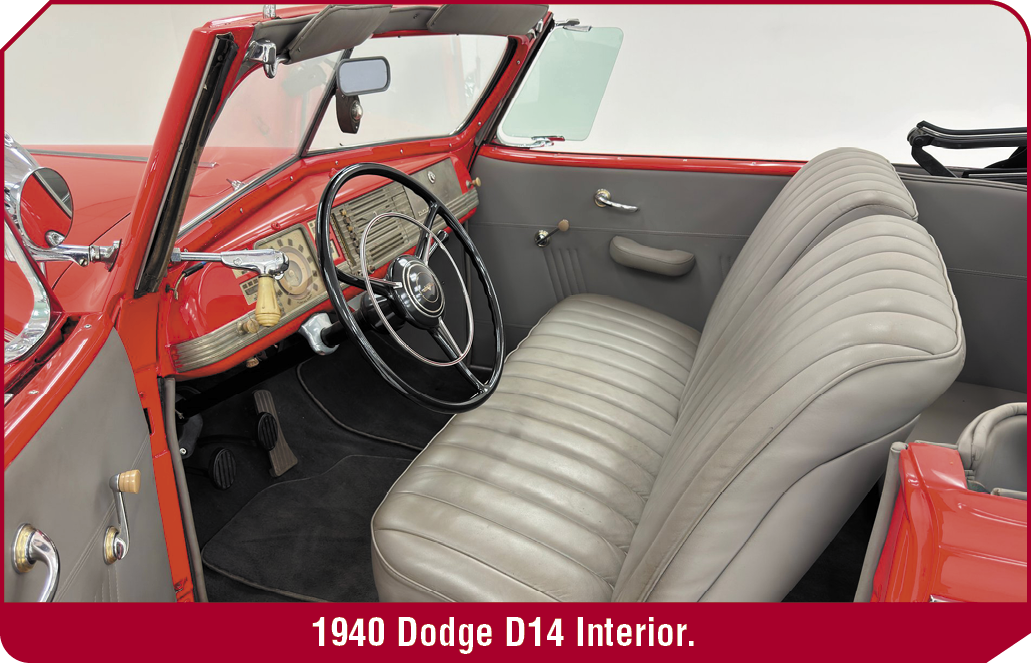
Styling featured updated Art Deco touches for 1940, including a fresh front-end design with a longer hood, chrome accents, and flowing fenders that created a more streamlined appearance compared to the previous year.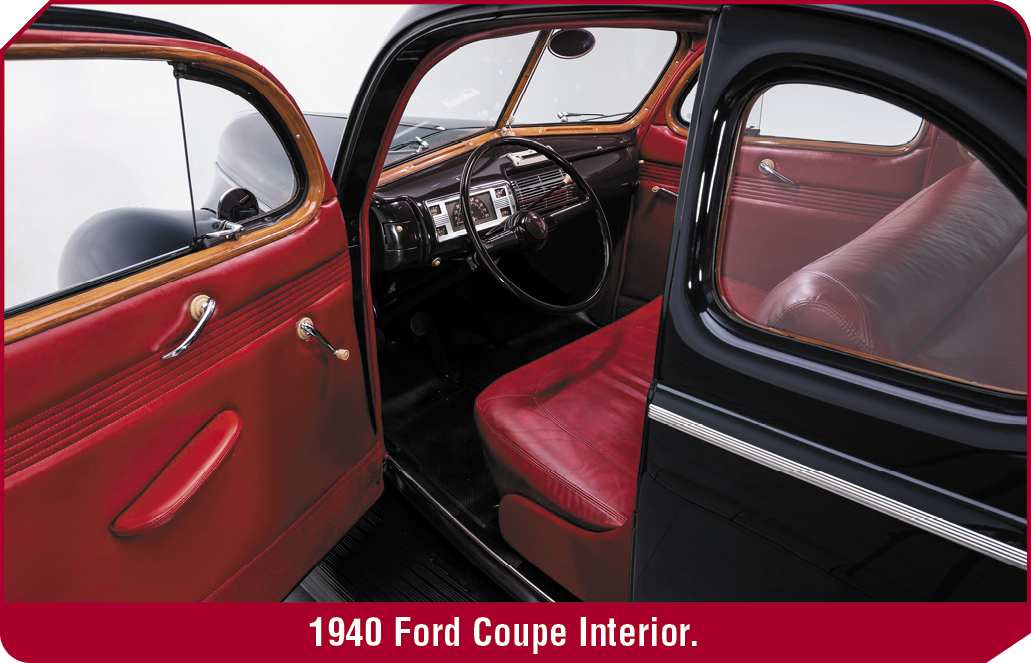 The convertible top folded neatly, and the body offered seating for four or five with auxiliary seats in some configurations. Interiors were upscale for the segment, with quality upholstery, a well-appointed dashboard, and thoughtful details that made occupants feel pampered on longer trips.
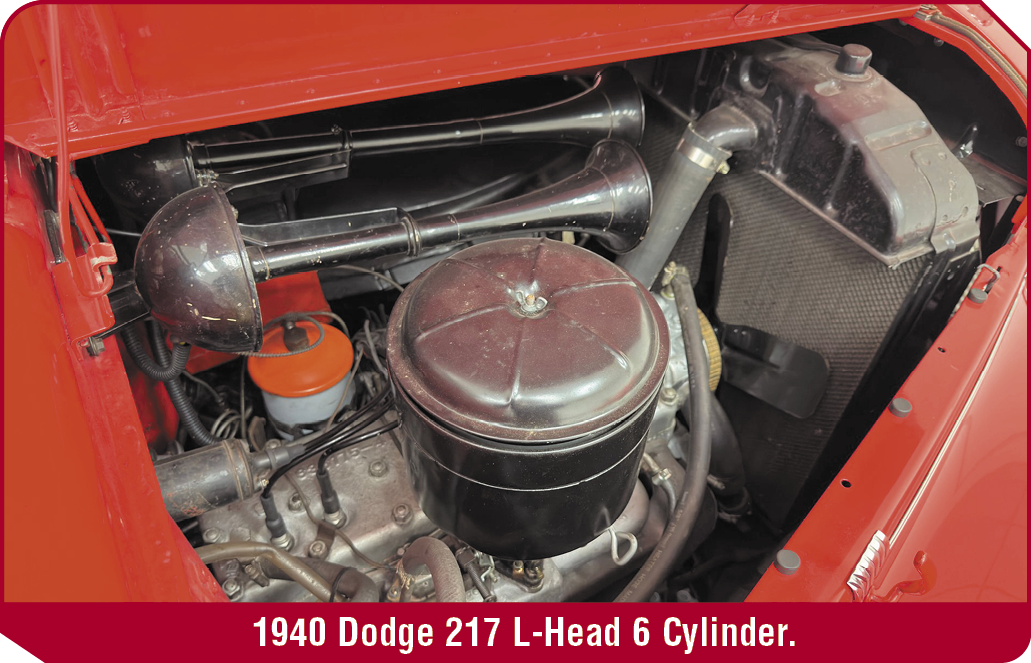
Power came from Dodge’s reliable 217.8-cubic-inch L-head inline-six engine, rated at approximately 87 horsepower at 3,600 rpm with a healthy 166 lb-ft of torque at low rpm. This torquey six provided smooth, dependable performance well-suited to cruising or carrying a family. The standard transmission was a threespeed manual, with the car riding on a longer 119.5-inch wheelbase (roughly 3035 mm) that contributed to a stable, comfortable ride. Suspension used coil springs up front in some configurations and leaf springs at the rear, paired with hydraulic drum brakes for adequate stopping power.
 The D14 convertible coupe offered open-top enjoyment with Dodge’s reputation for solid engineering and durability. While it didn’t have the V8 excitement of some rivals, its smooth six-cylinder pull and roomy cabin made it an appealing choice for those who prioritized comfort and style in a convertible package.
The battle between the 1940 Ford coupe and the 1940 Dodge D14 style icon against a rarer open-top cruiser from Chrysler’s stable. Both cars captured the pre-war spirit of American motoring; handsome designs, reliable powertrains, and practical usability at a time when the nation was on the cusp of tremendous change.
 After considering the engineering, driving character, styling appeal, and long-term collector interest, the nod this month goes to the 1940 Ford coupe. Its flathead V8 delivered more engaging performance and tunability, the overall design has become a timeless favorite among hot rodders and enthusiasts, and its stronger production numbers in the coupe body style have kept it more accessible while retaining strong desirability. The Ford, in my opinion, offered a more dynamic and versatile package that has stood the test of time exceptionally well.
That said, the Dodge D14 convertible coupe deserves real admiration for its rarity, open-air charm, and smooth inline-six character that provided a more luxurious, relaxed driving experience. Convertibles from this era always carry a special romance, and the D14 delivered it with Dodge’s trademark reliability.
Both are wonderful pre-war classics that remind us of an optimistic era when American cars balanced style, substance, and everyday enjoyment.
As always, we’d love to hear from you — let us know which car you prefer and why. Until next time when we take another ride on a classic highway, stay safe… stay timeless… stay classic!
About the Author
Donny Caccamise is an Automotive Technology Graduate and a Certified Master Technician with more than 40 years of automotive industry experience. Before retiring, he hosted the Nationally Syndicated Automotive Talk Radio Show “Horsepower for an Hour” airing on 161 AM and FM radio stations across the nation. He is a retired member of the ATRA Board of Directors, and retired transmission shop owner. Vintage and classic cars are his specialty. Contact Donny at donnycaccamise@gmail.com