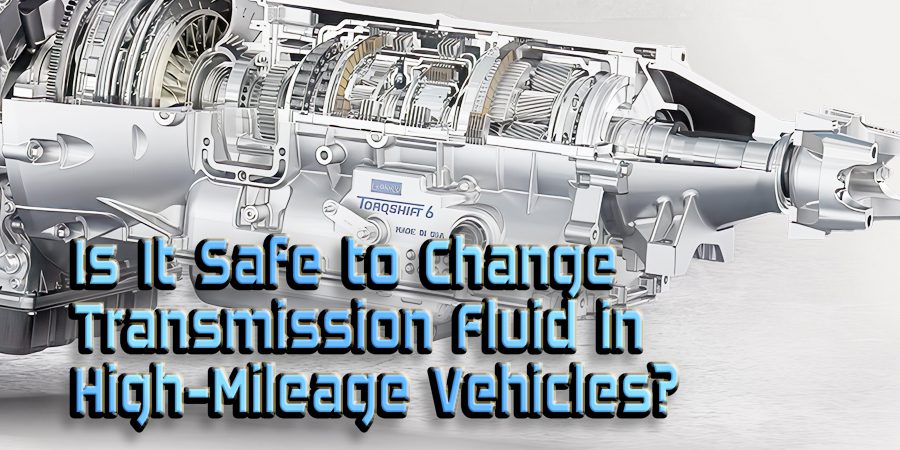
The conversation always starts the same way, but the person asking the question can be involved in vehicle service at any level, from vehicle owner to shop owner. The subject of the conversation is “Is it okay to change the fluid in a high-mileage automatic transmission?”. It would be nice to say there is an easy answer to the question, but there isn’t. Depending on who you ask, there will be some who say yes and others who disagree. For the vehicle owner and service technician, good advice based on a “data-driven” decision may be the difference between more trouble-free miles for anxious owners or the beginning of the end for the transmission. The service technician or mechanic may save them from a costly mistake or repair because they took the time, asked the questions, and applied common sense and good practices. It all starts with a service request.

Depending on the shop, which may cater to general repair or be dedicated to transmission repair, the main concern is to make sure the shop is familiar with the transmission to be serviced. When the customer tells the tech they want their transmission serviced, there should be a series of questions relating to service history. If, for example, they have 150,000 miles on the vehicle, you will want to know when or if the fluid was ever changed. How they use the vehicle (type of service) is also an important part of the decision and is usually the next question. Are they currently experiencing any problems (most will say no, but there is some reason they suddenly decided to have the fluid serviced). If the shop has performed a transmission service on the vehicle before, they will likely do so again. If they haven’t, there is a strong possibility they will refuse the job unless there is proof of prior service (receipts or work orders) or you have the vehicle owner sign a waiver absolving the shop of any blame if the transmission has problems after the service. The reason for this lies in the questions asked. Many drivers buy into the “fill for life” notion encouraged by OEMs, hoping you will not read the owner’s manual they provided that defines vehicle service (how we use our vehicles) as “normal service” or “severe service.”
The definition of “normal service” is simple and a bit vague in defining what constitutes normal driving. “Severe service” has more detailed, stating conditions like “operating on 90° F. or hotter days, or operating when ambient temperatures fall below 30° F. Operation in dusty conditions like dirt roads, operation in snow and icy conditions, driving over 60 mph, towing, stop and go driving, or operating fully loaded.” In other words, our daily drive. By their definition, 90% of our driving meets the requirements for “severe service.” The owner’s manual tells you, when these conditions are met, cut their recommended service interval for your automatic transmission service in half. Your 100,000-mile “normal service” warranty/fluid service interval now drops to the “severe service” recommendation of 50,000 miles. Your 60,000-mile recommended warranty/ fluid service interval drops to 30,000 miles. This is not service advice you normally hear at an OEM dealership pushing the notion of “fill for life.” Fear of litigation for “unnecessary service” encourages OEM dealerships to conclude all driving is “normal service” and that the service schedule is usually followed. Some shops will draw some of the used fluid and evaluate the smell and color. Others will do a spot sheet comparison between the used fluid and a spot of new fluid to determine the extent of fluid breakdown. If they don’t like what they see or did not like the service history (from the perspective of the shop owner or service technician), your vehicle with 150,000 miles on it (this will most likely be the first service in their opinion) is now a gamble they may not want to take.
What many shops will do at this point is ask the owner to sign a waiver in the event fresh fluid causes a problem. Some strategies somewhat mitigate the system shock (depending on how bad the used fluid looks), such as fresh ATF, which can cause a higher mileage transmission with a few years in service and higher miles to fail. Some shops will refuse to do a “complete flush”. Instead, they will drop and drain the pan to inspect the deposits in the pan. If it has a magnet, they’ll see how “fuzzy’ it may or may not be. They clean everything, replace the filter, and reinstall the pan. They then top it off with the correct fresh ATF, making no attempt to drain the remaining fluid from the torque converter. This usually gets about half of the used fluid out of the system and is now replaced with fresh fluid. There is also a greater chance the transmission control module will more easily learn to adapt to a mixture of new and used fluid if reprogramming is not an option. Many smaller shops lack the modern electronic programmers and technology the dealers and larger shops live by. For them or the DIY guy, this approach works well. The detergency of the new fluid can cause problems when a total flush or exchange is performed and a new/used fluid mixture dislodges less material, which might be a problem for solenoids and valves. Installing an in-line magnetic transmission filter in the low-pressure transmission fluid return line from the radiator cooler to the transmission adds another level of protection when servicing higher mileage transmissions. Performing a service this way doesn’t guarantee there will be no problems, but years of conversations with report backs on success or failure have indicated it’s a viable and successful method for changing the ATF in the neglected automatic transmission.
For the transmission specialist or the service center operating fluid changes, the higher mileage transmissions have become an opportunity to connect with the 2024 service mentality that now pervades the service sector. A few years ago, many consumers would sell or trade a vehicle that might need a transmission or service. Today, consumers desire to keep a vehicle as long as possible, servicing and replacing transmissions more frequently than at any other time in the last 30 years. For the transmission service and repair business, it’s an opportunity to sell transmission service and connect with concerned owners with higher mileage transmissions that have the potential to accumulate more miles if the right kind of maintenance is performed. Putting the liability aspect into focus and offering effective solutions while protecting your business from owner neglect allows both parties to get what they need. Today’s successful high-mileage service is tomorrow’s opportunity when that high-mileage transmission finally needs to be replaced.
One last little piece of advice that was learned the hard way. Before pulling a vehicle into the service bay, take it for a short test drive. Most importantly, make sure reverse functions. When a customer pulls the car up to the bay, make sure it goes into reverse before pulling it into the service bay. More than one shop has had to “buy” a transmission because they failed to check if reverse worked, changed the fluid, and it wouldn’t back out of the bay.