The 2019 model year marked a significant update for the General Motors 8L90 automatic transmission. In response to advancements in engine management and the pursuit of improved fuel economy and drivability, GM implemented a series of updates. These included the shift from Active Fuel Management (AFM) to Dynamic Fuel Management (DFM), and substantial torque converter redesigns.
 Active Fuel Management (AFM): Operation and Limitations
Active Fuel Management (AFM) is a cylinder-deactivation system that improves fuel efficiency in V8 engines. AFM operates by disabling half of the engine’s cylinders under light-load conditions, reducing fuel consumption during steady cruising. This is achieved through specialized lifters and oil-control valves that deactivate the intake and exhaust valves on selected cylinders.
While effective, AFM has its limitations. The system only allows fixed deactivation patterns (typically switching between eight and four cylinders), which can result in perceptible transitions and vibrations. Additionally, its fixed mode restricts potential fuel savings and can affect drivability, especially under varying load conditions.

Dynamic Fuel Management (DFM): Advancements over AFM
 Dynamic Fuel Management (DFM) represents a significant leap forward from AFM. Unlike its predecessor, DFM provides flexible cylinder deactivation, allowing the engine to operate with any combination of cylinders—ranging from 2 to 8—based on real-time power demands. The DFM system calculates the engine loads and the number of cylinders needed at 80 times per second. This granular control is managed by sophisticated algorithms and fast-acting software.
DFM’s adaptive approach enables seamless transitions between cylinder activation states, optimizing fuel efficiency without compromising responsiveness or comfort. The result is smoother operation, reduced vibration, and improved drivability compared to the fixed-pattern AFM system.
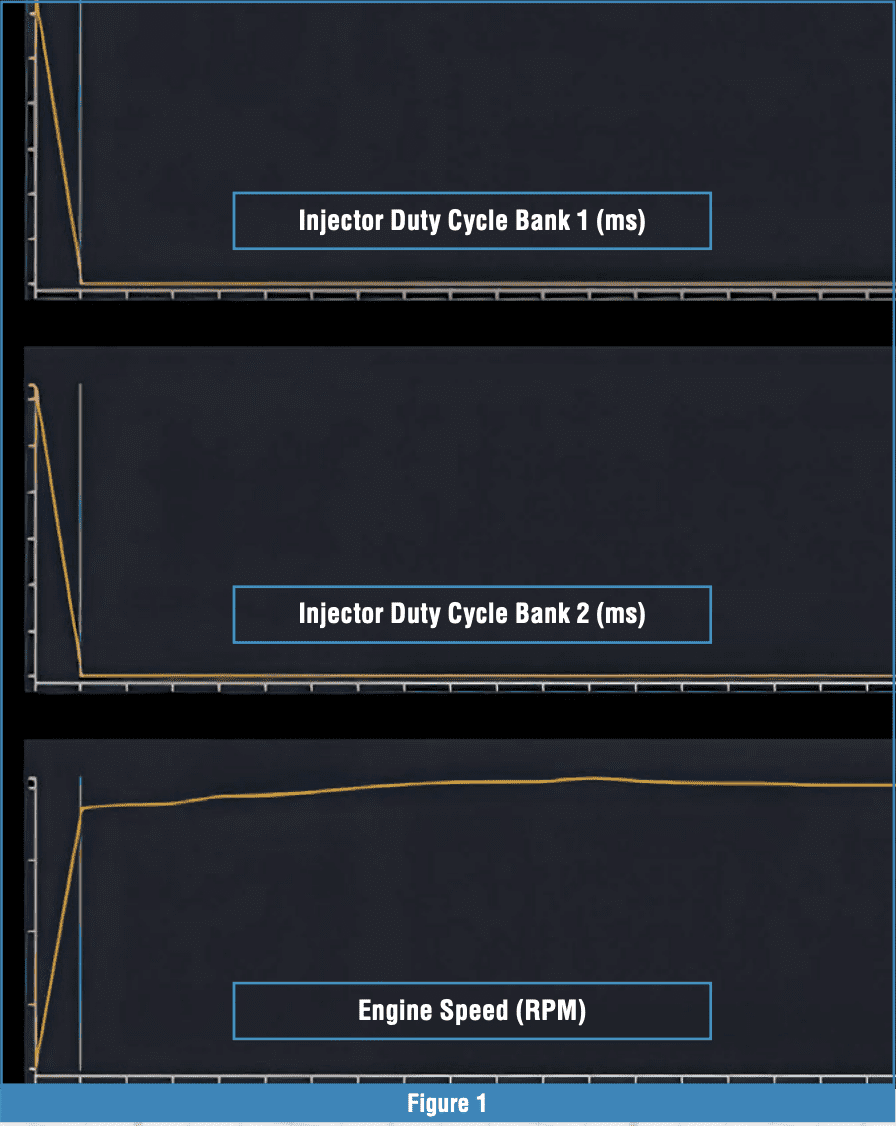
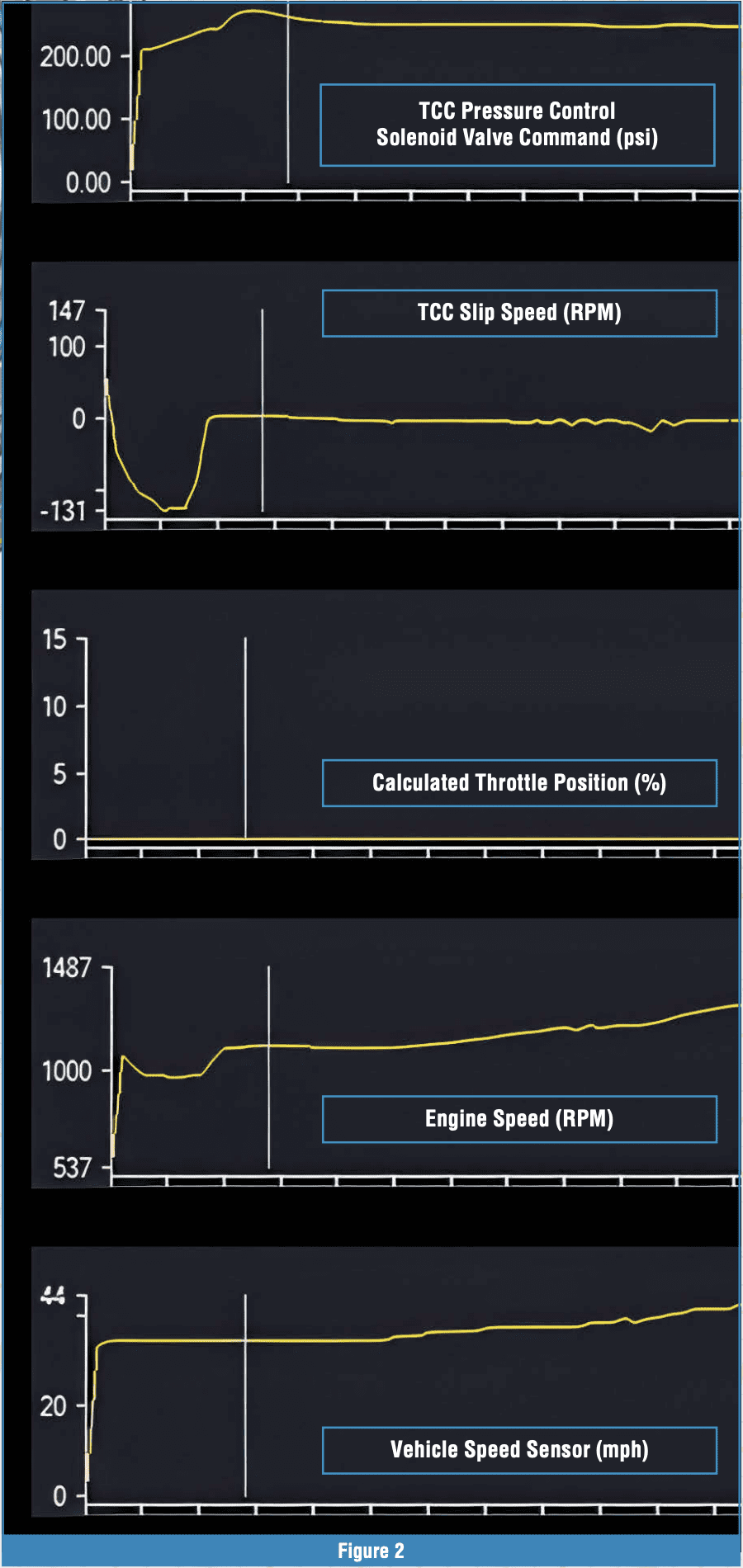
One similarity is when the vehicle is coasting, let’s say down a hill, and the ECM kills ignition and injector duty cycle (Figure 1). At the same time, it commands the converter to try to hold zero RPM of slip. The moment the throttle is depressed, the injector duty and ignition pick up as if nothing happened. Meanwhile, the converter keeps the engine spinning at a desired RPM (Figure 2). (Scan tool data in KPA, not PSI).
Torque Converter Redesign: Dampener Assembly and Friction Plate Enhancements
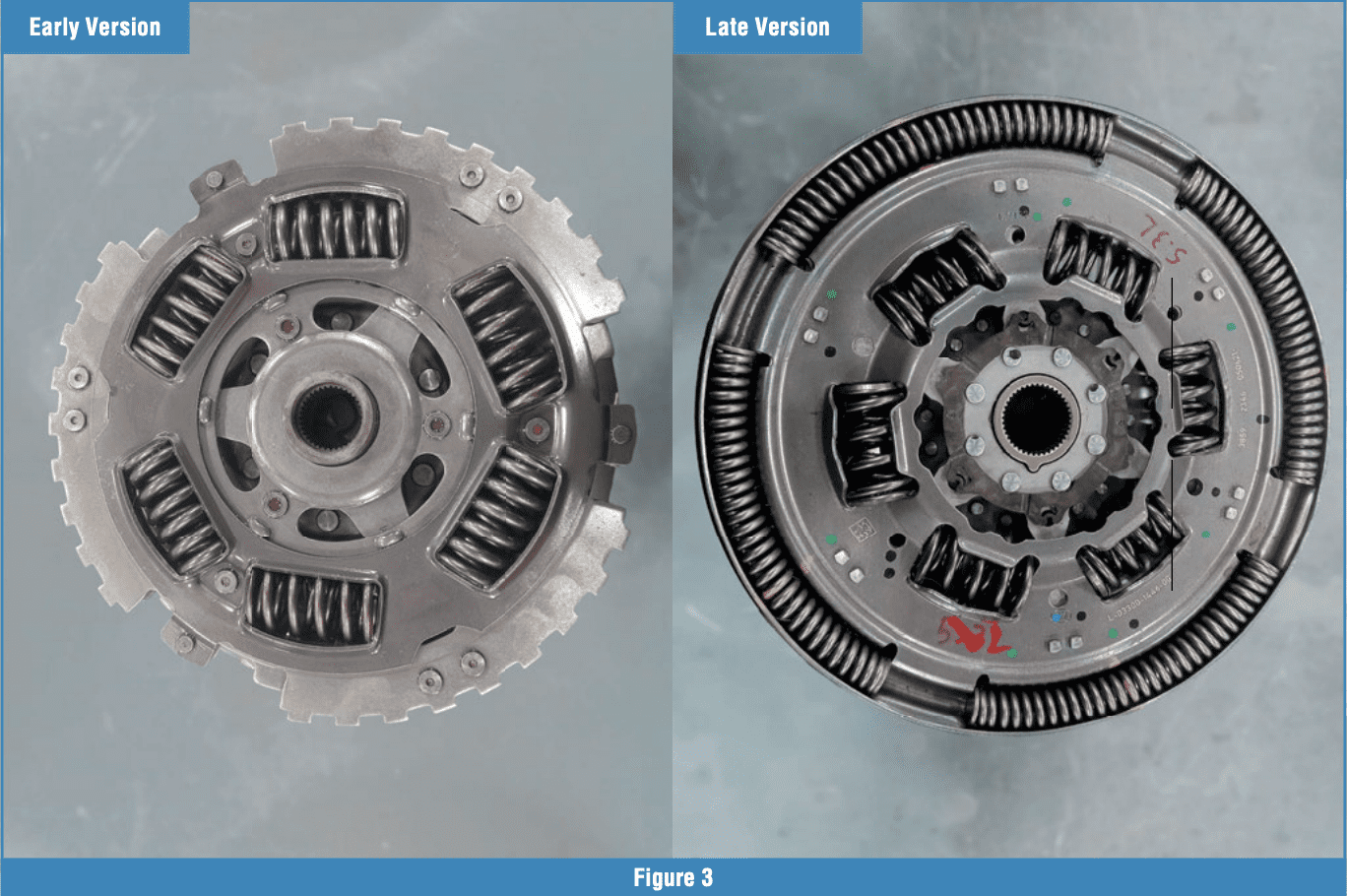
To complement the new fuel management strategies, the 2019 8L90 transmission received a major torque converter overhaul. The dampener assembly was redesigned to better absorb dynamic loads introduced by frequent cylinder deactivation and reactivation (Figure 3).
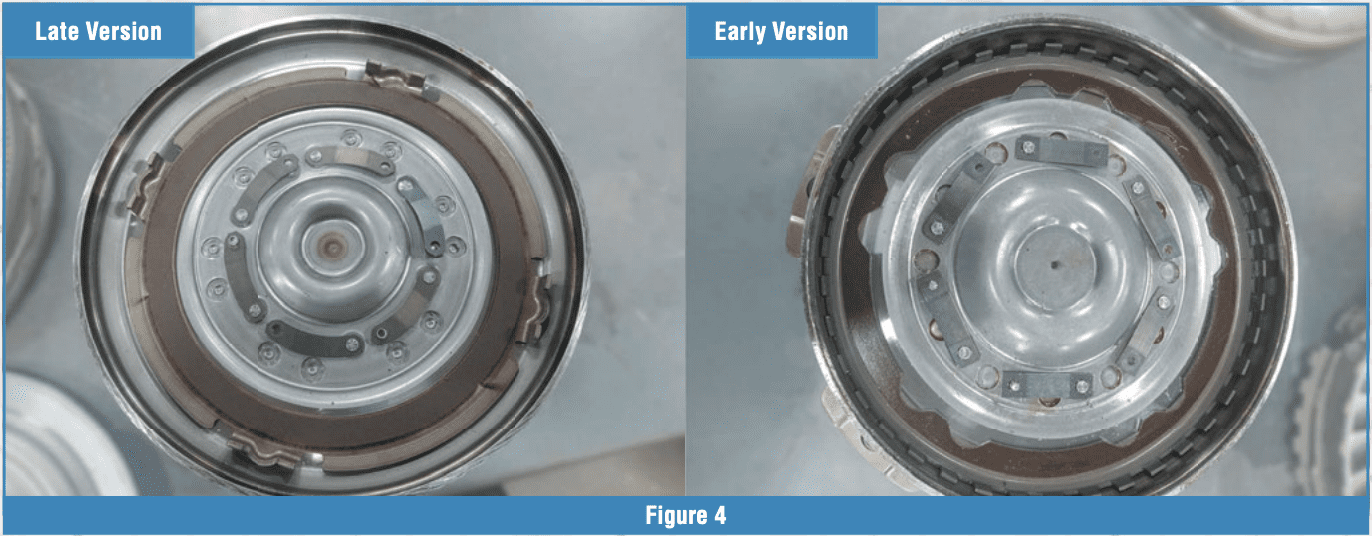
The friction plate alignment was refined for more consistent engagement, and the spring configuration was updated to provide improved torque handling and smoother transitions (Figure 4).

A key addition to the torque converter is the centrifugal pendulum absorber (CPA), which directly addresses the increased torsional vibrations resulting from DFM operation (Figure5). The CPA, integrated into the dampener assembly, is engineered to counteract low-frequency vibrations, ensuring that the transition between cylinder modes remains imperceptible to the driver.
Centrifugal Pendulum Absorber (CPA): Function & Benefits
The centrifugal pendulum absorber is a precision-engineered device that oscillates in response to torsional vibrations within the drivetrain.
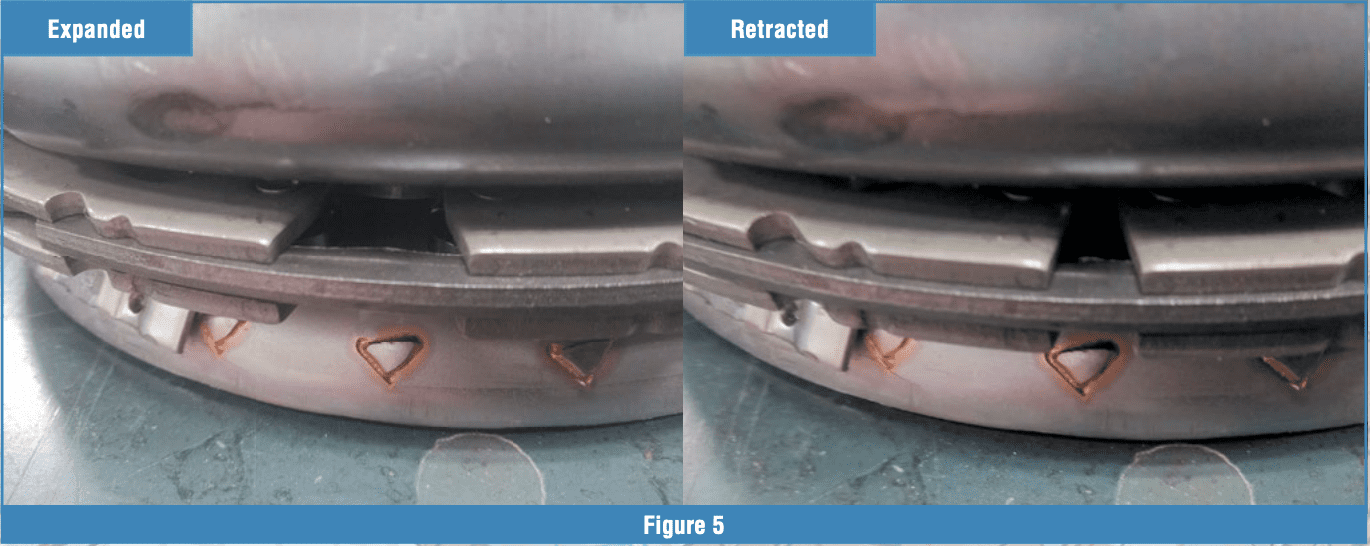
By tuning the CPA to target specific vibration frequencies generated during cylinder deactivation, it effectively cancels out unwanted harmonics. This results in a quieter, smoother driving experience, particularly during low-speed cruising or when the engine is operating with fewer cylinders.
The integration of the CPA not only improves cabin comfort but also extends the service life of transmission components by reducing mechanical stress caused by these vibrations.
Valve Body Changes: S4 Valve & Diameter Modifications
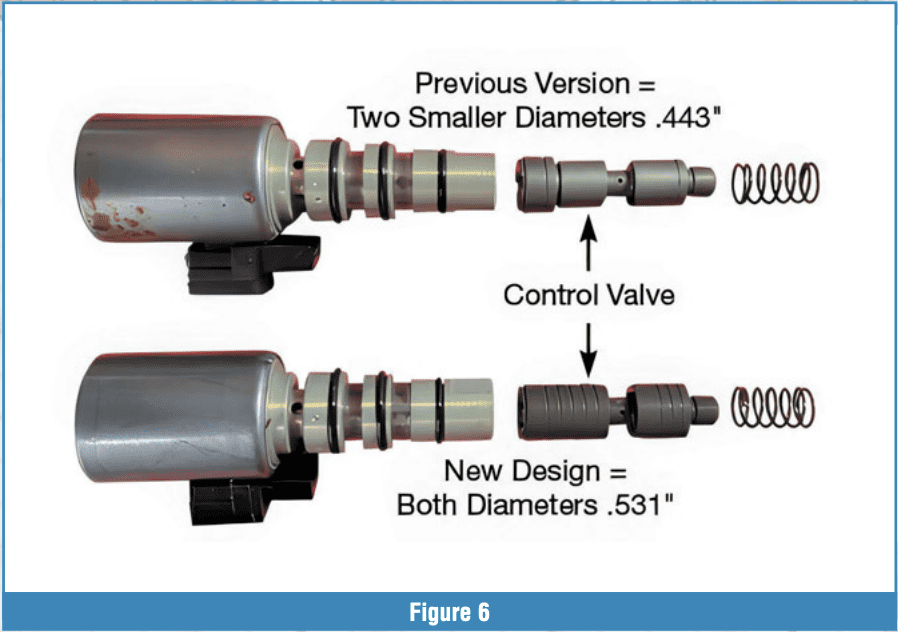
The valve body was also updated for 2019. Notably, the S4 valve and solenoid were revised, and valve diameters were increased to enhance oil flow characteristics. (Figures 6 & 7) These changes may provide better control of the 1-2, especially during DFM’s variable-cylinder operation.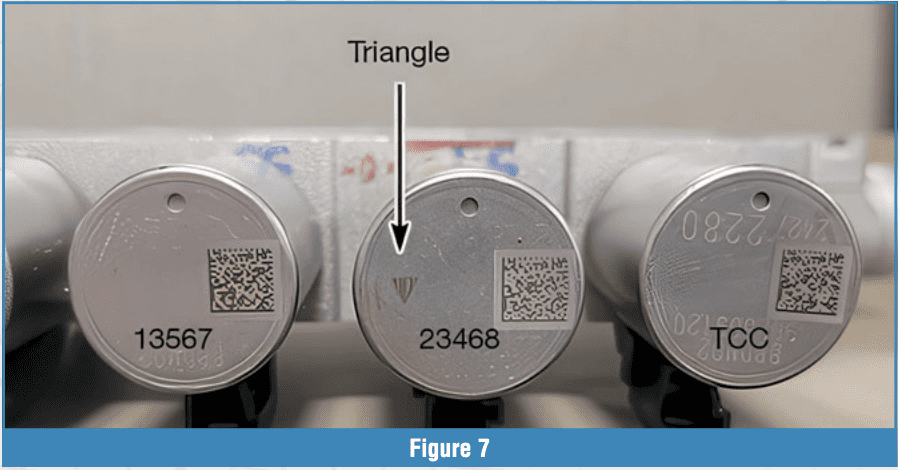
Improved hydraulic control ensures that gear changes remain smooth and responsive, even as engine operating modes change more frequently. The diameters and solenoid may have changed, but the hydraulics stayed the same.
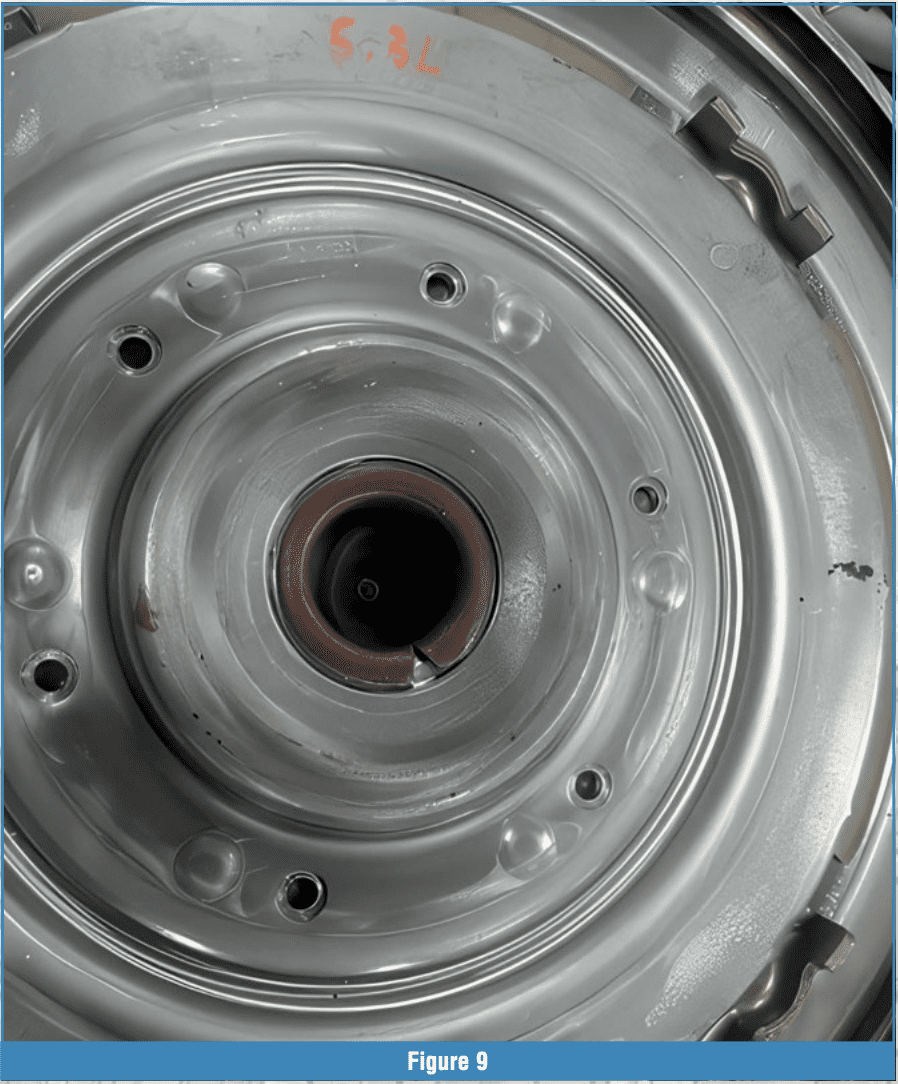
Input Shaft Update: Transition From 36 to 41-Spline One other update in 2019 8L90 is the input shaft. The previous 36-spline input shaft was replaced with a 41-spline variant (Figure 8). The Shaft’s diameter increased slightly to 1.235” over the previous 1.081”. Also note the end of the shaft, as it now has an internal bushing in the converter (Figure 9).  The stator shaft remains the same spline and height.
Conclusion:
In conclusion, the evolution from Active Fuel Management (AFM) to Dynamic Fuel Management (DFM) in engine controls has significantly influenced the design and operation of the 8L90 transmission and its associated components.
These advanced management systems have placed greater demands on the torque converter, elevating its role in both drivability and fuel economy. As the converter now actively manages slip and engine RPM during cylinder deactivation events, any malfunction can manifest as new symptoms—such as shuddering while coasting or unusual vibrations that may be mistaken for engine issues. Consequently, the torque converter is no longer just a passive link but a critical component in achieving optimal fuel efficiency and smooth operation, making its condition and performance more important than ever in modern powertrains.