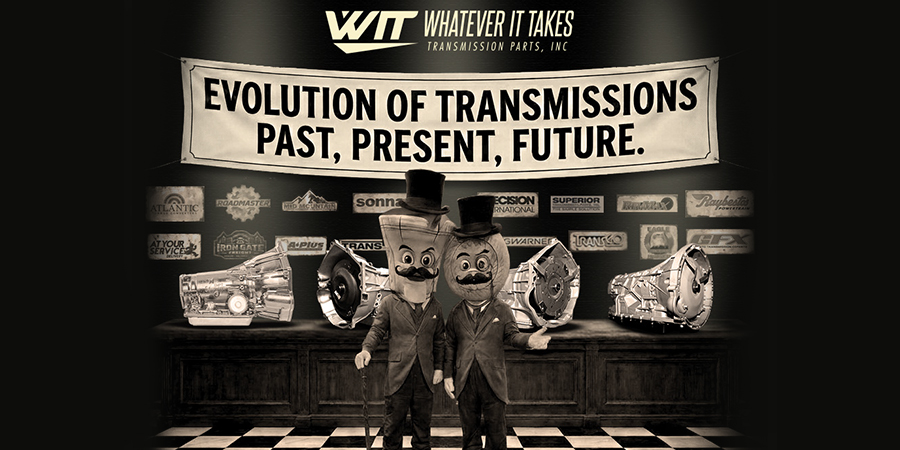
It looks like Electric Vehicles (EVs) will be a more common sight on Australian roads, which will require workshops to have a good understanding on their operation. Mechanically EVs are relatively simple, with a far lower number of moving parts when compared to an internal combustion engine vehicle. Part of this is because most EVs do not have transmissions. However, to improve efficiency, there are several transmissions in development for EV applications.

Transmissions have been used in internal combustion powered vehicles since their inception. This is because the power and torque produced by an engine varies depending on its operating speed, measured in revolutions per minute (rpm). For a typical engine, torque is low at idling speed approximately 750 rpm and reaches a usable value between 1,500 and 6,500 rpm. Within this range is a power band where the maximum torque is produced. The wheels of a vehicle have an operational rev range of zero rpm to approximately 1800 rpm. Transmissions with different gear ratios are required to convert the high rpm from the engine to a much lower rpm with higher torque to get the vehicle moving and to keep the engine within its most efficient rev range.
 Electric motors produce torque in a very different way. Because they can access the full current and voltage from the battery, electric motors can produce maximum torque at zero rpm and have a broad power band. Some electric motors can rev up to 10,000 rpm or more, but most are limited to a lower level to increase reliability. The high torque produced at zero rpm and the wide power band means that many EVs might only have one gear reduction between the electric motors and the wheels. For reverse, they run the electric motor backwards. The maximum speed in reverse is limited by software. This all sounds like a very simple and efficient system. However, there is a problem.
Electric motors with a single gear are great for around town, and a quick getaway from the lights. But this set-up is not ideal for sustained highway speeds and towing, which can impact the one thing everyone with an EV worries about, battery range. An electric motor’s torque output drops off at higher rpm, as does its efficiency, which impacts the battery’s available range. This is why there are companies creating transmissions to keep the motor in its sweet spot for longer.
Bosch installed a continuously variable automatic transmission (CVT) to a test electric vehicle. Called CVT4EV, this transmission increases efficiency by up to 4%. Depending on the application, this transmission can provide more torque, better acceleration, or a higher maximum speed. Due to the electric motor’s reduced torque and speed requirements, a cheaper and more compact motor can deliver the same or even better performance than a larger electric motor.
Alternatively, the same motor can achieve a greater range. As a result, manufacturers of electric vehicles can find the optimum balance between battery capacity and range.
Inmotive, a Canadian-based automotive supplier, has launched its patented Ingear two-speed transmission. Invented and designed for the next generation of electric vehicles, the Ingear features a simple and durable design that enables a more efficient powertrain, with extended range, at a lower cost. Typically, there are two reduction gears between the electric motor and the wheels, with the motor turning about nine times for each revolution of the wheels. The Ingear replaces the second reduction gear with a continuous chain drive and a morphing sprocket that resizes during a shift. The entire shift happens during a single revolution of the wheels.
To shift, an actuator directs sprocket segments into place during a single revolution of the wheels, effectively increasing or decreasing the gear ratio. The Ingear’s patented geometry keeps the motor and wheels in sync, enabling continuous torque flow throughout the shifting process. Shifts can be completed in as little as 19 milliseconds.

The original 2008 Tesla Roadster offered a two-speed transmission which was then changed to a singlespeed unit. Later Tesla models with dual-motors have a clever way around this problem. The motor unit on the rear axle uses a lower gear ratio than the unit on the front axle. For maximum acceleration and low speed driving the rear unit does most of the work. On the highway, the front unit takes over as it is optimized for higher speeds. No transmission, but it still has two different ratios.
Other electric vehicles are using transmissions, such as the Porsche Taycan that uses a two-speed transmission on the rear wheels. The Audi e-tron also has a multi-speed transmission. EV heavy trucks are being planned with multi-speed transmissions for better towing performance.
Depending on the designs used and the applications, there will still be transmissions in the future for technicians to service. However, it is unlikely that the driver will be allowed to change the gears. That will be the computer’s job.
This article was originally published in the November 2022 issue of VACC’s TechTalk magazine and reprinted with the permission of the author and the VACC.