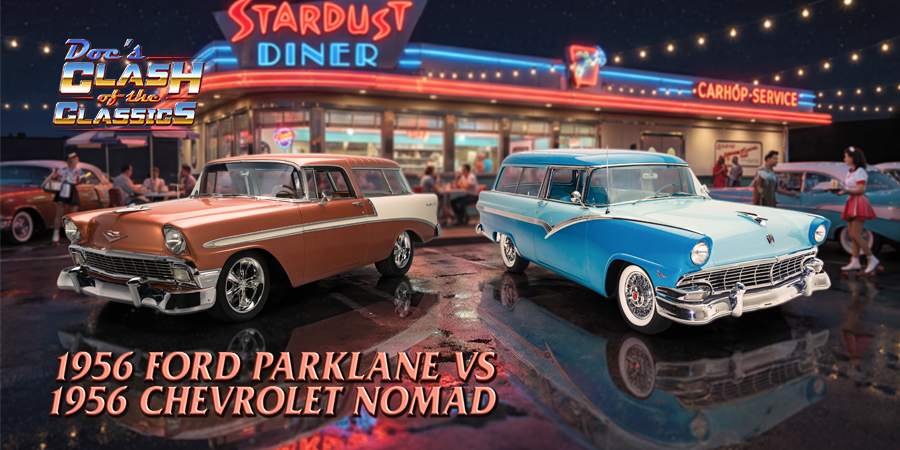
Welcome once again to Clash of the Classics. This month we head back to 1956 for a look at two wagons that captured the spirit of mid-century American optimism and family adventure. Very few models have blended practicality, style, and a touch of sporty flair quite like these two designs.
Both represent symbols of postwar prosperity—roomy enough for the growing family, stylish enough to turn heads at the drive-in, and loaded with chrome that screamed “I’ve arrived.” Today we pit the rare, one-year-only 1956 Ford Parklane against the iconic 1956 Chevrolet Nomad in a showdown that promises to be as nostalgic as it is informative.
1956 was an interesting year in America. The Federal-Aid Highway Act was signed into law, kicking off the greatest road-building adventure in American history—the Interstate Highway System!
Elvis Presley shook up the charts and the airwaves with smashes like “Heartbreak Hotel” and “Hound Dog,” and, for me, (on a more personal note) in November of 1956, my parents got married.
It was also a great time in the automotive industry. GM and Ford were both doing well in terms of sales and both were constantly looking for new ideas to gain an advantage over the competition.
One such idea was the station wagon, Detroit believed the station wagon could be something more than a family appliance. The idea was simple but ambitious: take the practicality of a wagon and combine it with the glamour and attitude of a hardtop coupe. The result would be a new kind of car— stylish, aspirational, and just practical enough to justify its existence.
Two of the most compelling expressions of that idea were the 1956 Ford Parklane and the 1956 Chevrolet Nomad.
Both were two-door sport wagons. Both were trimmed and marketed like premium models. And both attempted to transform the station wagon into something desirable rather than merely useful.
Yet despite their similarities, these two cars approached the concept in very different ways. One was bold and flamboyant, the other restrained and dignified. One has become a legend among collectors, while the other remains a fascinating and somewhat underappreciated rarity.
Looking back nearly seventy years later, the Parklane and Nomad reveal a great deal about the design philosophies of Ford Motor Company and Chevrolet during the golden age of American automotive styling.
To understand these cars, it helps to remember the cultural context of the mid-1950s.
Station wagons were growing in popularity as suburban life expanded across America. Families wanted space for children, groceries, and luggage. Yet wagons still carried a slightly utilitarian reputation—something practical rather than stylish.
Designers began to experiment with ways to change that perception.
At Chevrolet, inspiration came from a show car. The Nomad concept debuted at the 1954 Motorama, blending the sleek roofline of the Corvette with the proportions of a wagon. The reaction was enthusiastic enough that Chevrolet decided to put the car into production.
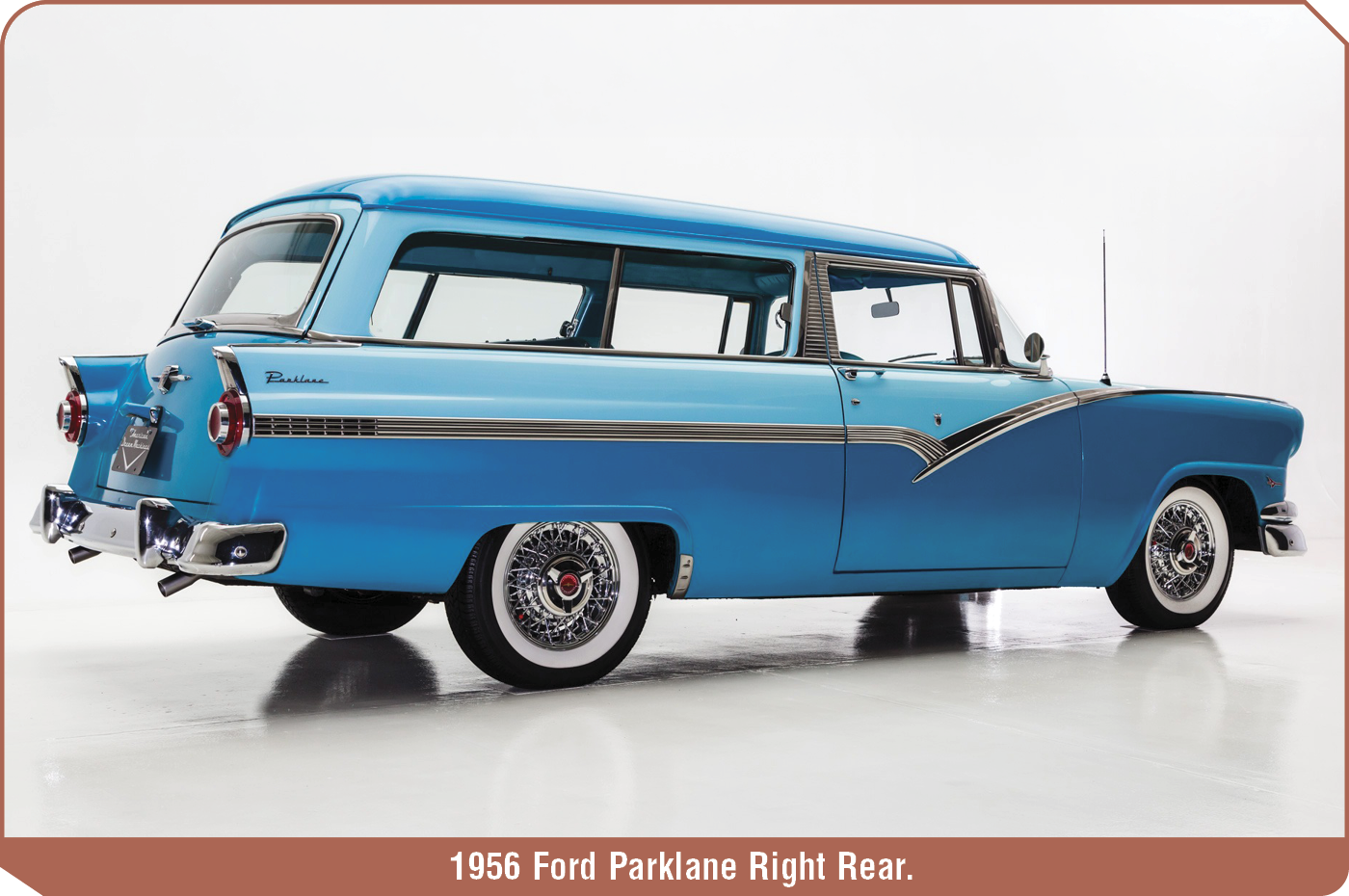 Ford, watching closely, developed its own interpretation. Instead of building an entirely unique body, Ford combined the structure of its two-door Ranch Wagon with the upscale trim of the Fairlane line. The result was the Parklane—a premium wagon intended to compete directly with the Nomad.
Both cars entered the 1956 model year representing the peak of the sport wagon idea. Visually, the Nomad and Parklane reflect two distinct design philosophies.
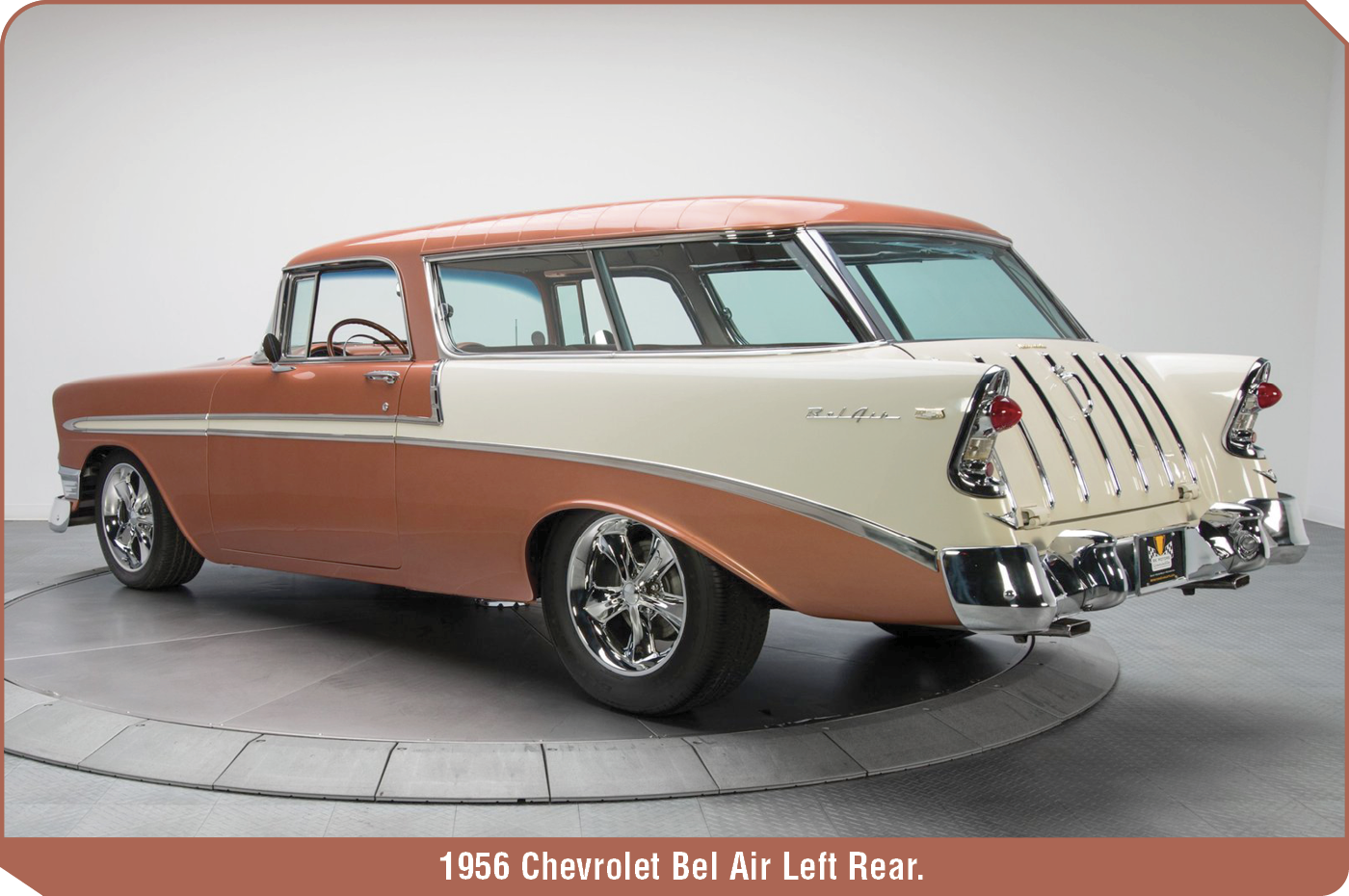
The 1956 Chevrolet Nomad is dramatic and unmistakable. Its roofline slopes gracefully toward the rear, supported by distinctive angled B-pillars and ribbed roof panels that give the car a sense of motion even when parked. The chrome trim flows along the side in sweeping arcs, accentuating the car’s length and emphasizing its premium status.
The tailgate area is arguably the Nomad’s most memorable feature. The wraparound rear glass and polished trim create a light, airy greenhouse that feels more like a sporty coupe than a traditional wagon.
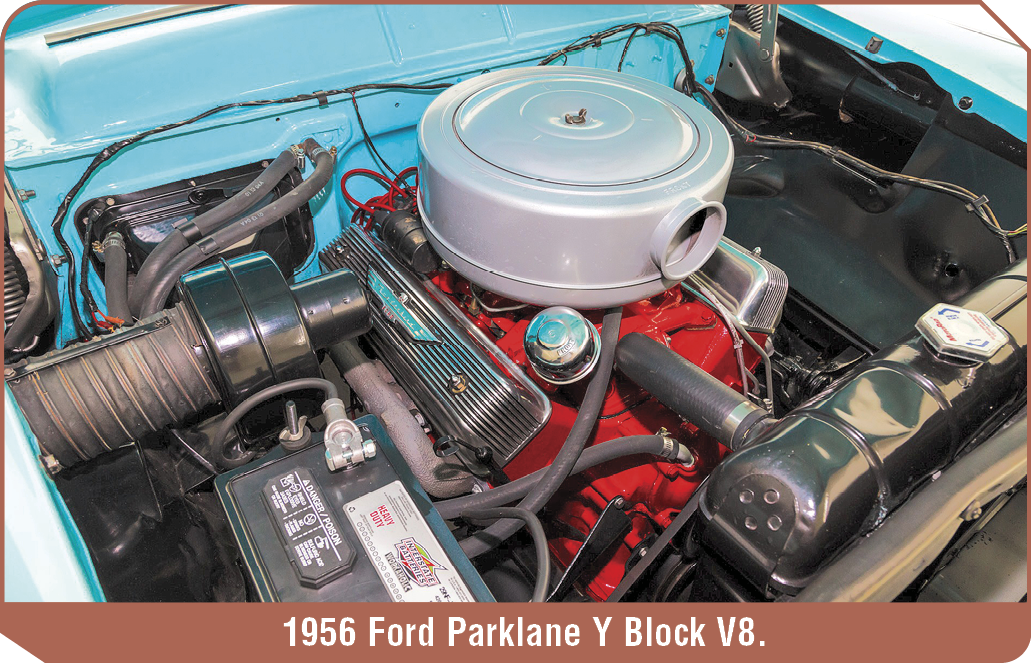 Ford engineers took somewhat of a more restrained approach as the Parklane retains the upright roofline of the Ranch Wagon, which makes it slightly more practical and spacious.
Where the Nomad is flamboyant, the Parklane is sophisticated. Its styling feels balanced and confident rather than experimental.
Interestingly, this difference reflects the broader identities of the two brands. Chevrolet often leaned toward youthful exuberance, while Ford emphasized durability and understated refinement.
Both approaches worked beautifully in their own way. Inside the cabin, the two wagons again reveal different priorities.
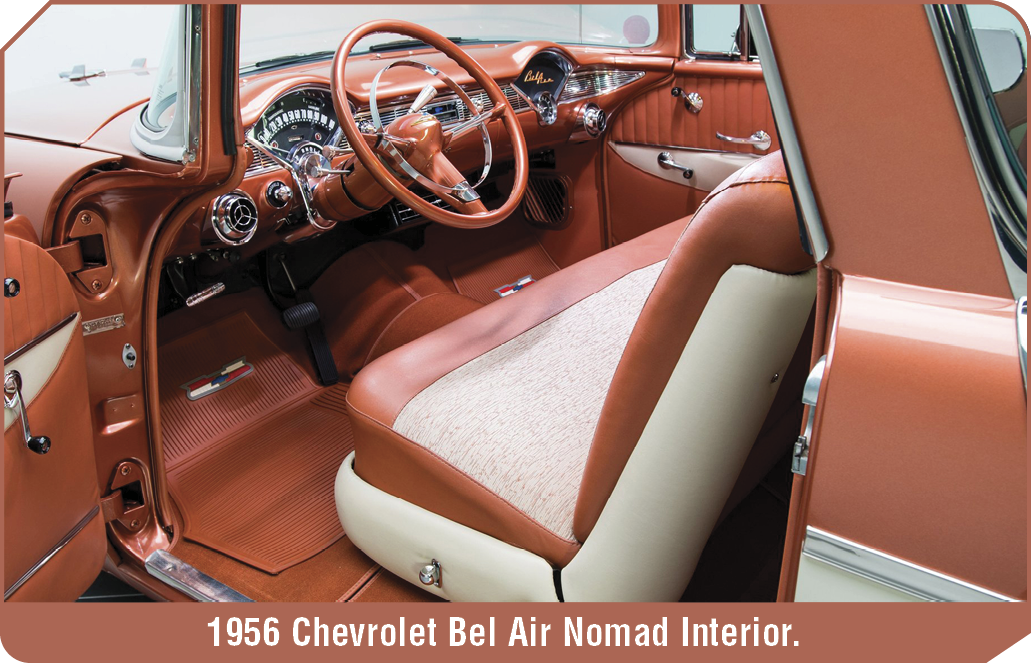
 The Chevrolet Nomad interior was designed to feel sporty and upscale. Patterned upholstery, polished metal accents, and carefully coordinated color schemes helped create an environment that felt closer to a Bel Air hardtop than a family wagon.
The rear cargo area was trimmed attractively as well, reinforcing the idea that this was not merely a utility vehicle but something special.
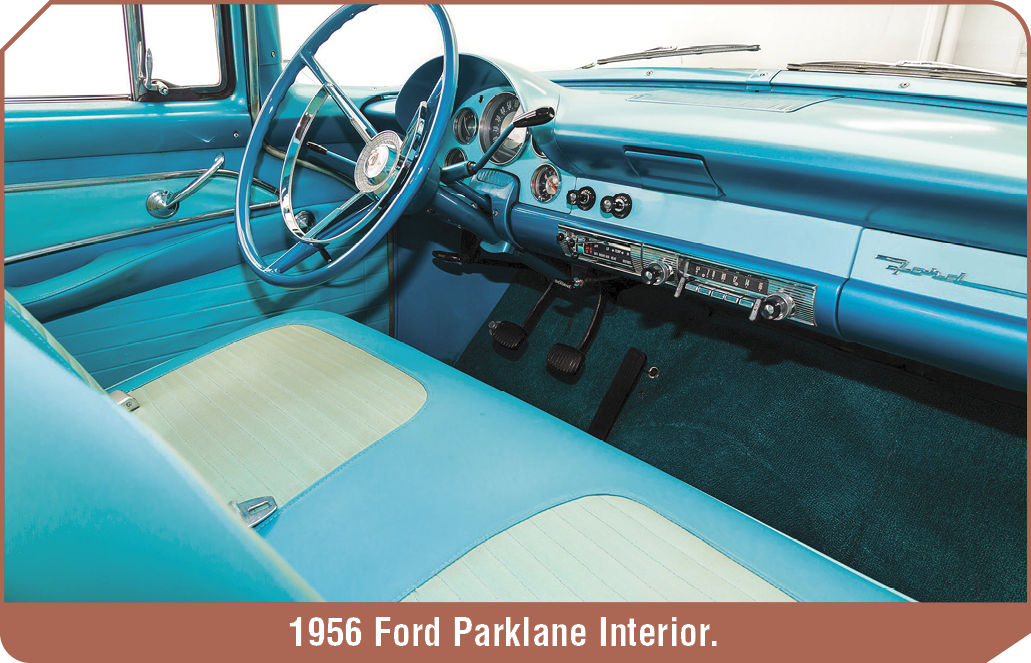
The Ford Parklane, however, offered a more luxurious atmosphere.
Ford used high-quality materials, tasteful two-tone seat patterns, and elegant dashboard styling. The interior felt refined and mature—less flashy than the Nomad but perhaps more comfortable for long trips.
Another advantage of the Parklane’s design was practicality. Because it retained a more traditional wagon roofline, rear passengers enjoyed slightly better headroom, and the cargo area was easier to load. In terms of everyday use, the Ford is probably the more accommodating car.
Under the hood, both wagons delivered the kind of performance expected from mid-1950s American cars.
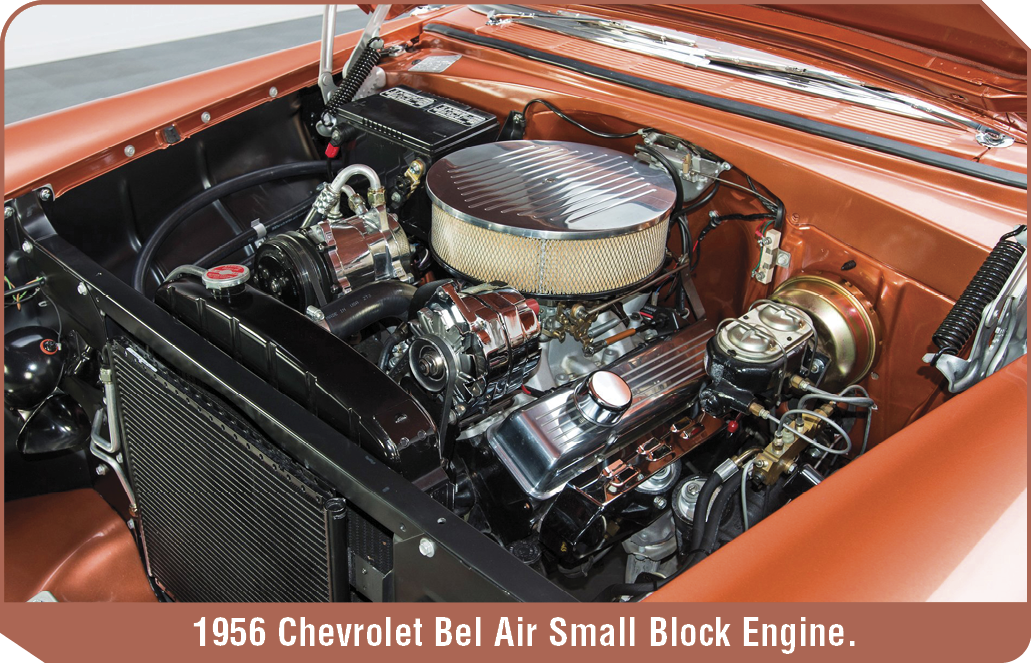
The 1956 Chevrolet Nomad came standard with Chevrolet’s inline-six engine but was most often ordered with one of the brand’s famous small-block V8s.
Buyers could pair the engine with a three-speed manual transmission, overdrive, or Chevrolet’s smooth Powerglide automatic.
The 1956 Ford Parklane offered its own impressive range of engines, and like Chevrolet, Ford offered both manual and automatic transmissions.
The Ford Y-block V8 was available in several displacements and power ratings, delivering strong torque and dependable performance. Personally, I’ve always been a big fan of the 292 cid. Growing up, my father and I spent considerable time with that engine and the cast iron Ford-O-Matic.
 On the road, the differences between the two cars were subtle. The Nomad often felt slightly sportier thanks to its lighter weight and responsive small-block engine. The Parklane, meanwhile, emphasized smoothness and stability, making it an excellent highway cruiser.
Neither car was intended to be a sports car. Instead, they delivered relaxed performance suited to the open American highways of the era. While both cars were marketed as stylish wagons, practicality remained important.
The Nomad’s unique roofline and dramatic styling came with a tradeoff: slightly reduced cargo capacity and rear headroom compared with conventional wagons. For many buyers, however, the style was worth the compromise.
 The Parklane leaned more heavily toward practicality. Its traditional roof structure provided more usable interior space, and the cargo area felt less constrained.
In other words, the Parklane behaved more like a true wagon, while the Nomad behaved more like a stylish experiment. This difference likely influenced how buyers perceived the two cars. Despite their appeal, sport wagons were never huge sellers.
The 1956 Chevrolet Nomad achieved moderate success, with approximately 7,886 units produced for the model year. While not a mass-market hit, it generated significant attention and helped establish the Nomad as an icon of 1950s design.
 Ford produced about 15,000 Parklanes in 1956 and while the numbers were slightly higher than the Nomad, it was still a niche product compared with Ford’s mainstream models.
Interestingly, the Parklane existed for only one year before Ford replaced it with the Del Rio in 1957. The Nomad, meanwhile, continued through several design generations before eventually disappearing from the lineup.
Over time, the Chevrolet Nomad has become one of the most recognizable wagons ever produced. Its distinctive roofline and show-car origins gave it an enduring mystique.
Today, the Nomad is celebrated at car shows and collector auctions around the world. The Ford Parklane, on the other hand, occupies a quieter place in automotive history.
Because it was produced for only one year and lacked the radical styling of the Nomad, it never achieved the same level of fame. Yet among enthusiasts who appreciate rarity and subtle design, the Parklane has become highly respected.
Behind the wheel, both cars deliver the relaxed charm typical of mid-1950s American automobiles.
The Nomad feels light and lively. The small-block V8 provides smooth acceleration, and the car’s relatively compact dimensions make it easy to maneuver. Its styling also creates a sense of occasion—people notice when a Nomad passes by.
The Parklane feels slightly more substantial. Its suspension tuning favors comfort over agility, and the car settles into highway cruising with confidence. Driving either wagon today feels like stepping into a different era. Among collectors, the Nomad has achieved near-mythical status. Restored examples command impressive prices, and the model enjoys strong aftermarket support.
The Parklane, by contrast, remains somewhat under the radar. Yet this very fact adds to its appeal. Because fewer people know about the Parklane, encountering one at a car show feels like discovering a hidden gem.
Collectors who appreciate unusual Ford models often seek them out specifically for their rarity and historical significance. The 1956 Ford Parklane and the 1956 Chevrolet Nomad represent a fascinating chapter in automotive history. Both attempted to transform the station wagon from a purely practical vehicle into something stylish and aspirational. Both succeeded in their own way.
Today, these two cars remind us of a time when Detroit was willing to experiment—to blend practicality with style and create vehicles that were as expressive as they were functional. And in that brief moment during the mid-1950s, the humble station wagon became something extraordinary.
As I close for this month, I must admit that I am biased toward the look of the 1956 Chevy. A close personal friend of mine, Kevin Smith, is currently restoring a ’56 two-door that I cannot wait to report on. Of all the various classic car models, the 1956 Chevy ranks in my top 3 must-haves!
I also admit that I am a huge fan of this ’56 Parklane, I got a chance to experience a true survivor car a few years back at the Fabulous Fords Forever event in So. Cal, it was definitely a highlight moment.
Now comes the time when we here at Clash of the Classics have to choose which car we like better and today the nod goes to the Nomad. While both of these cars are truly iconic, it is the Chevy that gets the checkered flag today.
As always, we’d love to hear from you, let us know which car you prefer and why.
Until next time when we take a ride on a classic highway, stay safe… stay timeless… stay classic!