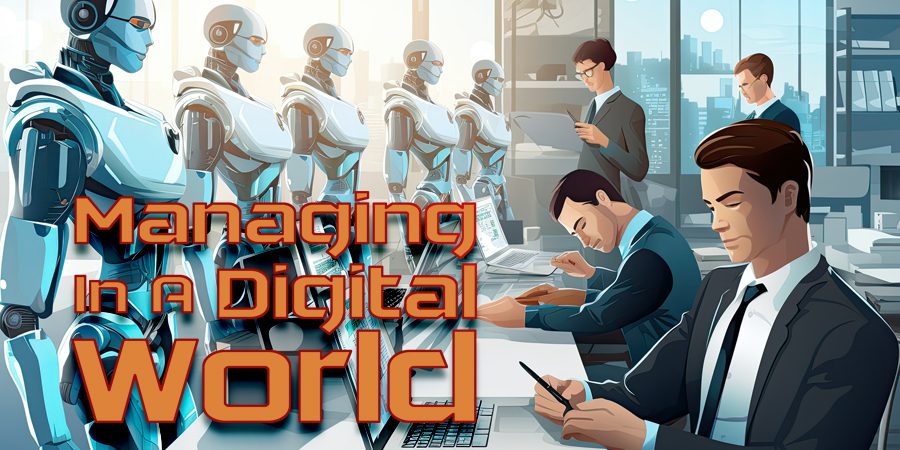
Every day we see headlines touting how much AI is taking over our lives. Yet, when we leave the house, get in the truck, drive, and arrive at work… There’s no AI to be seen. Hmmm.
When we turn on the news we hear about Wars, Police Raids, Congressional Conflicts, and Tragedies. Yet when we turn off the TV, there’s just our family room and kitchen, spouse and kids, dogs and cats, but no political issues. Hmmm.
On the radio we hear news updates and in publications we see headlines that warn of the dark implications and tell us we should brace ourselves. They say, “Citizens, fear another flood season. Fires may be even worse next time! Crime statistics indicate a disturbing trend. Temperatures are near record levels!”
Here’s a headline I read just a moment ago: “AI Bubble Warning: Economic Collapse Before Tech Delivers.” What’s a person to do?
Look outside right now. Just pause and peek out the door or window. Do you see evidence of ANY of the fearful items mentioned above? Neither do I.
Your life and mine are determined primarily by our daily actions and personal choices. Your business is the same; it’s a reflection of your daily actions, NOT the political landscape, climate crisis, nor fearful statistics. But your mindset is an entirely different scenario.
Your well-being is the result of two things: What actions you take, and What you feed your mind.
If we leave the radio playing all day, and it is tuned to a news station, then we are being conditioned passively to embrace the fear, dread, and skepticism that the news people spread. Likewise, if we watch “Soap Operas” (Daytime TV Dramas) daily, then we’ll soon think and feel like they do. We’ll see dark implications behind every word or deed. We’ll expect bad luck, bigotry, betrayal, and think everybody is out to cheat us. Turn it off!!!
In the early days of radio, actor Orson Welles had a dramatic show. On October 30, 1938, he broadcast a dramatization of H.G. Wells’ book, “War of the Worlds.” It was performed as if it was true and current news, and it depicted the invasion of Earth by Martians! The show was so convincing that it caused a nationwide panic. Some reports said people jumped out of high-rise windows to avoid being captured by Martians. None of it was true, of course. But listeners were convinced by the news format.
What are you convincing yourself and your team of each day? Again, Turn it off! Find a music station or an auto-lovers podcast to stream instead.
Famous motivator Charlie “Tremendous” Jones was a friend of mine. He was known for saying, “Five years from now, you will be the same person you are today except for two things: the people you meet and the books you read.”
Today we read fewer books but ingest even more information. The trouble is most of our information diet is incidental, not intentional. In other words, we read what we run across rather than what we choose to read.
Reading a book is a very different experience from scanning news feeds or scrolling Facebook and Instagram. The book immerses you; the scrolling just entices you.
Action steps for Managing in our Digital World:
- Be Aware of what goes into your mind. Notice what you are listening to or hearing in the background daily. Notice what you read, not just the item but the pattern – the types of sources and content you are seeing daily.
- Choose what’s in your workplace. Select posters or wall decorations that guide folks to good thoughts. Replace the “You want it when? Ha Ha” poster with something more useful. Choose soundtracks with helpful or pleasing sounds, not news broadcasts. Make it pleasant to be in your workplace.
- Don’t take the news too seriously. Every news source is somewhat biased and most of them are extremely biased. Don’t buy their fears, hates or hang-ups.
- Whenever you get worried, stop and look around. Do you see a threat, or do you see coworkers, tools, customers and nature? React to reality not concepts.
- Remember this above all else: Human Contact is the most important business asset! Not hydraulic lifts, transmission parts, training manuals, contracts, location, parking, or any other industrial factor. Talking with customers, coworkers and suppliers is where everything useful happens. That’s the source of jobs, profits, and support. Everything else comes second.
The reports on how hard times are lurking around the corner aren’t your truth. Business is as good as you make it through your thinking and human contact – not through AI-generated digital messaging!
Jim Cathcart, CSP, CPAE is a longtime friend of ATRA and contributor to GEARS magazine. He’s the original author of Relationship Selling and has been inducted into the Sales & Marketing Hall of Fame in London, England. Coauthor of HI-REV for Small Business with Dennis Madden. Jim is a Mentor to Expert Based Businesses, a Business Advisor who helps people become a Certified Professional Expert, CPE™. Contact Jim at info@cathcart.com or Cathcart.com.