For decades, transmission technicians focused almost exclusively on hydraulic circuits, gear ratios, clutch packs, and electronic controls contained within the transmission itself. Today’s vehicles have changed that mindset completely. Modern automatic transmissions no longer operate as isolated components. Instead, they function as part of an integrated vehicle network where information from seemingly unrelated systems can alter transmission strategy in real time. One of those systems is the Tire Pressure Monitoring System (TPMS).
At first glance, TPMS appears to have one simple responsibility; warn the driver of low tire pressure. However, the information generated by the TPMS and wheel speed sensors can influence transmission shift quality, torque converter operation, adaptive learning, and even diagnostic routines. Understanding these interactions has become increasingly important for transmission specialists who routinely diagnose complaints that extend beyond the transmission housing.
Two Types of TPMS: Direct and Indirect TPMS
Manufacturers use two basic TPMS designs.
Direct and Indirect TPMS. Direct TPMS uses a battery-powered pressure sensor mounted inside each wheel. Each sensor measures tire pressure, internal tire temperature, sensor battery condition, and unique sensor identification. The information is transmitted by radio frequency to a TPMS receiver, which shares data across the vehicle’s communication network. This system reports actual tire pressure values and can identify exactly which tire is low.

Indirect TPMS contains no pressure sensors. Instead, it uses the Anti-lock Brake System (ABS) wheel speed sensors to compare rotational speed between all four tires.
A tire with reduced air pressure has a smaller rolling circumference, causing it to rotate slightly faster than the others. The ABS module recognizes this speed difference and determines that tire pressure has decreased. Also, incorrect or mismatched tires can directly affect the operation. Although indirect TPMS does not measure pressure directly, it relies entirely on accurate wheel speed information.
Now here is the part that is important to us in the transmission industry. A transmission control module (TCM) continuously calculates vehicle operating conditions using dozens of sensor inputs. Among the most important are:
- Vehicle speed
- Engine load
- Wheel speed
- Accelerator position
- Brake switch
- Yaw rate
- Steering angle
- Traction control status
Wheel speed information serves as a primary input for determining:
- Shift timing
- Torque converter clutch application
- Downshift schedules
- Adaptive clutch pressure adjusting
- Shift quality monitoring
If one tire rotates faster because of low inflation, the TCM may interpret the difference as wheel slip rather than simple tire pressure variation or a change in the effective gear ratio. A properly inflated tire maintains its designed rolling diameter. When tire pressure drops significantly, rolling circumference decreases and wheel RPM increases. This causes the effective final drive ratio to change slightly. Although the change may appear insignificant, today’s transmission software measures vehicle speed with remarkable precision.

For example: A vehicle traveling 60 MPH with one tire underinflated by 20 PSI may produce several additional wheel revolutions every mile compared to the other wheels. To the transmission controller, this discrepancy resembles minor wheel slip, traction loss, or uneven driveline loading. The TCM responds by adjusting transmission operations to maintain drivability.
 TPMS Faults and Codes
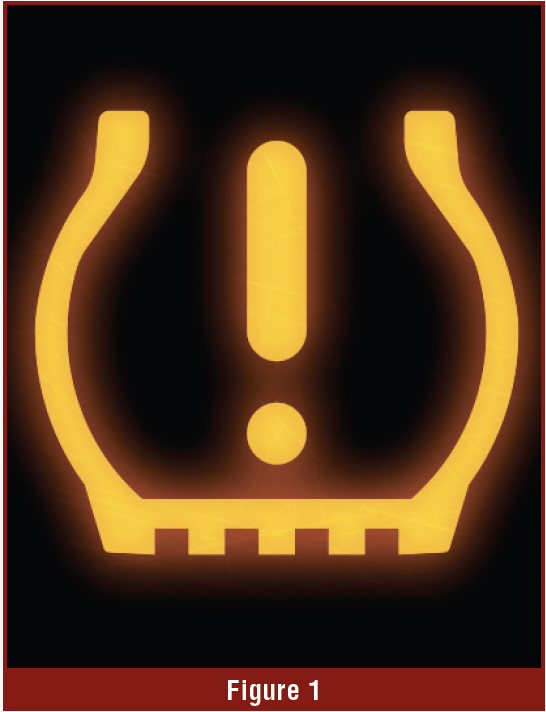
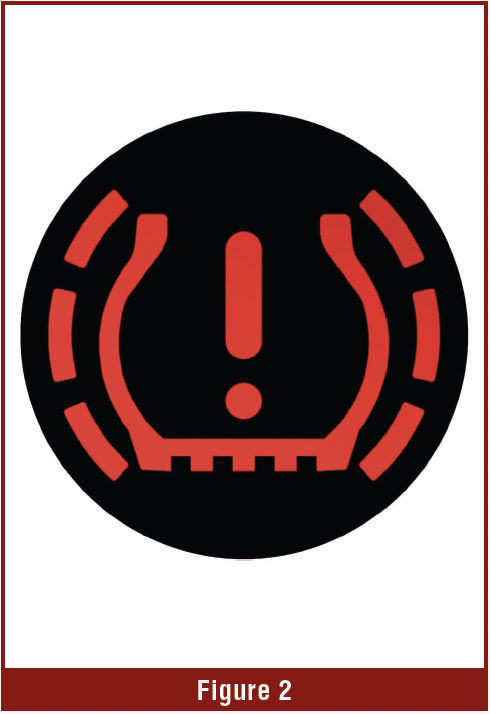
The transmission controller may enter a default operating strategy when messages from the TPMS become unavailable. This reinforces the importance of performing a complete vehicle scan during diagnosis. Note there are two different warning light signals for the TPMS. Figure 1 shows a low tire alert and Figure 2 indicates a system fault or failure.
After correcting tire pressure or addressing TPMS DTCs, it may be necessary to perform the manufacturer’s TPMS relearn procedure. Always refer to manufacturers’ procedures to ensure the TPMS system is returned to proper operating conditions.
Torque Converter Clutch Operation
Many modern transmissions delay or cancel torque converter clutch (TCC) engagement whenever wheel slip is detected. The logic is simple. A locked converter reduces drivetrain flexibility. If traction conditions are unstable, keeping the converter unlocked allows smoother torque delivery.
When TPMS-related wheel speed differences suggest traction instability, the transmission may:
- Delay or cancel TCC apply
- Increase converter slip
- Modify lockup pressure
TPMS-related adjustments while the driver has cruise control activated may result in a customer complaint of transmission hunting. However, based on sensor input, the transmission may be responding exactly as designed.
Transmission shift scheduling and torque converter apply strategy depend heavily upon calculated vehicle speed. If tire diameter changes, vehicle speed calculations become less accurate. Shift timing changes slightly. Clutch fill times may be modified. These changes are usually subtle but become more noticeable when multiple tires have incorrect pressures or mismatched tire sizes are installed.
Adaptive Learning Miscalculations
Adaptive learning can be misled. Modern adaptive transmissions constantly learn clutch apply characteristics. The TCM compares engine torque, input shaft speed, output shaft speed, and wheel speed. Using these values, it determines whether each shift occurred correctly.
When one wheel consistently rotates faster because of low pressure, adaptive calculations may become distorted. The result may include firmer shifts, softer shifts, longer shift times, and incorrect adaptive corrections. Technicians sometimes reset transmission adaptations only to discover the concern returns because the underlying cause, a low tire, was never corrected.
A TPMS Problem = A Transmission Concern
TPMS faults rarely set transmission-specific Diagnostic Trouble Codes (DTCs). However, on vehicles as early as 2015 and up, TPMS codes may directly affect transmission operation.
For example, a 2019 Jeep Cherokee equipped with the 948TE transmission interacts intimately with the TPMS system. Low tire pressure or a fault in the TPMS system causes the TCM not to command a shift into 8th or 9th gears at highway speeds, with no TCM DTCs. A low tire pressure light or sensor failure causes the TCM to inhibit upper gear commands, as the vehicle speed data from the ABS may be questionable. The PCM uses wheel speed data from the ABS module to calculate vehicle speed. With a TPMS fault or low tire pressure, the validity of the speed signal from that wheel is questionable. Rather than risk an incorrect ratio check or a shift flare, the system locks out the two highest gears.
Manually shifting the transmission through Autostick or paddle controls into 8th and 9th gear will verify that the transmission is functional. Returning to the drive position will cause the transmission to downshift back into 7th gear. Addressing the TPMS fault or adjusting tire pressure will return normal transmission operation.
The Technician’s Takeaway
Modern transmissions are no longer controlled solely by hydraulic pressure and internal sensors. They rely on information from nearly every electronic system on the vehicle, including the Tire Pressure Monitoring System.
A low tire may seem insignificant, yet it can alter wheel speed calculations, influence adaptive learning, modify torque converter operation, and change shift scheduling. As vehicle integration continues to increase, transmission technicians must expand their diagnostic approach beyond the transmission itself.
Before condemning a valve body, replacing solenoids, or rebuilding a transmission, take a few moments to inspect tire pressures, verify wheel speed data, and scan every module on the network. Sometimes the smallest contact patch on the vehicle can have the biggest influence on how the transmission performs.
Tech Tip
Before beginning transmission diagnostics, always verify:
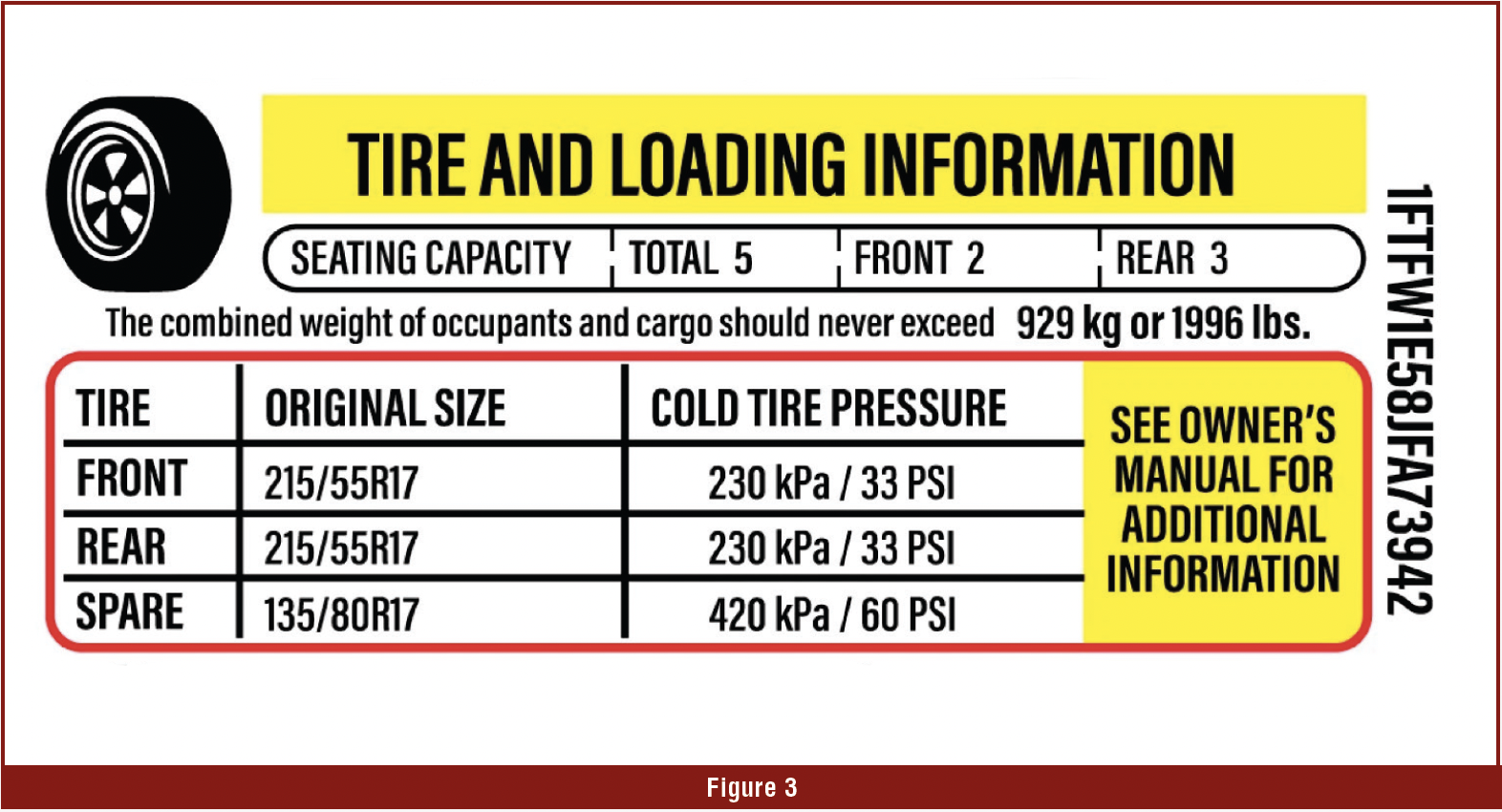
- All four tires are inflated to the manufacturer’s specification. All manufacturers place a tag on the drivers’ side door or door pillar containing tire information such as factory tire size and recommended inflation pressure (Figure 3). The TPMS and other systems are programed to these specifications to process and relay accurate information.
- Tire sizes and rolling circumferences match. Verify that all four tires are of the correct size according to the tag. This is especially critical for All Wheel Drive vehicles. Some 4 Wheel Drive vehicles allow you to program the tire size in anticipation of aftermarket wheels being installed. An excessively worn tire is something to be aware of also.
- No TPMS or ABS warning lights are active. You may also notice a Traction Control light accompanying a TPMS or ABS light. Warning lights are a clue to be used when looking outside of obvious issues or failures.
- Wheel speed sensor data is consistent during a road test. When monitoring wheel speed data pay close attention to the readings, it only takes a small variation to change vehicle performance.
- A complete network scan shows no communication faults. Always look beyond the transmission when performing your diagnostic routine. Even if you think that it’s not related to the transmission.
Five minutes spent checking the tires can save hours of unnecessary transmission diagnosis and prevent replacing parts that were never at fault.