Technology continues to move forward, and nowhere is that more evident than in today’s vehicles. In this issue, we’re focusing on new technologies and how they impact the transmission industry. One system that may not immediately seem transmission-related is the Electronic Parking Brake (EPB). The first question many technicians ask is, “What does that have to do with transmissions?” The answer is simple: as transmission technicians, we must understand how other vehicle systems function and interact. Modern vehicles are highly integrated. There will be times when unusual EPB-related situations affect our ability to complete a job, such as a vehicle arriving with a dead battery and a parking brake that won’t release. In this article, we’ll use the Jeep Cherokee as our demonstration vehicle while providing an overview of EPB functions, operation, and service challenges.

First, The Parking Brake Reengineered: A Technical Overview of Electronic Parking Brakes.
The traditional mechanical handbrake lever has steadily disappeared from modern vehicle interiors, replaced by a compact electronic switch. Behind that small switch lies a sophisticated system known as the Electronic Parking Brake (EPB). While the system simplifies driver operation and improves integration with advanced safety features, it introduces new levels of technical complexity —particularly when a vehicle becomes inoperative, and the brake must be released.
Electronic Parking Brakes replace the conventional cable-actuated mechanism with electronically controlled actuators mounted at the rear brakes. Instead of physically pulling a cable to apply clamping force, the driver sends a signal through a momentary switch to a control module. That module processes vehicle conditions and commands electric motors that apply the rear brakes. As with all modules today, the EPB module communicates with other systems via the vehicle communication network (CAN bus).

In most modern applications, including the Jeep Cherokee, the system uses a motor-on-caliper design. Each rear brake caliper contains an integrated electric motor and gear reduction mechanism. When activated, the motor rotates a threaded drive that mechanically advances the brake piston (like the old cable-activated disc brake parking brake), clamping the pads against the rotor. The clamping force is not measured hydraulically but is determined electronically via motor current monitoring. As resistance increases, current draw rises. When calibrated thresholds are reached, the control module determines that sufficient holding force has been achieved and stops motor rotation.
System operation is governed by software logic. When the EPB is commanded to apply, the control unit verifies that vehicle speed is near zero and that battery voltage is adequate. It then energizes the motors while continuously monitoring current draw. The applied position is stored electronically, meaning that it has established a learned value. Releasing the brake requires the ignition to be on, the brake pedal to be depressed, and the system voltage to remain within an acceptable range. In many vehicles, the system will automatically release when the accelerator is pressed, and the transmission is in an appropriate gear.

Unlike mechanical parking brakes, EPB systems are fully integrated into the vehicle’s electronic architecture. In the Jeep Cherokee, the parking brake communicates with the Body Control Module, Anti-lock Braking System, and Electronic Stability Control system. This integration allows features such as hill start assist and dynamic emergency braking if the switch is held while the vehicle is moving. However, it also means that faults in the voltage supply, communication networks, or control modules can prevent proper operation and sometimes result in no release.
When Things Go Wrong:
One of the most common scenarios occurs when a vehicle will not power up due to a discharged battery. Because EPB systems depend on electrical energy to retract the motors, low voltage can prevent the motors from retracting. In such cases, using a jumper to gain 12- volt power is often sufficient. Once voltage is restored, the ignition can be switched on, the brake pedal depressed, and the EPB commanded to release normally. This is typically the safest and most straightforward solution.
More complex challenges arise when the electrical system is non-functional or when communication with the EPB module cannot be established. Unlike older cable-operated designs, the Jeep Cherokee does not include a traditional mechanical override lever. The preferred method of release in a no-start or partial-failure situation is to use an OEM-level or compatible diagnostic scan tool. Through the scan tool interface, a technician can access the EPB module and command the system into service mode or directly instruct the actuators to retract. This method ensures controlled motor operation and preserves calibration data.
 Service Mode Through the Driver Interface

On some vehicles, such as our Jeep Cherokee, you can access the EPB through the vehicle’s driver interface screen. To place a 2018 Jeep Cherokee into brake service mode, use the built-in Uconnect touchscreen interface. This function retracts the electronic parking brake (EPB) calipers so the rear brake pads can be released, and the vehicle can be moved or pushed.
To enable service mode, first set the vehicle to the RUN/ON position by pressing the Start button twice without touching the brake pedal. On the Uconnect screen (Figure 1), select “Settings.” From there, navigate to “Safety & Driving Assistance,” then select “Brake Service” or “Electric Parking Brake Service Mode.” A confirmation prompt will appear asking whether you want to retract the calipers. Select “Yes.” You will hear the rear EPB motors winding back as the calipers retract. Once the process is complete, a message will confirm that the system is in Service Mode.
After completing the work, you must exit service mode. Press the brake pedal several times to properly seat the brake pads against the rotors. Then return to the same Uconnect menu and deselect Brake Service Mode. Alternatively, while holding the brake pedal, apply and then release the electronic parking brake switch on the center console to reset the system.
 Important safety note: Never attempt to manually compress the rear caliper pistons without first enabling service mode. Doing so can damage the electronic parking brake motor and internal gearing.
Using an EPB Service Tool
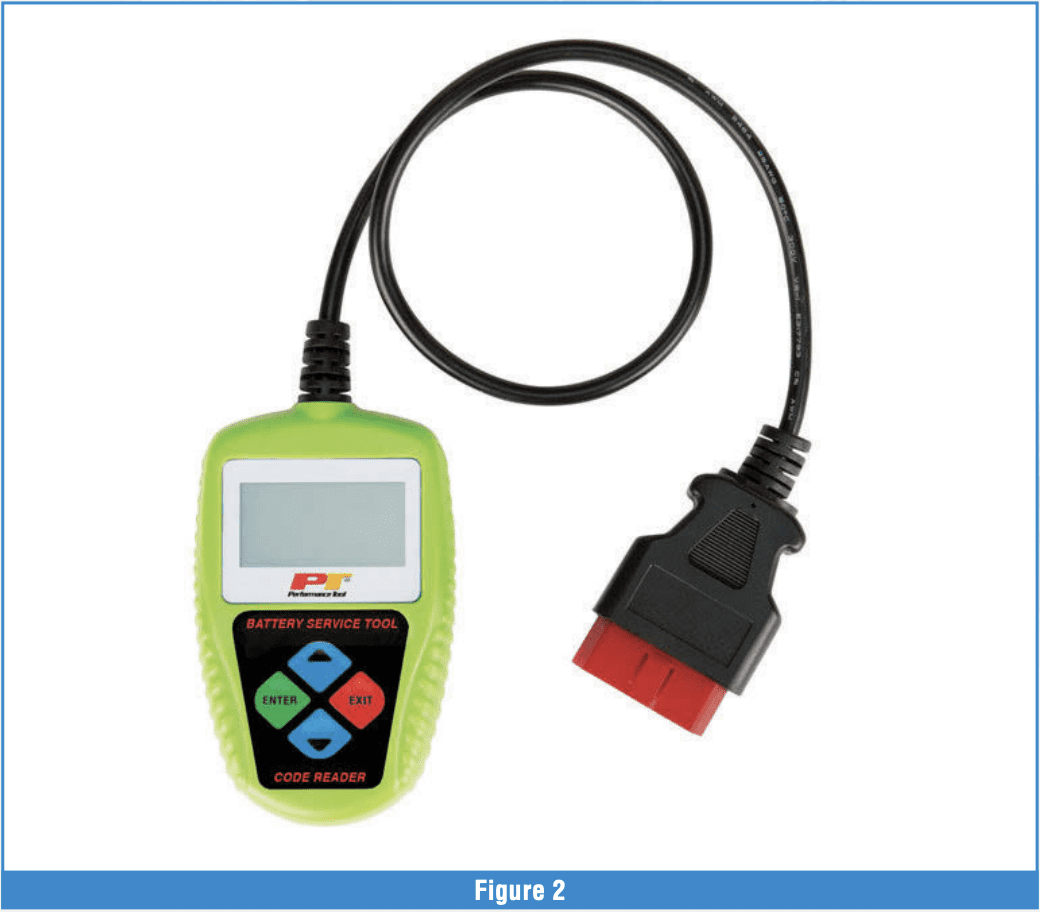
Another method of releasing the EPB is using an EPB service tool (Figure 2) that connects to the OBD-II port on your vehicle. These are relatively inexpensive interface tools that can be obtained through your local tool dealer or online retailers. There are many versions available, so research them to see which one best suits your needs.
Last-Resort Methods
The last method that we are discussing is to use a tool or manually apply voltage to the EPB motor to release the brake. This method involves removing the connector from the EPB motor on the caliper and applying current to the motor directly. Keep in mind that the EPB module controls the motor’s polarity to apply and release the brake; applying voltage in the wrong direction can either make the brake tighter or damage the motor. When applying direct voltage, energize the motor only long enough to release the brake. Over-travel can damage the internal mechanism. Excessive unwinding can result in internal gear damage or calibration loss. Once service is complete, the EPB will have to be relearned.
If an electronic release is not possible and the vehicle must be moved, mechanical intervention may be required. This involves lifting and properly supporting the vehicle, removing the rear wheels, disconnecting the EPB electrical connector, and removing the actuator motor from the rear caliper. Once the motor is separated, the piston can be manually retracted using appropriate service tools. This procedure carries risks, including possible damage to the reduction gear mechanism, loss of actuator position memory, and the storage of diagnostic trouble codes. After power is restored, the system must be recalibrated with a scan tool to ensure proper clamping force and symmetric operation. Failure to perform this initialization can result in warning indicators, uneven pad wear, or reduced holding capability.
From an engineering perspective, the Electronic Parking Brake reflects the broader industry transition toward brake-by-wire and software-governed control systems. The system depends on electric motor torque, reduction gearing, current-based force estimation, and network communication integrity. Mechanical redundancy has diminished, while electronic monitoring and fault detection have expanded.
For drivers, the EPB offers simplicity, convenience, and seamless integration with modern safety systems. For technicians and engineers, it represents a shift in diagnostic methodology and service strategy.
The parking brake is no longer a simple mechanical backup device. It is a fully networked, electronically controlled actuator system. In vehicles like the Jeep Cherokee, keeping a parked vehicle stationary is no longer a matter of cable tension and lever force—it is the result of coordinated software logic, motor control, and electronic oversight.
When a vehicle arrives with an applied EPB and no power, understanding the system’s design and release strategies can mean the difference between lost time and efficient workflow. As technology advances, systems like the Electronic Parking Brake are no longer isolated components—they are fully integrated into the vehicle’s electronic architecture. For today’s transmission technician, understanding these systems isn’t optional. It’s essential.