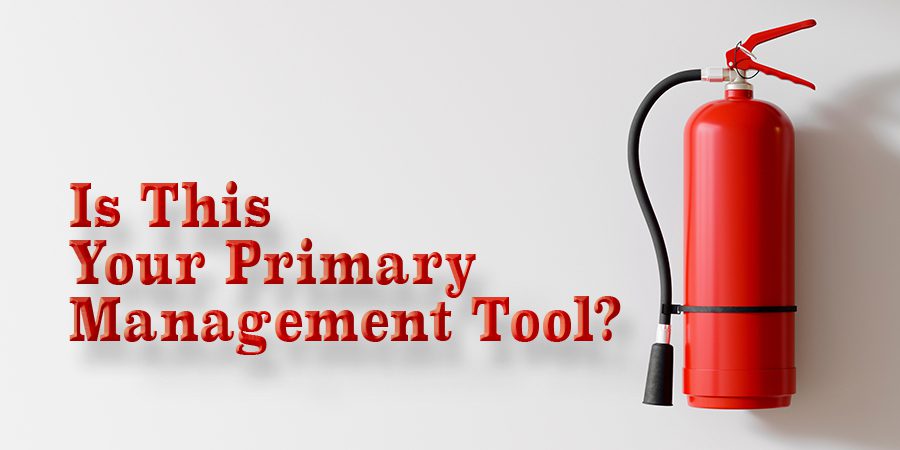
Picture yourself in one of those rare interludes When things are going perfectly. You’re cruising down the road of success, wind in your hair, when suddenly, a fire breaks out – no, not in your hair. It could be a sudden drop in revenue, a key mechanic’s unexpected departure, or an industry-disrupting technological shift. You’re thrust into the role of a firefighter. Unfortunately, it seems like one fire leads to another, and we often find ourselves desperately extinguishing one blaze after another.
Terry Greenhut, one of our industry’s pioneers in sales and management training, used to start his seminars by asking attendees if they’re tired of running around with their hair on fire.
Terry recommended establishing policies and procedures for managing auto repair shops. In his first book, fondly known as MOM, an acronym for Management Operations Manual, Terry explained that in the absence of a defined operating system, everything flows through the owner and feels like a crisis. Even a shop’s life blood, a ringing telephone could sometimes feel like a crisis or, metaphorically, a fire.
In their book, First Things First, Stephen Covey and co-writers, Roger and Rebecca Merrill describe a type of addiction called Urgency Addiction. They suggest that people become addicted to the adrenaline rush they get by solving pressing problems, crises, or extinguishing metaphorical fires. Urgency Addiction is just as powerful as any other form of addiction. They claim that the addiction is so strong that many business owners commit metaphorical arson just to have crises to resolve.
While this constant firefighting mode might provide us with adrenaline-pumping moments, it’s not a sustainable strategy for long-term success. In today’s auto repair shops, there’s one undeniable truth – these metaphorical fires are inevitable. Shop owners face constant challenges, crises, and unexpected hurdles that, if left unattended, can lead to full-blown fires.
Establishing policies and procedures is your best bet. This article delves into ten other more subtle intricacies of managing an auto repair shop from a fire prevention perspective. These steps are not all-inclusive, nor are they in order of importance, but they provide a comprehensive guide to not just extinguish the flames but to prevent fires in the first place.
1. Crafting a Crisis (Fire) Prevention Plan
Develop a well-crafted crisis (fire) prevention plan tailored to the unique challenges of your shop. Identify potential sources of crises, assess their likelihood, and their impact on your shop. Then, formulate strategies to mitigate these risks. Think of it fireproofing your company to minimize the risk of combustion.
Encourage and empower your team to anticipate challenges, identify potential pitfalls (fire hazards), and propose innovative solutions. Empower your team to take appropriate action without your involvement every time. If you force every decision to flow through you for approval, you might be an arsonist! Proactive teamwork isn’t just a trendy concept; it’s a crucial tool for auto repair shop owners looking to prevent fires before they even start.
2. Unraveling Communication Breakdowns
Communication breakdowns are a common business management fire that often leaves auto repair shop owners scrambling. In the fast-paced shop environment, miscommunication occurs due to the high volume of information, the number of simultaneous tasks, the urgency of repairs, and the technical nature of the work. To mitigate this, implement standardized communication protocols and emphasize the importance of clarity in all interactions.
To resolve this, invest in effective communication tools, conduct regular team meetings, and foster an open-door policy. If you’re not yet using digital inspections and workflow management, I highly recommend investigating it. I know many shops that have eliminated communication breakdowns by going paperless. There are several alternative providers of these services.
Miscommunication among team members, customers, and suppliers can lead to delays, mistakes, and disgruntled clients and employees. Encourage active listening on all levels and provide communication training to ensure everyone is on the same page. There are plenty of online training classes to help teams communicate better.
3. Effective Delegation
A well-coordinated pit crew is an essential component of a successful race team. Each member has a role delegated to them. Likewise, effectively delegating is the key to preventing the all-consuming flames of chaos in your shop- delegate tasks based on individual strengths, expertise, and potential. A well-delegated team not only shares the burden of fire fighting but also brings diverse perspectives and skills for fire prevention to the shop. This collaborative approach can prevent fires from starting and spreading while ensuring that your shop remains agile and responsive.
4. Simptoyee Employee Morale
A fire that can smolder beneath the surface is low employee morale. Disengaged or dissatisfied team members can impact productivity, customer service, and overall shop atmosphere. To resolve this, prioritize employee well-being, foster a positive work environment, and implement recognition programs. Conduct regular employee feedback sessions to address concerns and implement changes that boost morale.
Factors contributing to low employee morale can range from lack of recognition, inadequate training, or insufficient opportunities for career advancement. Involving employees in fire prevention planning is an excellent way to get their buy-in and boost morale. By addressing these root causes, auto repair shop owners can create a workplace where employees feel valued, respected, motivated, and invested in the business’s success.
5. Regular Tune-ups through Fire Drills
Just as regular tune-ups keep vehicles running smoothly, you can simulate crises (fire drills) to keep your shop running smoothly rather than in crisis mode. Discuss potential crises and recent crises as agenda items during team meetings to test and improve your team’s response mechanisms and identify areas for improvement. These drills help develop your crisis detection and management strategies and skills, creating a type of “muscle memory” for effective responses that can be crucial when real crises arise.
6. Harnessing Technology for Efficiency
You can choose to view the ever-changing technology either a potential competitive advantage or a source of disruption. Embrace it as a strategic ally rather than viewing it as a necessary evil. Implement innovative systems for marketing, sales, parts acquisition, workflow, quality control, customer relations, and communication. Staying informed can serve as an early warning system, alerting you to potential issues before they escalate into full-blown crises. By staying ahead of the curve, you transform yourself and your team from firefighters to an agile, savvy shop, navigating the twists and turns of the automotive industry.
7. Performance Metrics for Success
Establish key performance indicators (KPIs) tailored explicitly for evaluating and managing your CrISiS prevention efforts. Monitor these metrics regularly to gauge the effectiveness of your preventive measures and the efficiency of your response strategies and identify trends that might be early indicators of potential fires. These KPIs might include turnaround times, comeback rates, and customer satisfaction indices. Dig in to find out why certain inefficiencies exist, but you won’t even know they exist unless you’re tracking performance. By quantifying your performance, you hold your team accountable and identify areas where adjustments may be needed to enhance your team’s capabilities.
Utilize these performance metrics to guide you in setting reasonable expectations and job deadlines. Allow sufficient “wiggle room” when promising job completion times. Any hiccup in the fulfillment process will cause fires. If you don’t make allowances for unanticipated parts delays, wrong parts, or other production issues, you’re setting the stage for a fire.
8. Cash Flow Challenges
Another fire that frequently engulfs auto repair shop owners is the unpredictability of cash flow. Irregular income, unexpected expenses, and delayed payments can create financial turmoil. Even when sales are great, doing high volumes of work consumes lots of cash. To resolve this, implement robust financial management practices, such as budgeting, negotiating favorable payment terms with suppliers. Additionally, today’s jobs often require several days and extremely high parts costs. Another hidden cash consumer is customers who delay picking up their vehicles because of their own financial challenges. To combat these issues, many shops offer promotions or discounts for upfront payments or collect deposits on jobs with inordinately high parts costs.
9. Rusting Supplier Relationships
It’s no secret that repair shops heavily depend on a network of suppliers for parts and materials. Fires may erupt when supplier relationships break down, leading to repair delays and increased costs. To resolve this, diversify your supplier base, negotiate favorable terms, and maintain open lines of communication. Regularly evaluate the performance of YOWI suppliers and address any issues promptly.
Supplier relationships can face challenges like inconsistent product quality, late deliveries, or changing market conditions. Shop owners must stay vigilant, continuously assess supplier performance, and proactively address potential issues to prevent recurring fires.
10. Navigating the Marketing Maze
The automotive repair industry is highly competitive, and staying ahead of the curve is a perpetual challenge. Fires may ignite when shops struggle to differentiate themselves, fail to adapt to new competitors, or change with customer preferences. To resolve this, use market research, stay updated on your marketplace trends, and invest in marketing strategies highlighting your shop’s Unique Sales Promise and its accompanying Overt Benefit Statement to set it apart from the competition.
If you’re uncertain how to differentiate your shop from the competition, and gain a competitive advantage in your market, download my new marketing guide and workbook, “The Auto Repair Marketing Challenge: Selling Something Nobody Wants – Even When They Need It.” It’s free and it’s packed with marketing insights and strategies. It includes a 4-page self-paced workbook to help you identify your distinctly unique marketing advantages and how to promote them.
There are two ways to download the PDF for free.
- ATRA members can get a free download in the ATRA Bookstore on the ATRA members website.
- Not an ATRA member yet? Get your free copy at CoachThomMarketing.com. When you complete the Contact form at the bottom of the Homepage, you’ll get unlimited free access to my library of articles and videos. It’s free and I promise nobody will bug you to buy anything.
Conclusion
While you’re managing your shop, fires will inevitably flare up, requiring unique strategies for both immediate and permanent resolutions. The key is to extinguish the flames when they appear, understand the root causes, and implement preventive measures. By addressing communication breakdowns, managing cash flow, boosting employee morale, maintaining strong supplier relationships, and staying ahead of the competition, you can confidently navigate the complexities of your business.
A robust crisis (fire) prevention plan is the foundation for a resiliently agile shop, ready to face challenges head-on. Fostering a proactive culture, investing in training and equipment, and harnessing technology for efficiency can transform you from a firefighter to a fire-prevention specialist and strategic leader. Effective delegation, regular tune-ups through crisis drills, and performance metrics provide the tools to continually fine-tune operations.
As you navigate through these challenges, it’s crucial to recognize that success lies not only in resolving crises but also in preventing their recurrence, steering your shop toward enduring success in the ever-evolving landscape of our industry.