As I write this article, I can’t help thinking about Larry Bloodworth. Larry passed away last January 29th at age 70. He was a pioneer in bringing the digital age into our industry. He invested untold hours and thousands of dollars in every digital gadget and innovative idea he might, somehow, spin into running his business more efficiently. Then, he unselfishly shared his successes and failures with all of us with frequent social media posts and videos. He was the first shop owner I knew to use video for inspections, diagnostics, and to make sales.
I fondly remember the first time I met Larry was in the 1990s when he came to the first-ever ATRA Management Seminar I presented in Salt Lake City. He sat in the front row (as he always did at every seminar he attended) and furiously typed notes into the first laptop computer I’d ever seen. Larry was a friend and colleague to many members of the transmission industry, and he will certainly be missed.
There’s a timeless truth in our business, “We don’t fix cars, we fix customers.” Trust is the most important aspect of building lasting relationships and a people-friendly business that thrives on loyal customers. And, like transmissions need all parts working together to run smoothly, our customer service process needs to be fully integrated to run smoothly too.

I’m surprised that the need for this article still exists in today’s automotive repair marketplace. For some of you, this will be old news, but it never hurts to refresh our thinking, renew our commitment to systems, and reconsider the reasons we do things the way we do them.
For decades, we’ve done service writing, diagnostic inspection reports, estimating, sales, and workflow management in the old-fashioned way, relying on grease-streaked repair orders, paper inspections, handwritten estimates, a phone that never stops ringing, and the eternal game of phone tag just to get a “yes” on a repair. It worked… mostly. But let’s be honest; “mostly” isn’t good enough anymore.
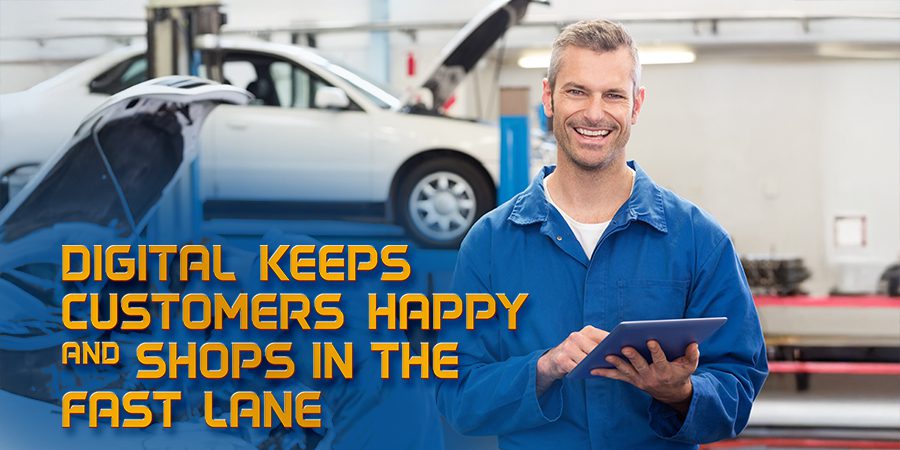
Today’s customers expect clarity, speed, and control. And if we’re being brutally honest with ourselves, most shops could stand to improve in these critical customer service areas. That’s why a growing number of smart operators are ditching the clipboards and stepping into the world of digital inspections, estimates, sales, and job management. It’s not just to make the shop look fancy, but to deliver something even more important – a seamless experience that builds trust, promotes loyalty, increases efficiency, and yes, helps to prevent customer misunderstandings and disputes.
Let me give you a real-world story to show what I mean. About a year ago, I got a call from a shop owner, Mike, who owns a nice transmission shop in the Midwest. One of his longtime customers, a guy named Terry, had brought in his Silverado for a fluid leak. Mike’s team found a cooler line leak, replaced the defective cooler line and topped off the fluid. Routine job, nothing major.
A week later, Terry was back, and back with furiosity. “The truck is still leaking,” he exclaimed. “Only now, the leak is even worse than before.” He swore up and down that Mike’s shop had botched something, and he wanted it fixed – both at once and on the house.
Here’s where it gets interesting. The transmission was indeed leaking but not from the replaced cooler line. Mike’s crew had only done a paper inspection, but it was sparsely completed – no photos, no video, just a few handwritten notes. There was no clear visual record of the original leak, no documented explanation of what was fixed and why, and no way to confirm or deny whether Mike’s shop was responsible.
Mike ended up eating the cost of the second repair just to keep the customer happy. But eating that whole mess left a bad taste in his mouth. And it could’ve been avoided.
Enter Digital Inspections – Seeing Is Believing
With a digital inspection system, Mike could’ve sent Terry a visual walkthrough of the problem and the diagnostic findings the first time around – photos of the transmission lines, a short video of the leak, maybe even a narrated clip explaining the diagnosis and proposed solution. All that would’ve lived in the cloud, timestamped, sharable, and transparent as a sunny day.
Customers can argue with opinions, but they’re not as likely to argue with video. When people can see what’s wrong with their car, you’ve got instant credibility. It’s not “he said, she said;” it’s evidence, and that gives your recommendations weight. Trust me: when you show someone a close-up of a worn or damaged part or a leaking seal with annotations and arrows, they get it and say “yes” a whole lot faster.
Estimates That Don’t Miss
Digital estimating adds greater credibility at the service counter. Forget scribbled numbers on the back of a work order or chasing down updated labor rates and times. With digital tools, your estimates are generated using real-time data, OEM specs, and consistent labor times. That means no guessing, no gaps, and no pricing errors because someone misread or misunderstood a number.
Your customer sees exactly what they’re paying for, and you’re protected from the dreaded “but you said it would only be…” conversation. It’s cleaner, faster, and fairer to both sides.
Communication That Clicks
Let’s go back to Terry for a second. Imagine if he’d gotten a real-time notification the moment his Silverado hit the lift. Then a message when the inspection was done and a report on the diagnostic findings and a written estimate Once the repair was approved, he’d get another notification when the parts were on order and when they’re expected to be delivered. Instead of stewing in silence, wondering what was happening, he’d be part of the process every step of the way.
That’s the magic of digital customer communication. With these systems, your shop can send status updates by text or email manually or even automatically. You can attach progress photos, send quotes for approval, or even get live chat going with a customer who’s got questions. No more hearing the complaint, “I’ve called three times and nobody picked up.” Now it’s, “Oh, I just got the update. It looks like we’re waiting on parts. Cool.”
You just removed a big chunk of frustration from the customer’s life, and that’s how loyalty and trust are built.
Approvals Without the Waiting Game
Raise your hand if you’ve ever waited days to hear back from a customer for approval of a $300 repair. That downtime kills your workflow and your profitability.
With digital approvals, your customer gets a detailed quote on their phone or computer. They can tap “approve” or “decline” on each line item, right then and there. Do you need a signature? No problem. It’s built in. Now your tech isn’t waiting. The bay isn’t tied up. And the job moves forward without you chasing people down.
That’s putting time back on the clock, making you more profit with money you’re not losing.
Receive Payments Too
Now let’s talk about the end of the job and getting paid. Digital payment systems let your customers settle up without even setting foot in the shop. Secure online portals mean they can pay with a card or another financing option from their phone, while you’re still cleaning up the workbench.
That means no more awkward “I’ll be there in an hour” promises that turn into next week. And it’s easier for the customer, too – they’re not digging for their checkbook or asking if you take AMEX. Faster payment. Less hassle. Everybody wins.
Less Paper, More Progress
One of the hidden benefits of going digital – paperwork disappears. Okay, not completely, but a huge chunk of it does.
Digital workflow management reduces your reliance on printed estimates, job tickets, and hand-written notes. Everything lives in your system: tech notes, customer communications, parts orders, invoices, approvals. It’s searchable. It’s sharable. It’s organized.
And when your techs spend less time filling out forms and more time turning wrenches, your shop runs leaner and meaner. You’re not just working faster, you’re working smarter.
The Bottom Line Is Why It Matters
We’re always looking for ways to improve our customers’ experience. Every time we can reduce their anxiety, make a repair easier to understand, or get them back on the road faster, we win their trust.
Digital inspections, estimating, communication, and payments aren’t just bells and whistles. They’re tools to build transparency, confidence, trust, and loyalty – four things that matter more now than ever in this business.
Customers remember when you made their life easier by eliminating hassles. They’ll tell their friends, and they’ll come back. In a market where shops are fighting for every ticket, that kind of trust and loyalty is gold.
And all that boosts your bottom line!
What Can We Do?
Terry eventually came around. Mike walked him through the second repair in person, explained what probably happened, and chalked it up to experience. But that job, small as it was, lit a fire under Mike to start modernizing. He’s now fully digital, and he swears it’s changed his business for the better.
If you’re still doing things the old pen-to-paper way, it might be time to take a hard look at how you can level up.
The real question isn’t, “Can I afford to go digital?” It’s, “Can I afford not to?”
Learn more about Coach Thom Marketing and get unlimited free access to sales and marketing articles and videos in our online library. Initial consultations and guidance are always free. CoachThomMarketing.com Phone: 480-773-3131 Email: coachthom@gmail.com
About the author — Thom Tschetter has served our industry for over four decades. His article topics come from our readers and Thom’s years as a speaker, writer, certified arbitrator, business consultant, and his own in-the-trenches experiences. Thom owned a chain of award-winning transmission shops in Washington State, and ATRA presented him with a Lifetime Achievement Award for his years of training for the transmission industry.