If you work on Subarus and like to save money, this article is for you. We have a very simple solution to a very expensive problem.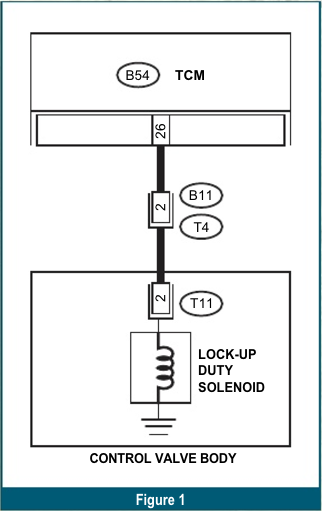
Lately it seems as though you can’t buy anything separate, such as when you need a single solenoid but have to buy an entire valve body, because the solenoid isn’t available separately.
The Subaru CVT Gen 1 has been on the road for over six years now. It’s starting to show up at shops and the ATRA HotLine is getting more calls about it. One of the more common problem areas has to do with lockup operation.
The problem goes like this: The car comes in with code P2769 (lockup on/off solenoid circuit low) or P2770 (lockup on/off solenoid circuit high). There’s no solenoid available to repair this problem. The factory repair requires you to buy the whole valve body for around $900.
This repair is strictly for the lockup on/off solenoid; don’t confuse that with the lockup duty cycle solenoid.
First a little info about the lockup on/off solenoid: It’s a normally open solenoid, which means it vents when it’s de-energized. The solenoid should have about 16 ohms resistance and has one wire for power; it grounds through the valve body.
 Use an ammeter to test the circuit and wiring. Using Ohm’s Law (V ÷ R = I) with a system voltage of 12.5 volts ÷ 16 ohms, the circuit should draw about 0.8 amps.
The 2010 Subaru 2.5L Outback TCM is under the dash; not the easiest place to reach. Use the wiring diagram (figure 1) to find connector T4 between the TCM and transmission. This is the gray, main connector on top of the transmission, and it’s a lot easier place to perform some basic checks.
Disconnect the connector, and connect your ammeter between pin 2 and the positive battery terminal to check the current draw from the lockup on/off solenoid. It should draw about 0.8 amps. Keep the solenoid loaded for a little while. The problem usually shows up when the solenoid gets hot the current starts climbing fast.
If the current remains within specs, you may have a problem elsewhere in the circuit, between the connector and the TCM. In that case, you’ll have to bite the bullet and access the TCM.
If the solenoid is overdrawing the circuit, now you have another problem: There are no individual solenoids available for this transmission. It’s buy the whole valve body or nothing.
Until now: If the lockup on/off solenoid is bad, order a JF506E shift solenoid B from your local vender. The JF506E shift solenoid B is very similar to the lockup on/off solenoid. It bolts right into place, but there are few minor difficulties you’ll have to overcome.
To begin with, the connectors and their rotations are different (figure 2). No problem here: Get a used JF506 internal harness so you can rob one of its connecters. Cut and splice the JF506 connectors onto the harness. The rotation of the connector is a little different, but there’s plenty room for it.
 The second issue is the solenoid snouts are different sizes (figure 3): The JF506E solenoid snout is smaller, so you’ll need to make a sleeve. Use the chart for the sleeve sizes (figure 4).
 Finally, you’ll have to cut two slots into the sleeve so the oil can pass through when the solenoid is off (figure 5).
We went to Universal Machine Shop, Inc, in Portland, Oregon, a machine shop that specializes in automatic transmissions. They made this sleeve quickly and cheaply. It’s a simple sleeve that any machine shop should be able to build. Or, if you have a lathe, you can make it yourself.
You can make these sleeves out of plastic or steel. Plastic will work fine, as long as it’s a type that can withstand the heat and oil environment.
Install the sleeve into the valve body: Make sure it’s a snug fit and the oil slots line up so they don’t block the oil from venting. Bolt the solenoid in (figure 6) and install the valve body. There you have it: The solenoid is replaced and you just saved your customer a lot of money.
This repair has been confirmed a few times with very good results.
Special thanks to Tony Potamitis from AA Automatic in Canton, Connecticut, for sharing this great fix.