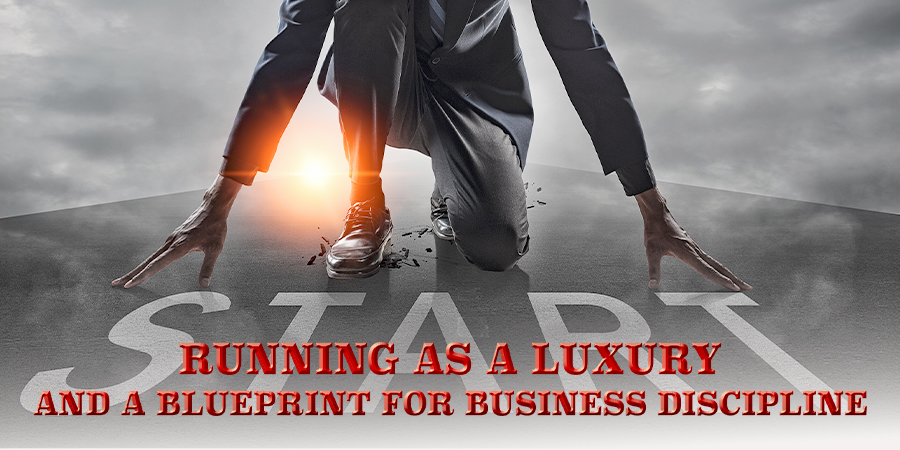
During a 10K in Agoura Hills, California, a realization hit me around mile four: for most working adults, running is a luxury. Not because it’s expensive, but because it requires something far scarcer – time, energy, and the mental space to push oneself without immediate reward.
By mile five, that thought evolved into something deeper. Running isn’t just physical exercise; it’s a mental endurance test. Every runner faces the same three choices: stop and walk, maintain the current pace, or let momentum carry them faster than they believed possible. That simple decision point mirrors the daily crossroads leaders and entrepreneurs face in business.
Running forces you to confront your internal dialogue. When fatigue sets in, the mind offers easy exits: slow down, save energy, quit early. In business, these same temptations appear in subtler forms – postponing a difficult conversation, delaying a strategic decision, or avoiding the discomfort of innovation. The discipline to keep moving, even at a steady pace, compounds over time. But consistency becomes a competitive advantage.
Momentum is another shared truth. In a race, once your stride locks in, your body begins to trust the rhythm. In business, momentum shows up as operational cadence, team alignment, and the compounding effect of small wins. Leaders who understand momentum don’t waste it. They build systems that reinforce progress, allowing teams to move faster than they once believed they could.
But the most powerful parallel is choice. During a run, no one forces you to continue. There’s no external scoreboard, no quarterly earnings call, no investor pressure. It’s you versus your threshold. Business goals operate the same way. The most meaningful achievements – scaling the company, entering a new market, rebuilding a brand – require self-generated drive. The choice to push, to accelerate, or to simply not stop is internal long before it becomes external.
Running also teaches humility. Some miles feel effortless; others feel like climbing a hill with weights strapped to your legs. Business cycles follow the same unpredictable pattern. Leaders who understand this don’t panic during slow cycles or become complacent during strong ones. They stay present, adjust their breathing, and keep moving.
Most importantly, running reveals that breakthroughs often happen after the point where you wanted to quit. The fifth mile, the one where your legs burn and your lungs tighten, is where you discover what you’re capable of. In business, breakthroughs often come after the setbacks – after the failed sales pitch, the major comeback, the lost customer, the stalled initiative. Endurance is built in the struggle, not the sprint.
CONCLUSION
A 10K doesn’t change your life, but the lessons embedded in each mile can. Running reminds us that progress is a privilege, momentum is earned, and endurance is a choice. Business success follows the same pattern. Keep moving, stay disciplined, and trust that the finish line is closer than it feels.
About the Author
Edward Vela is an M&A Advisor and independent Financial Planner, also helping clients with raising capital. Edward has 15 years of wealth management experience but is not in the securities business. He writes this column for educational purposes.
Edward earned a Journalism Certification from the University of Massachusetts, a BA in Political Science, a Financial Planning Certification at UCLA, and an MBA from the UCLA Anderson School of Management specializing in entrepreneurship and finance. You can contact Edward at 925-300-8805 or the empiriKalpartners team at empiriKalpartners.com.