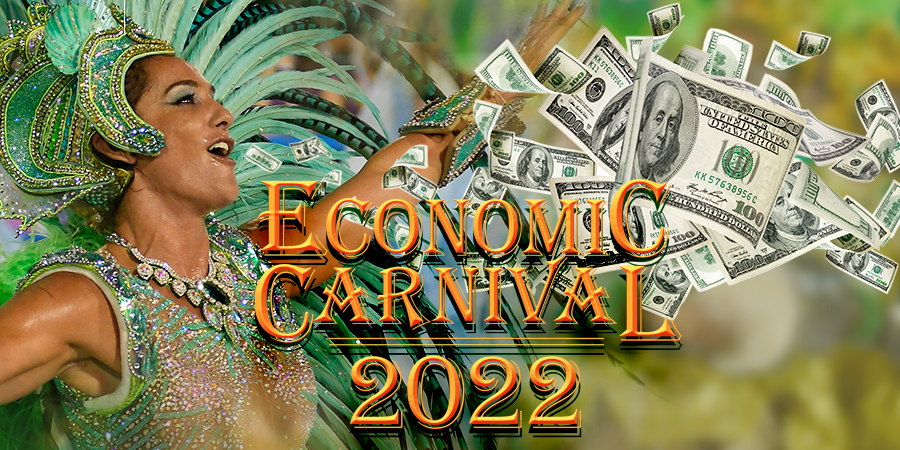
As a student in 2004, I studied Brazilian economics in Brazil, Salvador da Bahia, while also experiencing one of the world’s most dynamic festivals, Carnival.
I was fascinated as I observed the festivities from my luxury eighth-floor apartment balcony. Multitudes were streaming from the hills – local favelas (shantytowns) forming midday. Hours later, several semi-trucks drove by hauling platform stages for Brazil’s top musicians to play music for at least 12 hours a day during the weeklong festivities. Long rectangular-shaped ropes were attached to the back of these trucks while security surrounded them. Throughout the evening, affluent Brazilians and tourists slowly started filling these rope blockades called “Blocos.” Looking down from my balcony, at around 9 pm, somehow society now made sense. The affluent were safely tucked in barricades celebrating for hours while the rest of the crowds fended for themselves. Although groups were in different situations, everyone celebrated Carnival together! UCLA professor Randal Johnson encouraged me to journal my experiences throughout my stay. Often, the news would report society one way while my journal read something different.
Likewise, today, we find ourselves in a situation where business media describe conflicting interpretations of the economy. For example, on December 9, 2021, CNBC’s Jim Cramer stated, “Today we have the strongest economy, perhaps, I’ve ever seen.” Conversely, on September 11, 2021, Amy Fontinelle wrote for Investopedia that it might take months for unemployment applicants to receive their benefits due to overwhelmed employees dealing with widespread layoffs from the COVID pandemic in 2020. Furthermore, Allison Morrow, writer for CNN Business, wrote an article titled Why Inflation Can Actually Be Good for Everyday Americans and Bad for Rich People. She stated that household incomes were bolstered by unemployment checks and stimulus funds but failed to mention that incomes are not sustainable if employment isn’t found. $5.00 gas prices, alone, will crush many of these households. To her credit, she did mention that the current inflation situation makes it hard to define winners and losers.
EmpiriKal partners’ CEO, Eric Harding, described the situation as a dystopian economy, favoring big corporations. Nevertheless, with a national unemployment rate of 4.2%, an inflation rate at 6.8% (the highest it’s been since 1982), and interest rates expected to rise in 2022, investors need to plan for cautious growth to hedge inflation, risk, and other uncertainties that 2022 might bring. Harding recommends precious metals and cryptocurrency for 10% of your portfolio when exploring your traditional and nontraditional options.
Whether you feel securely fortified from the current inflation situation or left to fend for yourself, we are all in this 2022 Economic Carnival together. As financial professionals, we are here, so you don’t have to go at it alone. We are here to help you!
Let us help you rather than going it alone. If you already have an investment advisor, congratulations. However, if you’d like to learn more about what investment advisors do for their clients, please feel free to reach out to me at empirKalpartners.com for an individual assessment.
About the Author
Edward Vela is an Investment Advisor and Estate Planning Specialist at empiriKal partners, llc©, with 13 years of wealth management experience. He earned a Journalism Certification from the University of Massachusetts, a BA in Political Science, a Financial Planning Certification at UCLA, and an MBA from the UCLA Anderson School of Management. You can contact Edward at 925-300-8805 or email edward@empiriKalpartners.com.