In February 1992, Bob and Patricia Franklin and their 18-month-old son, Matthew, emigrated from their home in England to the United States, to pursue the American Dream. They received an E2 Visa and moved to the U.S., where they began looking for a business.
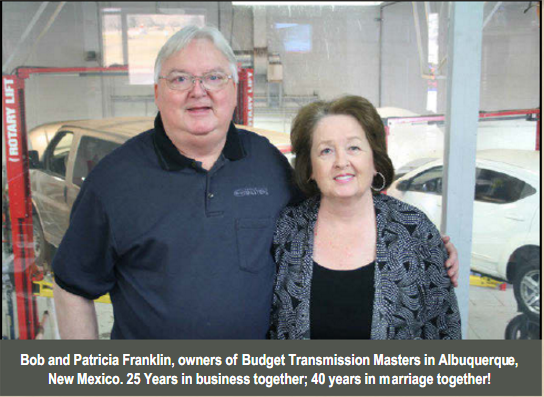
“Our dream was to come live and work in the States,” says Bob. “We’d come here on vacation — loved it here — and kept gravitating toward Albuquerque, a beautiful neck of the woods that kind of suited us. We sold off everything we had in the UK and came here with seven suitcases.”
It didn’t take them long to choose Budget Transmission Masters in Albuquerque, New Mexico. The shop was just off Route 66; it had three lifts and six employees. It had been operating since 1976 and, after 16 years, was fairly successful.
Before buying Budget, Bob was a national account manager for Nestle; he had no experience in auto repair or transmissions. But he had a strong background in sales and marketing.
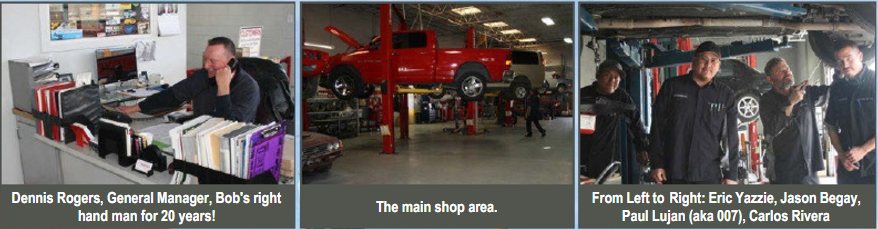
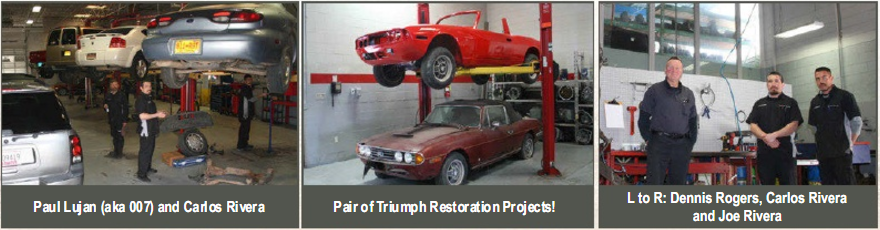 So what made them choose a transmission shop? “Since I came in on an E2 Visa, I needed to find a business,” says Bob. “The embassy prefers it to be a business with at least a couple employees, but also a business that we could add value to; at least that was the theory.
“When you look for a business, particularly in New Mexico, the ones that are available are generally related to food or printing.
“Budget was available. We liked that it had a half dozen employees and that it was an established business. We continued our search for a few months, and then one day — at about 2 o’clock in the morning — it came to me that it really kind of fit what we were looking for.”
One thing they haven’t had to deal with is any kind of nationalistic bias. In fact, just the opposite: “I love the American people, and I’ll be honest, I think they love dealing with us, too. It’s been our unique selling point in many ways. I think Americans admire small entrepreneurs who come here, want to invest, and want to do something positive in their communities.
“We’ve been in business for 25 years now; we’ve built fantastic, long relationships with not just the parents but now the next generation as well.”
Larger Building
Six years after buying their transmission shop, Bob and Tricia had to make a decision. Their building lease was up and they’d either have to renew the lease or buy the building if they wanted to remain there.
But, by this time, they’d more than doubled their business, and the shop they were in didn’t provide near enough room for them to work, let alone continue to grow.
As luck would have it, a building in the area became available. It was an old Hyundai dealership, with 13,500 square feet of space, including more workspace and a full office and waiting room. They purchased the building in 1999 and were able to move their business “without any noticeable interruption” in their work.
One thing that makes their new building unique is that it sits on two levels: The office is at street level, but the technicians have to drive down a ramp to the service bays. When the cars are up on a lift, they’re almost level with the office, so, when the cars are on the lifts, customers can see them from the office.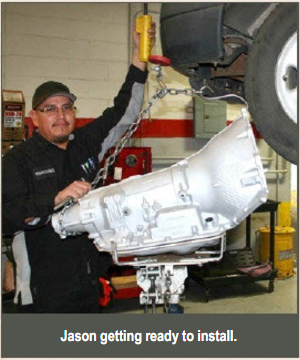
“When we first opened our business we had three lifts,” explains Bob. So, to keep the shop busy, they’d have to pull a transmission out, reset the subframe and suspension, and push the car out. Then, once they had the transmission ready, they’d have to push it back in and remove the suspension and subframe again, so they could reinstall the transmission. It was a lot of wasted effort.
The new shop has 14 lifts, so they can leave cars on the lift until the transmission’s done, without interfering with their workflow.
Having the office looking down on the shop also gives Bob the opportunity to keep an eye on things from above. What’s more, having the work area set down keeps the bays a little cooler during the summer months.
Business Philosophy
When asked about a business philosophy, most shop owners jump right into the familiar “customer first” discourse. It’s hard to argue with; experience proves it works as a business model.
Bob’s response was dramatically different: “When we first came here, we had people working here with virtually no vacation time. This seemed to have been characteristic of the industry 25 years ago.
“So the first thing we did was double their vacation time. And people who’d been with the company for a long time got an extra few days. We brought in what we felt was a fairer program.
“We also discovered that the employees couldn’t do anything in the shop without channeling it through the owners. No one could make a decision without taking it to the boss. We gave them the authority to make decisions for themselves and show initiative.
“It didn’t happen overnight; when people have been prevented from making decisions, it takes time. But now we want to see examples of initiative from our people. We want them to think smart… we want them to be part of the business; we want it to be part of their lives.”
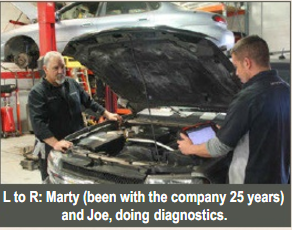 At first, that response sounded as though Bob wasn’t really paying attention to the question. But, after a second or two, it sinks in: He’s building a team of ambassadors for his shop. Every employee feels comfortable and empowered… that they’re an integral part of something bigger; not just an employee.
With that attitude, they’re only too happy to bring the people they meet into “their” shop. It’s a big part of why Budget Transmission Masters remains busy: The entire staff represents their shop to the community, each and every day.
“And, because of that, we have a wonderful team of people here, with very little turnover,” says Bob. Tricia agrees: “Anyone who’s ever left for ‘greener pastures’ usually wants to come back,” because of that feeling of being part of something that they don’t seem to get anywhere else.
Sounds like an interesting business philosophy after all.
Mostly Transmissions
If you check Budget’s web site —www.albuquerquetransmission.net — you’ll see they list some general service in addition to drivetrain repairs. But they don’t do a lot of that. “I wanted to start being able to provide general repair work for our customers,” explains Bob, “so I brought a guy in who could handle that end of the business.
“But we never quite married up the mix. Our focus here is, and always has been, transmissions. I’d be reluctant to branch out into too many other areas, because, if you don’t have the skill set and the consistency for it, we’re not going to be most people’s long-term solution.”
When they do accept other types of work, it’s often something related to the transmission, such as a radiator or starter: “Things that fit easily within our mix. But detailed engine work? We’ll usually refer that to one of the general shops we work with and really trust.”
One thing they’re happy to work with are remans; about half of the transmissions they sell are remans.
“When I entered this business, we only had to work on a few dozen transmissions; today there are hundreds,” says Bob. “And even within the same family of transmissions, there are so many different variations.”
That’s a big part of why Budget now uses remans for so many of their customers’ cars. “Even with our scale of purchasing, we can’t always compete effectively with the prices for a reman. “That’s been our challenge over the last three or four years: Discovering which reman supplier provides the best units and the best service for our business.
“Today we’re seeing transmission jobs costing $3000, $4000… even $5000. At those prices, you can’t be experimenting on your customers’ cars. If you don’t have the skills for a particular transmission, you’re better off choosing a company that’s proficient with it.”
And, of course, there’s the issue of time: With remans, there’s no question of waiting for a part to come in. After they order the transmission, “we put the car in the air, pull the unit out, flush the cooler, and, the next day, the remain is here. We have the car back to the customer later that day.
“We try to get the balance right: We rebuild the more common units that are still profitable to rebuild, but we prefer to buy the units that are less familiar.”
Budget and ATRA
Budget Transmission Masters has been an ATRA Member since before Bob and Tricia bought the shop.
“I’m not a technical person,” says Bob. “I couldn’t build a transmission in a hundred years. But what was necessary to me was having access to ATRA’s professional support resources.
“We’re the only shop in Albuquerque to send our technicians to every training seminar that comes to the area. We’re the only ones to take the exams.
“A few years ago, we sent everyone from the shop to Expo in Vegas. It was important for team building; we had a few great days there. It was a wonderful learning experience.” They’re planning to make this
year’s Expo a big event for their team, because this is the 25th anniversary of when Bob and Tricia came to America and took over the company.
And, of course, they’re thrilled to be able to offer the ATRA Golden Rule Warranty on the units they rebuild, which enables them to compete with the large transmission chains.
Barriers to Citizenship
Bob and Tricia came to the U.S. 25 years ago, and they’ve been productive members of their community for the entire time. So why haven’t they become U.S. citizens? Turns out, it’s not that easy.
According to Wikipedia, there is a path from the E2 visa to citizenship. But according to Bob, that’s a difficult path to follow, it requires massive financial backing, and can take years to accomplish.
“I’ve only known two people who’ve managed to navigate that passage,” says Bob, “and you really have to be a multimillionaire and have the liquid funds to make it through.”
The issue of immigration has taken center stage recently, and there are a lot of different situations to consider. But it’s hard to argue that folks like Bob and Tricia are exactly the ones for whom we should be rolling out the welcome mat. They work hard, they provide jobs, and they spend a lot of money to help support our economy.
Their son, Matt, is 26, and is presently working in Florida, thanks to his H1B visa, which is sponsored by the company he works for. If not for his education and skill set, he’d have been required to move back to England when he turned 21, even though his parents are here and he was raised here since he was 18 months old.
Because of these difficulties, Bob and Tricia have gotten together with a few other expats to form an organization whose goal is to reform the E2 visa. Their site — E2visareform.org — provides a lot of valuable information about the issues facing immigrants working on an E2 visa.
“I know the immigration debate has gotten a lot of press lately,” says Bob. “I’d like everyone to remember that there are a lot of people coming here who follow every rule and make a significant contribution to this great country, but are still having difficulty getting a green card.”