In this issue of Keep Those Trannys Rolling, we are going to take a look at a 2004 Acura TSX experiencing torque converter clutch issues. This 2004 Acura TSX was equipped with a 2.4L engine and an MCTA 5-speed automatic transmission.
I first learned about this 2004 Acura TSX when one of our member transmission shops contacted the ATRA Hotline to discuss a torque converter chatter concern. According to the technician, a local automotive repair shop manager had contacted them regarding one of their customer’s vehicles. According to the repair shop manager, his customer was experiencing a chatter or shudder while driving down the road. The repair shop manager said “they had confirmed that the transmission was chattering and the transmission fluid was discolored”, so they removed the transmission from the vehicle with a plan to replace the transmission with a used assembly. Unfortunately, according to the repair shop manager, a used transmission assembly was not available. The repair shop manager asked the member shop to take a look at the original transmission assembly. The member transmission shop agreed to inspect the transmission.
Transmission Assembly Arrives:
The next morning, the repair shop delivered the transmission assembly to our member shop. With the transmission assembly setting on the floor, there was no way to diagnose or confirm a transmission chatter/shudder concern, so the transmission assembly was moved to the rebuilder’s workbench.

On the Bench:
 With the transmission assembly on the rebuilder’s bench, the rebuilder began the transmission disassembly process. The rebuilder removed the torque converter, indicating it was discolored and that the fluid smelled burnt. During disassembly, the rebuilder found clutch material throughout the transmission. The rebuilder continued to disassemble the transmission case to inspect the clutches. To his surprise, the clutches were in good shape with no signs of wear. This was an indication that the clutch material found throughout the transmission was probably coming from the torque converter. The rebuilder continued to disassemble the transmission for further inspection. During the removal of the valve body assembly from the case, the rebuilder started removing the clutch feed and lube tubes. During the feed and lube tubes removal, the rebuilder found that one of the tubes was cracked. On further inspection, the rebuilder wiggled the feed and lube tubes and found that the lube tube was completely broken all the way around the tube (Figure 1). With the feed and lube tubes removed, the rebuilder removed the valve body assembly from the transmission case. It was time to disassemble & inspect the valve bodies.
Cleaning and Inspecting the Valve Bodies:
After removing the valve bodies from the transmission case, the rebuilder cleaned and inspected each, checking for excessive valve and bore wear. Aside from contamination with torque converter clutch debris, the valve bodies looked good. The rebuilder replaced the valve body end plugs as needed and started reassembling the valve body assembly. With the valve body assembly ready to install on the transmission case, it was time to reseal and reassemble each clutch component. With the clutch components resealed and reassembled, it was time to start reassembling the transmission case.
Reassembling the Transmission Case:
With the clutch components resealed and reassembled, the valve body assembly cleaned and inspected, it was time to start reassembling the transmission case. The rebuilder installed each clutch component into the transmission case and installed the pump assembly. The rebuilder air-checked each clutch circuit at 35 psi of air pressure prior to installing the valve body assembly. With the valve body assembly installed on the transmission case, it was time to address the broken feed and lube tube concern.
Purpose of Feed and Lube Tubes:
Most Honda and Acura transmissions use feed tubes to direct fluid to different transmission components as needed. Some feed tubes direct fluid to the clutches, while others direct fluid to the lube circuits.
 Feed and Lube Tube Concerns:
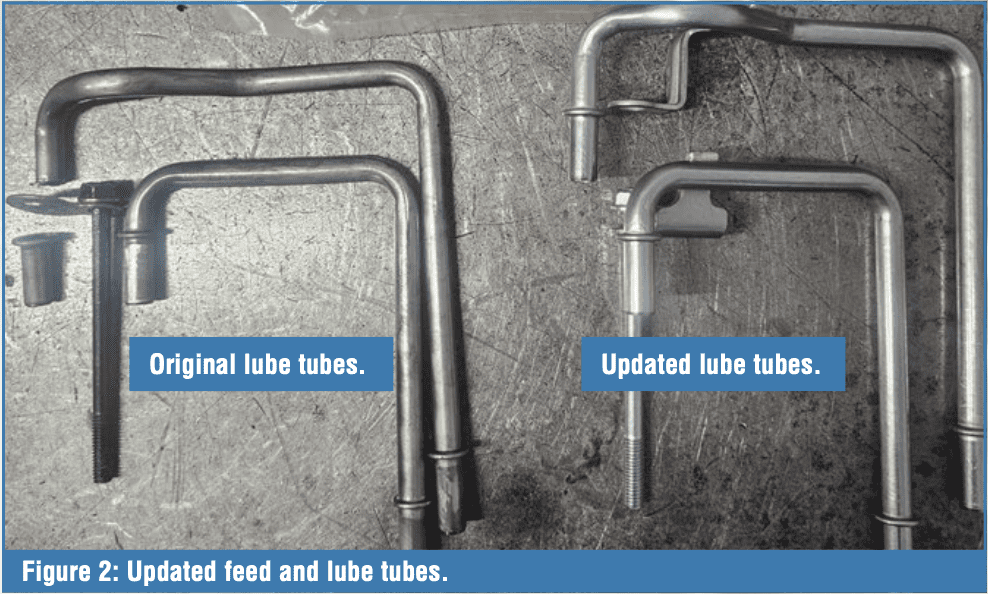
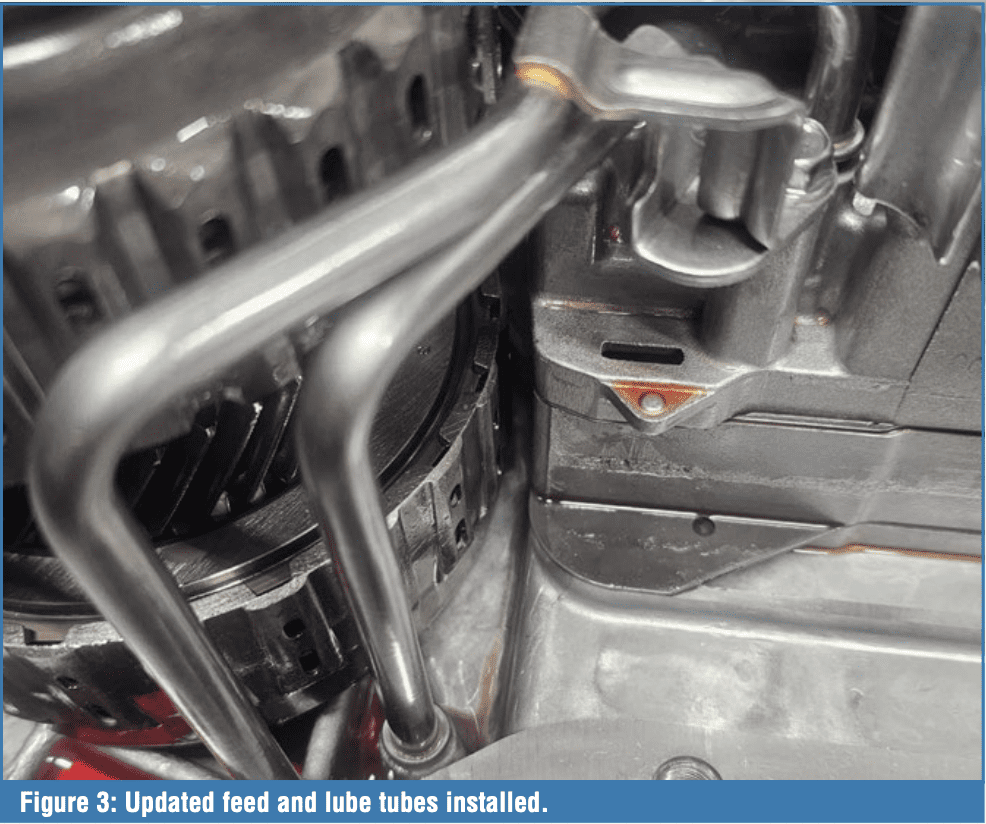
In this case, the cracked/broken feed tube was used to direct fluid to the lube circuits. A loss of lube circuit pressure, which is tied to the TCC release circuit, can cause torque converter overheating, premature torque converter clutch failure, and eventually transmission failure. Feed and lube tube concerns are fairly common. Honda/Acura has redesigned the feed tubes (#22770-RCL-305) to prevent cracking or breaking feed tubes (Figure 2). The rebuilder installed the newly designed feed and lube tubes onto the valve body and case assembly (see Figure 3) and then completed the transmission reassembly.
Reassembly Complete:
With the transmission reassembly complete, it was time to return the transmission assembly to the local repair shop for installation into the 2004 Acura TSX.
Closing:
The transmission assembly was returned to the local repair shop and was installed in their customer’s 2004 Acura TSX. According to the local repair shop manager, the transmission is working perfectly, and their customer is happy. Well, there you have it, with a new design feed and lube tube kit from Honda/Acura, you too can keep those Honda/Acura trannys rolling down the road.
Special thanks to Sean Jones from AAMCO Transmissions in Venice, Florida, for his contribution to the storyline and pictures. Thank you, Sean, for sharing your story.